
-
QuietFlex
QuietFlex 5-Inch x 25-Foot R-6 Insulated Flexible Duct, Rip-Stop Silver Jacket, 80 Series, Indoor | 580
SKU: 580
$63.67- 📦$14.95 Flat-Rate Shipping
- ⚡Fast Shipping
Ships in 1-2 Business Days10 in stock -
Hart & Cooley
Hart & Cooley 4-Inch x 25-Foot R-6 Insulated Flexible Duct, Silver Jacket, F216 Series (Bagged) | FB216-04-25
SKU: FB216-04-25
$69.38- 📦$14.95 Flat-Rate Shipping
- ⚡Fast Shipping
Ships in 1-2 Business Days10 in stock -
QuietFlex
QuietFlex 9-Inch x 25-Foot R-6 Insulated Flexible Duct, Rip-Stop Silver Jacket, 80 Series, Indoor | 980
SKU: 980
$97.02- 📦$14.95 Flat-Rate Shipping
- ⚡Fast Shipping
Ships in 1-2 Business Days10 in stock -
Hart & Cooley
Hart & Cooley 5-Inch x 25-Foot R-6 Insulated Flexible Duct, Silver Jacket, F216 Series (Bagged) | FB216-05-25
SKU: FB216-05-25
$81.47- 📦$14.95 Flat-Rate Shipping
- ⚡Fast Shipping
Ships in 1-2 Business Days10 in stock -
QuietFlex
QuietFlex 6-Inch x 25-Foot R-6 Insulated Flexible Duct, Mobile Home Outdoor HUD-Rated, 71 Series | 671
SKU: 671
$97.02- 📦$14.95 Flat-Rate Shipping
- ⚡Fast Shipping
Ships in 1-2 Business Days10 in stock -
QuietFlex
QuietFlex 10-Inch x 25-Foot R-6 Insulated Flexible Duct, Rip-Stop Silver Jacket, 80 Series, Indoor | 1080
SKU: 1080
$113.18- 📦$19.95 Flat-Rate Shipping
- ⚡Fast Shipping
Ships in 1-2 Business Days10 in stock -
Hart & Cooley
Hart & Cooley 6-Inch x 25-Foot R-6 Insulated Flexible Duct, Silver Jacket, F216 Series (Bagged) | FB216-06-25
SKU: FB216-06-25
$91.29- 📦$14.95 Flat-Rate Shipping
- ⚡Fast Shipping
Ships in 1-2 Business Days10 in stock -
QuietFlex
QuietFlex 10-Inch x 25-Foot R-6 Insulated Flexible Duct, Mobile Home Outdoor HUD-Rated, 71 Series | 1071
SKU: 1071
$113.18- 📦$19.95 Flat-Rate Shipping
- ⚡Fast Shipping
Ships in 1-2 Business Days10 in stock -
Hart & Cooley
Hart & Cooley 7-Inch x 25-Foot R-6 Insulated Flexible Duct, Silver Jacket, F216 Series (Bagged) | FB216-07-25
SKU: FB216-07-25
$103.29- 📦$19.95 Flat-Rate Shipping
- ⚡Fast Shipping
Ships in 1-2 Business Days10 in stock -
QuietFlex
QuietFlex 12-Inch x 25-Foot R-6 Insulated Flexible Duct, Mobile Home Outdoor HUD-Rated, 71 Series | 1271
SKU: 1271
$133.44- 📦$19.95 Flat-Rate Shipping
- ⚡Fast Shipping
Ships in 1-2 Business Days10 in stock -
QuietFlex
QuietFlex 12-Inch x 25-Foot R-6 Insulated Flexible Duct, Rip-Stop Silver Jacket, 80 Series, Indoor | 1280
SKU: 1280
$133.44- 📦$19.95 Flat-Rate Shipping
- ⚡Fast Shipping
Ships in 1-2 Business Days10 in stock -
Hart & Cooley
Hart & Cooley 8-Inch x 25-Foot R-6 Insulated Flexible Duct, Silver Jacket, F216 Series (Bagged) | FB216-08-25
SKU: FB216-08-25
$108.96- 📦$19.95 Flat-Rate Shipping
- ⚡Fast Shipping
Ships in 1-2 Business Days10 in stock
Buying guidance
Flexible Duct





 Clearance Center
Mitsubishi R-410A Close-Outs
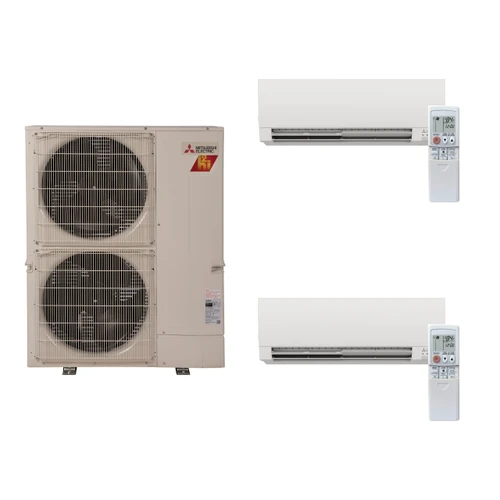
Remaining stock of Mitsubishi Electric R-410A ductless systems, priced to clear while quantities last.
Shop Mitsubishi Clearance
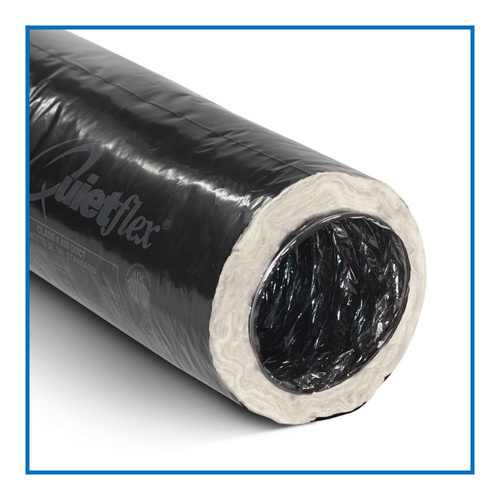
Flexible duct is how most residential systems get air from the trunk line to each room. It is quick to route around framing, it comes pre-insulated, and a good run of flex can last as long as the equipment it serves. HVAC365 stocks R-6 insulated flex duct from QuietFlex and Hart & Cooley in 4- through 18-inch diameters, all in 25-foot lengths, with indoor and outdoor-rated jackets.
Choosing the Right Flex Duct
- Diameter: match the collar or boot you are connecting to and the airflow the room needs. Undersized flex is one of the most common causes of noisy registers and weak airflow.
- R-value: every duct in this category is R-6. That is the common minimum for ducts outside the conditioned space. Some energy codes ask for R-8 on supply ducts in attics, so check your local requirements.
- Jacket: silver jackets reflect radiant heat and are the go-to for attics. Black UV-inhibited jackets suit crawlspaces and exposed indoor runs. Outdoor HUD-rated duct is built for mobile home crossovers and runs that are exposed to sun and weather.
- Indoor vs. outdoor: standard flex is made for use inside the building envelope. Only use duct marked for outdoor or HUD use where it will see sunlight.
- Length: each piece is 25 feet. Cut to length on site instead of leaving extra duct coiled in the attic.
Jacket Types at a Glance
- Silver rip-stop (QuietFlex 80 Series): tear-resistant metalized jacket for attics and indoor runs.
- Silver metalized polyester (Hart & Cooley F216): fiberglass-scrim reinforced jacket over formaldehyde-free insulation, shipped bagged.
- Black UV-inhibited (QuietFlex 60 Series): durable black jacket for indoor and crawlspace use.
- UV-inhibited polyethylene, HUD-rated (QuietFlex 71 Series): outdoor-rated duct for mobile home crossovers.
Installation Tips
- Pull the duct fully extended. Compressed or kinked flex adds resistance and cuts airflow.
- Support runs with hanger strap at the intervals your code requires, and do not let the duct sag between supports.
- Keep bends gentle and as few as possible. Avoid tight 90-degree turns right off a collar.
- Seal the inner core to the collar with UL 181B-FX tape or mastic and a clamp or tie, then pull the insulation and jacket over the joint and seal the jacket.
- Do not crush the insulation with straps, framing or stored items. Compressed insulation loses its R-value.
Things You Should Know
- Flex duct is listed as a UL 181 air duct or connector. Use it for supply and return air, not for dryer exhaust or appliance venting.
- Pair your flex with the right collars, register boxes and foil tape so every joint seals. You will find all three in our Air Distribution category.
- Need help sizing a run or matching flex to a new system? Call HVAC365 at 1.888.509.3391 and talk to someone who installs this every day.
Q: What size flex duct do I need?
Match the duct to the collar on the trunk or plenum and the boot at the register. Typical residential branches run 6 to 8 inches. Larger returns and trunk runs use 12 inches and up. A Manual D duct design gives the exact sizes for each room.
Q: Is R-6 flex duct good enough for my attic?
R-6 is widely used and meets many codes for ducts in unconditioned spaces. Some newer energy codes require R-8 for supply ducts in attics. Check your local code before you buy.
Q: Can I use indoor flex duct outside?
No. Sunlight breaks down standard jackets. Use outdoor or HUD-rated duct, such as the QuietFlex 71 Series, anywhere the duct is exposed to the weather.
Q: How do I connect flex duct to a collar?
Slide the inner core over the collar, seal it with UL 181B-FX tape or mastic, and secure it with a clamp or tie. Then pull the insulation and jacket over the connection and seal the jacket to the collar or boot.
Q: Can I cut flex duct?
Yes. Cut through the jacket, insulation and core with a sharp knife, then snip the wire helix with cutters. Cut it to the length you need instead of leaving extra duct coiled up.
Q: What is the difference between bagged and boxed flex duct?
Only the packaging. Bagged flex, like the Hart & Cooley FB216, is compressed in a poly bag, and boxed flex ships in a carton. The duct inside is the same.


