
-
York
York Inducer Assembly with Limit & Gasket 1-Stage Nonmodulating | S1-32434558000
SKU: S1-32434558000
$1,205.47- 🚚Qualifies for FREE Shipping
- ⚡Fast Shipping
Ships in 3-5 Business Days4 in stock -
$664.44
- 🚚Qualifies for FREE Shipping
- ⚡Fast Shipping
Ships in 3-5 Business Days6 in stock -
$52.27
- 📦$14.95 Flat-Rate Shipping
- ⚡Fast Shipping
Ships in 3-5 Business Days5 in stock -
$478.91
- 🚚Qualifies for FREE Shipping
- ⚡Fast Shipping
Ships in 3-5 Business Days4 in stock -
$110.84
- 📦$19.95 Flat-Rate Shipping
- ⚡Fast Shipping
Ships in 3-5 Business Days4 in stock -
$387.53
- 🚚Qualifies for FREE Shipping
- ⚡Fast Shipping
Ships in 3-5 Business Days6 in stock -
$530.89
- 🚚Qualifies for FREE Shipping
- ⚡Fast Shipping
Ships in 3-5 Business Days4 in stock -
$593.49
- 🚚Qualifies for FREE Shipping
- ⚡Fast Shipping
Ships in 3-5 Business Days4 in stock -
$60.27
- 📦$14.95 Flat-Rate Shipping
- ⚡Fast Shipping
Ships in 3-5 Business Days4 in stock -
ICP
ICP Combustion Inducer Blower Vent Assembly with Gasket 90+ 1 Stage Jakel | 1172823
SKU: 1172823
$515.27- 🚚Qualifies for FREE Shipping
- ⚡Fast Shipping
Ships in 3-5 Business Days10 in stock -
$709.44
- 🚚Qualifies for FREE Shipping
- ⚡Fast Shipping
Ships in 3-5 Business Days4 in stock -
$665.40
- 🚚Qualifies for FREE Shipping
- ⚡Fast Shipping
Ships in 3-5 Business Days4 in stock
Buying guidance
Inducer & Draft Motors








Every mid-efficiency and high-efficiency gas furnace built in the last three decades has a small blower whose only job is to move combustion gases out of the heat exchanger and up the vent. That blower is the draft inducer, also called the induced draft motor, combustion blower or venter motor. If it does not start, runs slowly or cannot create enough draft, the pressure switch never closes and the furnace will not light. Power venters and draft inducers do the same job for water heaters, boilers and appliances vented sideways through a wall. This category brings together inducer motor assemblies, draft inducers, power venters, venter controls and the gaskets that seal them.
We carry OEM inducer assemblies from Goodman, Carrier, ICP, Rheem, York, Nordyne and Trane alongside power venters and controls from Field Controls and Tjernlund, all with live stock counts. This guide explains how inducers work, how to identify the right replacement and what to check before you buy one.
How an induced draft system works
In a natural-draft appliance, hot flue gas rises up a chimney on its own. Higher-efficiency furnaces pull more heat out of the gas, so the gas is cooler and needs help. On a call for heat, the furnace control starts the inducer first. The inducer pulls air through the burners and heat exchanger and pushes flue gas into the vent. A pressure switch connected to the inducer housing or heat exchanger confirms that the draft is strong enough, and only then does the control power the igniter and gas valve. After the burner shuts off, the inducer runs for a short post-purge to clear the heat exchanger.
On 90 percent and higher condensing furnaces, the inducer also moves acidic condensate toward the drain and pushes flue gas through PVC or polypropylene vent pipe. On power-vented water heaters and boilers, a power venter mounted at the wall or at the appliance does the same job and is usually interlocked with a draft proving switch.
Types of parts in this category
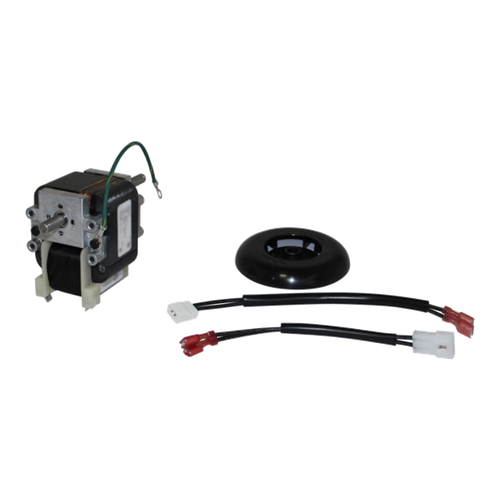
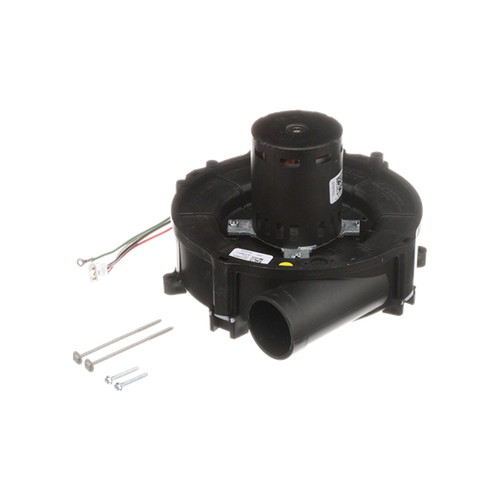
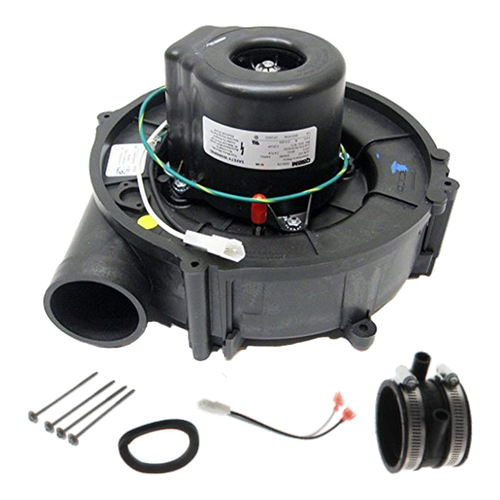
- Inducer motor assemblies: the motor, blower wheel and housing as one unit, built for a specific furnace family. This is the most common OEM replacement.
- Draft inducers: standalone inducers and motors for furnaces, boilers and oil or gas appliances, including universal draft inducers that mount on 5 to 8 inch flue pipe.
- Power venters: sidewall venting systems for gas and oil appliances, rated by BTU input and vent diameter.
- Venter controls: controls that interlock a power venter or inducer with the burner, so the burner can fire only when the venter proves draft.
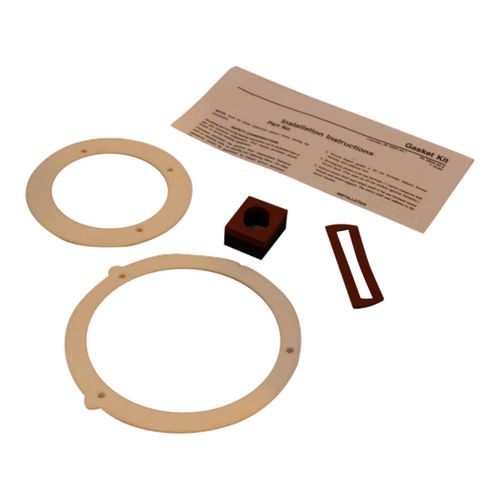
- Inducer gaskets: the gasket between the inducer and the collector box or heat exchanger. Replace the gasket whenever an inducer is removed to prevent flue gas leaks.
Matching a replacement inducer
Inducers are among the most model-specific parts on a furnace. Use these details:
- OEM part number. The furnace's parts list or the label on the inducer housing gives the service part number. Search it here; listings show the part numbers they replace when the manufacturer publishes them.
- Furnace model and serial number. The same furnace family can use different inducers by cabinet width, input and production year.
- Voltage and phase. Most residential inducers are 115 to 120-volt single phase. Some commercial equipment uses 208/230-volt or three-phase motors. Use the Voltage and Phase filters to narrow the list.
- Number of speeds. Single-stage furnaces use one-speed inducers; two-stage furnaces use two-speed inducers; modulating furnaces may use variable-speed inducers controlled by the board.
- Rotation. Motors are clockwise (CW) or counterclockwise (CCW) viewed from a specific end. The wrong rotation moves almost no air.
- Housing orientation and outlet. Outlet position and size must line up with the vent connection and the furnace's vent options.
| Spec | Where to find it | Why it matters |
|---|---|---|
| Part number | Inducer label, furnace parts list | Fastest way to a direct-fit replacement |
| Voltage and phase | Motor nameplate | Wrong voltage burns out the motor |
| Speeds | Motor label, furnace staging | Two-stage furnaces need two-speed inducers |
| Rotation (CW or CCW) | Motor nameplate or arrow on housing | Reverse rotation fails the pressure switch |
| Vent diameter | Vent connector, power venter rating | Power venters are rated by pipe size and BTU input |
Signs an inducer is failing
- Loud grinding, rattling or squealing when the furnace starts, usually worn motor bearings.
- The inducer hums but does not spin, or starts slowly and only after a push.
- The inducer runs but the furnace flashes a pressure switch code. Check the pressure switch hose for water or cracks and the vent for blockages before condemning the inducer.
- Water dripping from the inducer housing or rust on the motor, often caused by a blocked condensate drain on 90 percent furnaces.
- The smell of flue gas near the furnace, which can indicate a cracked housing or failed gasket. Shut the furnace off and have it inspected.
Many inducer complaints are really vent problems: a crushed or disconnected vent, snow or a bird's nest at the termination, or water trapped in a sagging PVC run. A technician should check the vent and the pressure switch circuit before replacing the motor.
Installation and safety
Inducers and power venters are part of the appliance's combustion and venting system, so a qualified technician should install them following the equipment manufacturer's instructions and local codes. Always install a new gasket, reconnect the pressure switch tubing to the correct port, confirm the inducer turns freely and test that the pressure switch closes and opens at the right points. After any venting work, the installer should check for flue gas leaks and verify carbon monoxide levels are within the manufacturer's limits.
Inducer maintenance that extends motor life
An inducer has no routine lubrication on most modern furnaces, but a few simple checks during an annual tune-up catch problems early. The technician should listen for bearing noise at start-up, look for rust streaks or water at the housing seams, confirm the pressure switch hose is clear and pitched so water drains away from the switch, and verify the condensate trap and drain lines on high-efficiency furnaces are clean and flowing. On older induced-draft furnaces with oil ports, a few drops of non-detergent motor oil each season keep the bearings quiet. Keeping the furnace filter clean and the vent termination clear of snow, leaves and nests also reduces strain on the motor.
OEM versus aftermarket inducers
OEM inducer assemblies are built to the original airflow, mounting and vent dimensions of your furnace, so they are the safest choice for proper draft and pressure switch operation. Universal and aftermarket inducers can work when they are listed for your furnace model, but always confirm the housing outlet, mounting pattern, wheel size, voltage, speed and rotation before ordering. When in doubt, the furnace manufacturer's parts list is the final word.
Shopping this category
Narrow the list by brand, part type, voltage, number of speeds, rotation and phase. Each listing shows the manufacturer part number, the numbers it replaces and the quantity in stock now. If you are unsure which inducer your furnace uses, call 1.888.509.3391 with your furnace model and serial number and we will help confirm the part.
Frequently asked questions
Can I replace just the inducer motor instead of the whole assembly?
On some furnaces the motor is sold separately, but most manufacturers now supply the inducer as a complete assembly. A full assembly with a new wheel and housing usually restores the correct draft and avoids balance problems.
Why does my new inducer run but the furnace still will not light?
The control also needs the pressure switch to close. Check the switch, its hose, the vent and the condensate drain. A blocked drain trap on a high-efficiency furnace is a common cause.
What is the difference between an inducer and a power venter?
An inducer is built into the appliance and moves flue gas from the heat exchanger. A power venter is a separate fan, usually mounted at a sidewall, that creates draft for an appliance that would otherwise vent through a chimney.
Is an inducer motor universal?
Most furnace inducers are model specific because the housing has to match the collector box and vent. Universal draft inducers exist for flue pipe applications on boilers and other appliances.
How long does a draft inducer last?
Many last 10 to 15 years. Heavy cycling, condensate exposure and dust in the bearings shorten their life.
Do I need to replace the gasket?
Yes. The gasket seals flue gas inside the furnace. Reusing an old, compressed gasket risks a combustion gas leak.


