
-
$178.69
- 🚚Qualifies for FREE Shipping
- ⚡Fast Shipping
Ships in 3-5 Business Days5 in stock -
$129.07
- 📦$19.95 Flat-Rate Shipping
- ⚡Fast Shipping
Ships in 3-5 Business Days26 in stock -
$104.96
- 📦$19.95 Flat-Rate Shipping
- ⚡Fast Shipping
Ships in 3-5 Business Days72 in stock
Buying guidance
Venting & Draft Controls
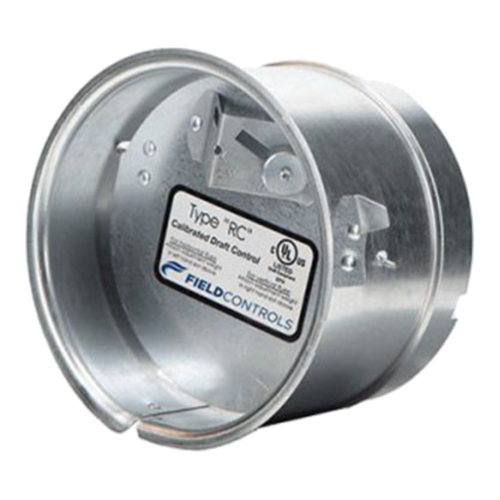
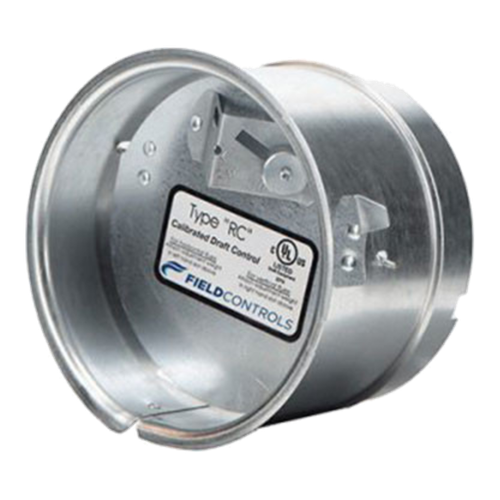

A fuel-burning appliance is only as safe and efficient as its venting. Chimneys and flue pipes have to remove combustion gases at a steady rate: too little draft and gases spill back into the room, too much draft and heat is pulled up the chimney before it reaches the heat exchanger. The parts in this category manage that balance. You will find barometric draft regulators, draft hoods and diverters, and draft safety switches for oil, gas, wood and coal appliances that vent into a chimney.
We carry draft controls from Field Controls along with OEM draft hoods and venting parts, each with live stock counts. This guide explains how draft control works, how to size and install a barometric damper, and how to recognize venting problems before they become dangerous.
What draft is and why it changes
Draft is the slight negative pressure in a chimney created by hot flue gas rising through it. It is measured in inches of water column (in. W.C.) with a draft gauge or combustion analyzer. Draft is not constant. It increases on cold, windy days and with taller chimneys, and it drops on warm days, with short or oversized chimneys and when exhaust fans run in the building. Appliance manufacturers specify a target draft range at the flue outlet or over the fire, and draft controls keep the appliance inside that range.
Types of draft and venting controls
Barometric draft regulators
A barometric draft regulator, also called a barometric damper, is a weighted gate installed in a tee on the flue pipe. When chimney draft rises above the setting, the gate swings open and lets room air into the flue, which steadies the draft at the burner. Barometric regulators are standard on oil-fired furnaces and boilers and are also used on some gas, wood and coal appliances where the manufacturer permits. Models differ by pipe diameter, fuel type and whether they are single-acting (open only into the flue) or double-acting.
Draft hoods and draft diverters
Natural-draft gas appliances such as atmospheric water heaters and older furnaces use a draft hood. It isolates the burner from changes in chimney draft and gives flue gas a path to spill if the chimney is blocked. Draft hoods are specific to the appliance and must match the vent connector diameter.
Draft safety and spill switches
Spill switches and draft proving switches shut down the burner if flue gas spills out of the draft hood or if a power venter fails to prove draft. They are an important safety layer on appliances that share a chimney or vent into tight homes.
Sizing a barometric draft regulator
Barometric regulators are sized by the flue pipe diameter at the point of installation. Use the Pipe Size filter to find the right diameter, typically 5, 6, 7, 8, 10 or 12 inches for residential and light commercial work.
| Flue diameter | Typical use | Notes |
|---|---|---|
| 5 in. to 6 in. | Residential oil furnaces and boilers | Most common residential sizes |
| 7 in. to 8 in. | Larger oil boilers, combination appliances | Check appliance flue collar size |
| 10 in. to 12 in. | Light commercial boilers and multiple appliances | Follow the manufacturer's sizing tables |
Always follow the regulator's installation instructions for its position in the flue, its orientation (horizontal or vertical pipe) and its distance from the appliance. The gate must hang level and swing freely, and it is adjusted with a draft gauge while the burner is firing.
Signs of a venting problem
- Soot or rust marks around the barometric damper, draft hood or flue pipe joints.
- A barometric gate that is stuck, bent, painted shut or flutters constantly.
- Oil burners that rumble, smoke or puff back on start-up.
- Condensation, white streaks or dripping at the base of the chimney, a sign of low draft or an oversized chimney.
- Carbon monoxide alarms or a smell of combustion products near the appliance. Leave the area and have the system inspected before using it again.
Installation and safety
Draft controls affect combustion and carbon monoxide safety. They should be installed and adjusted by a qualified technician using a draft gauge and combustion analyzer, following the appliance manufacturer's instructions and the codes that apply where you live. Some appliances are not approved for a barometric damper, and venting requirements differ for gas, oil and solid fuel, so confirm what the appliance manufacturer and your local code authority allow before installing one. Never install a barometric damper on a positive-pressure vent or a vent system that the appliance manufacturer prohibits.
Barometric damper or power venter?
A barometric damper limits excess draft; it cannot create draft where there is none. If a chimney is too short, too cold or too large for the appliance, the fix may be a chimney liner, a vent resize or a power venter. You will find power venters and venter controls in our Inducer & Draft Motors category.
Draft testing during a tune-up
A draft check takes only a few minutes and is part of every proper heating tune-up. With the appliance running at steady state, the technician drills or uses a test port in the flue pipe between the appliance and the barometric damper, measures draft with a gauge, and on oil appliances also measures over-fire draft through the observation port. The difference between the two readings shows whether the heat exchanger or flue passages are restricted. The barometric gate is then adjusted until draft sits in the manufacturer's range, and a combustion analyzer confirms oxygen, carbon dioxide, stack temperature and carbon monoxide are where they should be. Recording these numbers each year makes it easy to spot a chimney or heat exchanger problem before it becomes a safety issue.
Choosing between single-acting and double-acting dampers
A single-acting barometric damper opens only toward the flue to relieve excess draft. A double-acting damper can also swing outward, which lets flue gas spill into the room if the chimney becomes blocked. Double-acting types are used where an appliance manufacturer or code calls for them, often with gas appliances, and should be paired with a spill switch or carbon monoxide protection. Oil appliances normally use single-acting dampers. Always use the type the appliance manufacturer specifies.
Shopping this category
Use the filters to narrow by brand, part type and pipe size. Every listing shows the manufacturer part number, any cross-references the manufacturer publishes and how many are in stock right now. For help choosing a draft control, call 1.888.509.3391 with the appliance model, fuel type and flue pipe size.
Frequently asked questions
Do gas appliances need a barometric damper?
Most natural-draft gas appliances use a draft hood instead. Some gas appliances allow a barometric damper, usually a double-acting type, but only when the appliance manufacturer and local code permit it.
What draft setting should my oil burner have?
Follow the burner and appliance manufacturer's specification. Many residential oil appliances call for a small negative draft over the fire, measured with a draft gauge while the burner runs.
Why is my barometric damper always open?
The chimney is producing more draft than the setting, which is common in cold weather and with tall chimneys. That is its job. If it is wide open all the time, have the setting and the chimney sizing checked.
Can I install a barometric damper on a horizontal pipe?
Yes, most can be installed on horizontal or vertical pipe as long as the gate hangs level and plumb according to the instructions.
What does a draft hood do?
It separates the burner from changes in chimney draft and gives flue gas a place to spill if the vent is blocked, protecting the flame and the heat exchanger.
Should I add a spill switch to my water heater?
Many newer water heaters already include one. On older natural-draft appliances, a spill switch adds an extra shutdown if flue gas backs up. Have a technician confirm compatibility with your appliance.


