null
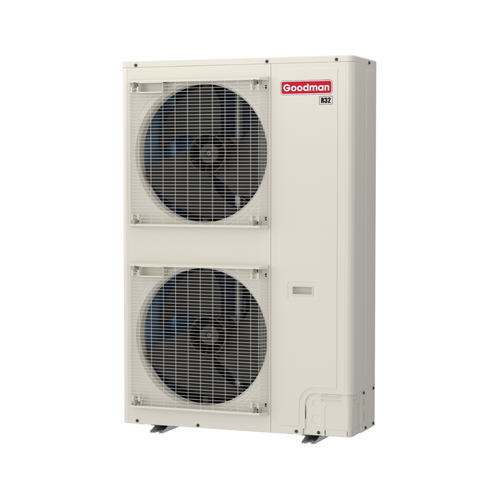
3.5 Ton Air Conditioner Condenser

3.5 Ton Air Conditioner Condenser

A failed or undersized condenser in the middle of summer is not a problem that waits for a convenient repair window. The outdoor unit is the heart of a split air conditioning system, and when it stops working or cannot keep up with the load, everything downstream suffers. HVAC365 stocks a broad selection of 3.5 ton condensers so that whether you are replacing a failed unit at a residence, spec-matching for a commercial job, or restocking a fleet, you are not waiting weeks for something to ship from a warehouse halfway across the country.

A 3.5 ton condenser moves 42,000 BTU of heat out of a conditioned space per hour. That output sits squarely in the range used for mid-to-large residential homes, smaller multi-unit residential buildings, and light commercial spaces. Homeowners replacing an aging system, contractors pulling a condenser for a specific job, and distributors buying in volume for fleet or wholesale stock all shop this category. The configuration choices, efficiency tiers, and code considerations differ a bit by application, but the equipment itself is the same pool of products.

Picking the Right 3.5 Ton Condenser

Tonnage is where the selection starts, but it is not where it ends. Confirm that a 3.5 ton condenser is actually what the load calculation calls for before you commit. A Manual J load calculation (or an equivalent method) is the correct way to establish cooling load for a space. Square footage is a rough proxy at best. A 2,100-square-foot house in Phoenix has a dramatically different cooling load than the same footprint in Portland, and sizing off square footage alone without accounting for insulation, window area, orientation, and internal gains is one of the most common and expensive mistakes in residential HVAC. An oversized condenser short-cycles, which raises humidity and wears components faster. An undersized one runs constantly and still cannot hit setpoint on the hottest days.

Once tonnage is confirmed, efficiency tier is the next real decision. Higher SEER2 ratings reduce operating costs over the life of the equipment, but they carry a higher upfront price. The right tradeoff depends on local utility rates, how many hours per year the system will run, and whether utility rebates in the buyer's area are available for equipment above a certain efficiency threshold. Local code may also set a minimum efficiency floor that narrows the choice. Check with the local authority having jurisdiction and the applicable utility before settling on a tier.

Application type matters too. A residential replacement operates under residential load profiles and is governed by residential code. A light commercial install may involve different voltage requirements, different disconnect and overcurrent protection rules, and different expectations about runtime and duty cycle. A condenser that is perfectly appropriate for a single-family home may not be the right choice for a small retail or office space where the system runs longer hours or faces a different kind of load. The installation-readiness factors covered further down are worth reviewing before finalizing any commercial selection.

For distributors and contractors buying for multiple jobs or stocking for resale, lead time and availability become part of the selection calculus alongside technical fit. Stocking a commonly specified tonnage like 3.5 ton can reduce job delays when equipment needs to move fast.

Buying Tips

  • Match the refrigerant type of the full system, not just the tonnage. A condenser specified for a newer refrigerant will not work with an existing line set and indoor coil designed for an older refrigerant without additional changes. Verify the refrigerant designation of the condenser against the indoor unit and the existing line set before ordering.
  • Check the AHRI certificate, not just the box. Rated efficiency figures on a condenser are only valid when that condenser is paired with a compatible indoor coil and air handler from the same matched system listing. Mixing components that are not on the same AHRI certificate can void the efficiency rating and, in some cases, the warranty.
  • Do not assume the existing disconnect and breaker are sized for the new unit. Replacement condensers do not always draw the same amperage as the unit they replace. Pull the minimum circuit ampacity and maximum overcurrent protection specs from the new unit's nameplate before assuming the existing electrical infrastructure carries over.
  • Factor in the refrigerant transition. The industry has been moving away from older refrigerant types. If the existing system uses a refrigerant that is being phased down, a condenser replacement may be a good time to evaluate whether a full system replacement makes more sense than patching a system whose refrigerant supply will become increasingly expensive and limited.

How 3.5 Ton Condensers Are Configured

Within the 3.5 ton category, the most meaningful distinctions are efficiency tier, staging type, and whether the unit is designed for residential or light commercial application.

  • Single-stage condensers run at full capacity or not at all. They are simpler, less expensive to purchase, and easier to service. On a day where the cooling load is well below the design load (which is most days), a single-stage unit will short-cycle more than a variable or two-stage unit would.
  • Two-stage condensers operate at a lower capacity stage during lighter load conditions and ramp to full capacity when the load demands it. This reduces short-cycling, improves dehumidification, and can lower operating costs compared to single-stage at similar efficiency ratings.
  • Variable-capacity condensers modulate output across a wide range to closely match the real-time load. They deliver the most consistent temperature and humidity control and tend to have the highest efficiency ratings, but they also carry the highest purchase price and require compatible controls and indoor equipment.

Efficiency tier cuts across all three staging types. A single-stage unit at a higher SEER2 rating may outperform a variable unit at a lower rating in operating cost terms, depending on local conditions. Compare within the staging type that matches the application and budget, not across all types at once.

Residential and light commercial variants may look similar, but check the application rating. Some condensers are listed for residential use only. Others carry a light commercial rating that permits installation in commercial occupancies. The installation-readiness factors below cover what else changes between those two application contexts.

What It Takes to Install a 3.5 Ton Condenser

Site readiness is where a lot of condenser installs either go smoothly or generate expensive callbacks. Work through these before the unit arrives.

Electrical supply. Look up the minimum circuit ampacity and maximum fuse or breaker size from the condenser's nameplate or specification sheet before assuming the existing disconnect and panel wiring are adequate. These figures vary by model and do not always match the unit being replaced. Verify the supply voltage as well. Most residential condensers in this size class run on 240V single-phase, but light commercial applications may involve different voltage or phase requirements. Measure what is actually at the disconnect, and compare it against the spec sheet before ordering.

Refrigerant and line set. Check whether the new condenser uses the same refrigerant as the system it is replacing. If the refrigerant type is changing (which is increasingly common during system upgrades), the existing line set may need to be replaced or flushed, and the indoor coil must be compatible with the new refrigerant. A mismatched refrigerant type is not a field-fixable problem after the install.

Indoor coil and air handler compatibility. The condenser is one part of a matched system. The indoor coil must be compatible with the condenser for the rated efficiency to be achieved and the warranty to hold. Pull the AHRI-matched system listing and verify the indoor equipment before ordering the condenser. If the indoor coil is being replaced at the same time, confirm the complete matched system listing covers both units together.

Clearances and mounting. Measure the available pad space and compare it against the condenser's physical dimensions. Manufacturer minimum clearances for airflow and service access are published in the installation manual. A condenser installed too close to a wall, a fence, or another unit will restrict airflow, reduce efficiency, and potentially void the warranty. If the existing pad is not large enough for the replacement unit, account for pad work in the project scope.

Ductwork and airflow. The condenser itself does not move air through the house, but it is matched to an indoor coil that sits in the air stream. Verify that the existing duct system can handle the airflow the indoor unit requires. An undersized duct system will limit system performance regardless of the condenser's capacity or efficiency rating.

Controls and integration. Check whether the new condenser requires a compatible thermostat or communicating control system. Variable-capacity and some two-stage condensers require specific control wiring and thermostat compatibility that a standard single-stage thermostat cannot provide. Ask the manufacturer or check the installation manual before assuming the existing thermostat carries over.

Things You Should Know

Q: How do I confirm that 3.5 tons is the right size for my space?

A: Run a Manual J load calculation — or have a qualified technician run one. Square footage rules of thumb are too imprecise for a purchase this size. The sizing section above explains why undersizing and oversizing both cause real problems.

Q: Do I need to replace the indoor coil when I replace the condenser?

A: Not always, but verify compatibility first. The indoor coil must appear on the same AHRI-matched system listing as the new condenser. If the refrigerant type is changing, the coil almost always changes too. The coil and refrigerant compatibility points in the installation section above walk through exactly what to check.

Q: Can I install a residential-rated 3.5 ton condenser in a commercial building?

A: Not if the unit is rated for residential use only. Some condensers in this tonnage range carry a light commercial application rating; others do not. Check the application listing on the unit before specifying it for a commercial occupancy. The application-type discussion above and the installation section both cover what changes in a commercial context.

Q: What refrigerant do 3.5 ton condensers use?

A: It depends on the specific unit. The industry is in the middle of a refrigerant transition, and products in this category may use different refrigerant types depending on the manufacturer and model year. Check the refrigerant designation on the condenser's nameplate or spec sheet, and verify that it matches the indoor coil, line set, and any existing refrigerant in the system before purchasing.

Q: Will my existing electrical disconnect and breaker work with a new condenser?

A: Not necessarily. Minimum circuit ampacity and maximum overcurrent protection size vary by model. Pull those figures from the new unit's nameplate before assuming the existing infrastructure carries over — the electrical supply checklist above details what to verify on site.

Q: Is a higher SEER2 rating always worth the extra cost?

A: It depends on local utility rates, annual runtime hours, and available rebates. The efficiency-tier discussion above covers the tradeoffs. Check with your local utility for rebate thresholds before making the final call.

Q: Can a 3.5 ton condenser be paired with any air handler?

A: No. The condenser must be matched to a compatible indoor coil and air handler from the same AHRI-listed system combination. Staging type also has to be compatible with the control wiring and thermostat. The coil compatibility and controls points in the installation section above cover both requirements in detail.

HVAC365 ships 3.5 ton condensers nationwide, which matters when a household is without cooling in summer heat or when a contractor's job schedule cannot absorb a long wait for equipment. The catalog covers a broad range of efficiency tiers and configurations, from straightforward residential replacements through distributor and volume orders, so the selection that comes up when you search is stocked and ready, not a placeholder for something on a slow boat.

Compare
Show: 12 24 48

Fast Shipping

Easy Returns

Warranty Coverage

Financing Available