null
Gas/Electric Rooftop Units

Gas/Electric Rooftop Units

Gas/Electric Rooftop Units: How to Choose a Packaged Gas Heat RTU

A gas/electric rooftop unit combines a packaged air conditioner with a natural gas or LP furnace section in one cabinet. In cooling mode it works like any packaged RTU. In heating mode, an induced-draft burner fires into a tubular heat exchanger, and the same supply blower that moves cooled air in summer pushes heated air through the ductwork in winter. For buildings that already have gas service, this is the most common commercial rooftop configuration in the United States, from a 3-ton unit over a dental office to a 25-ton unit over a grocery store.

This guide covers what matters specifically about the heating side: heat input and output, temperature rise, heat exchanger materials, single-stage versus two-stage and modulating gas, natural gas versus propane, venting and clearances, and when a gas/electric unit is the right call versus a heat pump.

How does a gas/electric rooftop unit heat a building?

On a call for heat, the control board starts the induced draft (combustion) blower, proves airflow through a pressure switch, opens the gas valve, and lights the burners with a hot surface or spark ignitor. A flame sensor confirms ignition. After a short delay to let the heat exchanger warm up, the supply blower starts and moves building air across the outside of the heat exchanger tubes. Combustion products stay inside the tubes and are pushed out through the unit's vent hood by the inducer. High-limit and rollout switches shut the burners down if the heat exchanger overheats or flame escapes the burner area.

What is the difference between heat input and heat output?

Gas heat sections are listed by input in Btu/h, which is the rate of fuel energy being burned. Output, or heating capacity, is the input multiplied by the thermal efficiency. Federal standards for gas-fired commercial warm air furnaces, which include the gas sections of packaged rooftop units, require a minimum thermal efficiency of 81 percent for units manufactured from January 1, 2023 onward. A 150,000 Btu/h input heat section at 81 percent delivers roughly 121,500 Btu/h to the airstream.

Most manufacturers offer two or three gas heat sizes for each cabinet, often described as low, medium, and high heat. Typical inputs run from around 40,000 to 125,000 Btu/h on 3 to 5 ton units and from about 120,000 to over 300,000 Btu/h on 10 to 25 ton units. Choose the heat section based on the building's heating load, including the ventilation air the unit must heat, not simply the largest option available.

Why does temperature rise matter on a gas RTU?

Every gas heat section has a published temperature rise range, often something like 20 to 50°F or 30 to 60°F depending on the size. Temperature rise is the difference between return air and supply air in heating. If the rise is too high, airflow is too low for the burner, the heat exchanger runs hot, and limit switches trip, which shortens heat exchanger life. If the rise is too low, the supply air feels cool and flue gas may condense inside the heat exchanger. A larger heat section on the same blower means a higher rise, which is one reason the biggest heat option is not automatically the best one. Set airflow in heating so the measured rise falls within the nameplate range.

Aluminized vs stainless steel heat exchanger: which one do I need?

Standard gas RTUs use aluminized steel heat exchanger tubes, which perform well in typical applications where the air entering the heat exchanger stays warm enough to prevent condensation. Stainless steel heat exchangers resist corrosion from condensed flue gas and are the better choice when:

  • The unit brings in a high percentage of outdoor air, so the mixed air entering the heat section can be cold in winter.
  • The building is in a cold climate with long heating seasons and low return air temperatures.
  • The application involves high humidity or corrosive air, such as pools, kitchens with makeup air, or some industrial spaces.
  • The owner wants maximum heat exchanger life and is willing to pay the upcharge.

Manufacturers publish a minimum entering air temperature for their heat exchangers, commonly in the 40 to 55°F range. If the design mixed-air temperature is below that, stainless steel is usually required. Heat exchanger warranties also often differ between aluminized and stainless options.

Is two-stage or modulating gas heat worth it?

Single-stage gas heat fires at 100 percent whenever it runs. Two-stage gas heat adds a low-fire stage, typically somewhere around 60 to 70 percent of full input, that handles mild days and maintains temperature after warm-up, with high fire reserved for morning recovery and cold snaps. Modulating gas heat varies the firing rate across a wider range and is used where tight discharge air control is needed, such as units serving variable air volume systems or high-outdoor-air applications.

Benefits of staging include fewer on/off cycles, more even space temperatures, less stratification in high-ceiling spaces, and reduced stress on the heat exchanger. Many energy codes and utility programs favor staged heat, and two-stage heat is frequently paired with two-stage cooling and a multi-speed supply fan.

Can a gas/electric rooftop unit run on propane (LP)?

Most units ship set up for natural gas and can be converted to LP with a manufacturer's conversion kit, which typically includes burner orifices and a gas valve spring or regulator change. The conversion must be done by a qualified technician and labeled on the unit. Typical gas pressures differ substantially between the two fuels:

FuelTypical inlet supply pressureTypical manifold pressure
Natural gasAbout 5 to 10.5 in. w.c.About 3.5 in. w.c.
Propane (LP)About 11 to 13 in. w.c.About 10 in. w.c.

These are common industry values; always set pressures to the unit's installation manual. At altitudes above 2,000 feet, gas input generally must be derated per the manufacturer's high-altitude instructions and the fuel gas code.

How are gas rooftop units vented?

Packaged gas RTUs are self-venting. The induced draft blower pushes flue products out through a vent hood on the side of the cabinet, so no field-installed chimney or flue pipe is needed. What does matter is the location of that vent relative to other things on the roof. The National Fuel Gas Code (NFPA 54) and the International Fuel Gas Code set minimum distances between mechanical draft vent terminals and forced-air inlets; a common requirement is that the vent be at least 3 feet above any forced-air inlet located within 10 feet. That includes the outdoor air intake of a neighboring RTU, makeup air units, and exhaust fans. Plan unit orientation on crowded roofs so flue gas is not drawn back into fresh air intakes.

What gas piping is required on the roof?

The gas line must be sized for the total connected load at the available supply pressure, with a manual shutoff valve and a sediment trap (drip leg) at each unit, and supported off the roof surface. Many installers run gas through the curb so piping is protected and concealed; others pipe through the side of the cabinet. Check whether the unit requires a minimum supply pressure that exceeds a low-pressure building system, which would require a pounds-to-inches regulator.

When should I choose a gas/electric unit over a heat pump?

Gas/electric RTUs make the most sense when:

  • Gas service is already on the roof or easy to extend.
  • Winter design temperatures are cold, where heat pump capacity drops and electric backup would run often.
  • The unit handles a large amount of outdoor air, which needs strong heating capacity on cold mornings.
  • Local gas rates are low compared with electricity.
  • The electrical service cannot support large electric heat kits.

A heat pump is usually the better choice in mild climates, in all-electric buildings, or where local codes or owner goals favor eliminating on-site combustion. Some jurisdictions have adopted electrification policies that affect new gas equipment, so confirm local rules early in the project.

What gas/electric rooftop units are available here?

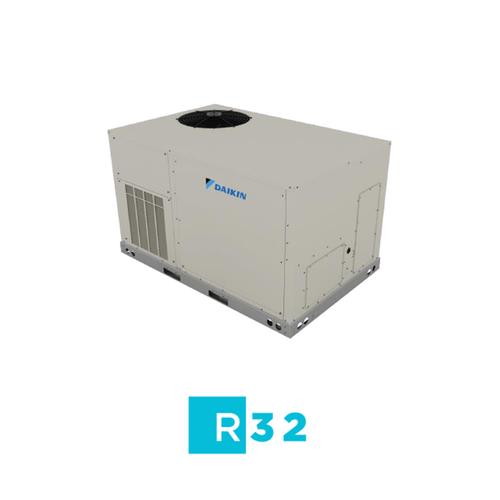
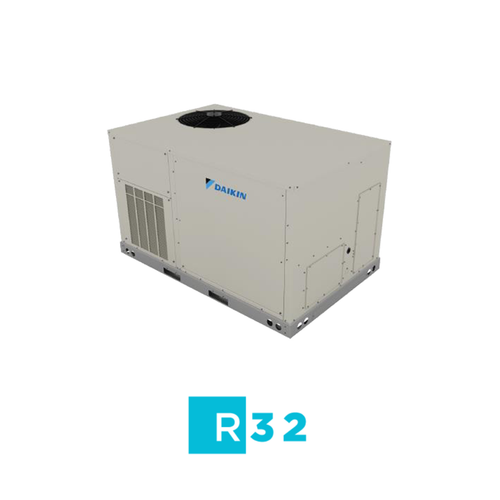
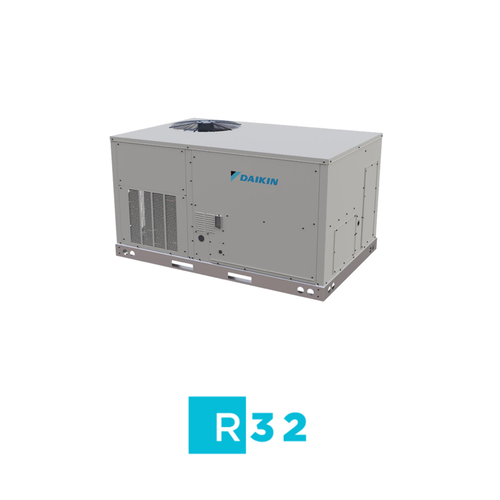
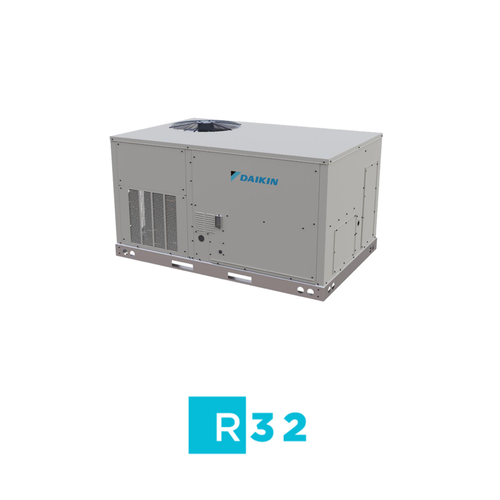
This category features Rheem Commercial Renaissance Line Classic gas/electric packaged units, including the RGECYB, RGEDYB, and RGEGYB families. They use R-454B refrigerant on the cooling side and are offered across a range of tonnages, voltages (208/230V three-phase and 460V, with 575V on select sizes), and gas heat inputs. Daikin light commercial gas/electric packaged units are also offered where available. Compare heat input options, heat exchanger material, staging, and electrical data on each product page, and match curbs and economizers from Rooftop Unit Accessories.

Gas/Electric Rooftop Unit FAQ

How efficient is the gas heat in a rooftop unit?

Packaged rooftop gas sections are non-condensing, with federal minimum thermal efficiency of 81 percent for units built from 2023 on. Cooling efficiency is rated separately in SEER2 or IEER.

Why does my gas rooftop unit trip the high limit?

The most common causes are low airflow from dirty filters, closed dampers, a slipping belt, or a blower set too slow for the heat section. Measure temperature rise and compare it with the nameplate range.

Do gas/electric RTUs need a separate flue?

No. They vent through an integral vent hood using the induced draft blower. You do need to maintain code clearances between the vent outlet and any nearby air intakes.

Can I add an economizer to a gas/electric rooftop unit?

Yes. Economizers are available factory-installed or as field accessories for most gas/electric RTUs, and many energy codes require them on units of about 4.5 tons and larger outside the hottest, most humid climate zones.

Does R-454B change anything about the gas heat section?

No. The refrigerant affects only the cooling circuit. The burner, heat exchanger, and venting work the same way, though the unit may include a refrigerant leak detection sensor required for A2L equipment.

Compare
Show: 12 24 48

Fast Shipping

Easy Returns

Warranty Coverage

Financing Available