
-
Comfort-aire
Comfort-aire 16 Ton 14.9 EER Belt Driven Front / Top Return Vertical Water Source Heat Pump Package Unit 460V 3ph | MBF192ALC30C01S
SKU: MBF192ALC30C01S
$47,531.00Ships in 3-5 Business Days5 in stock
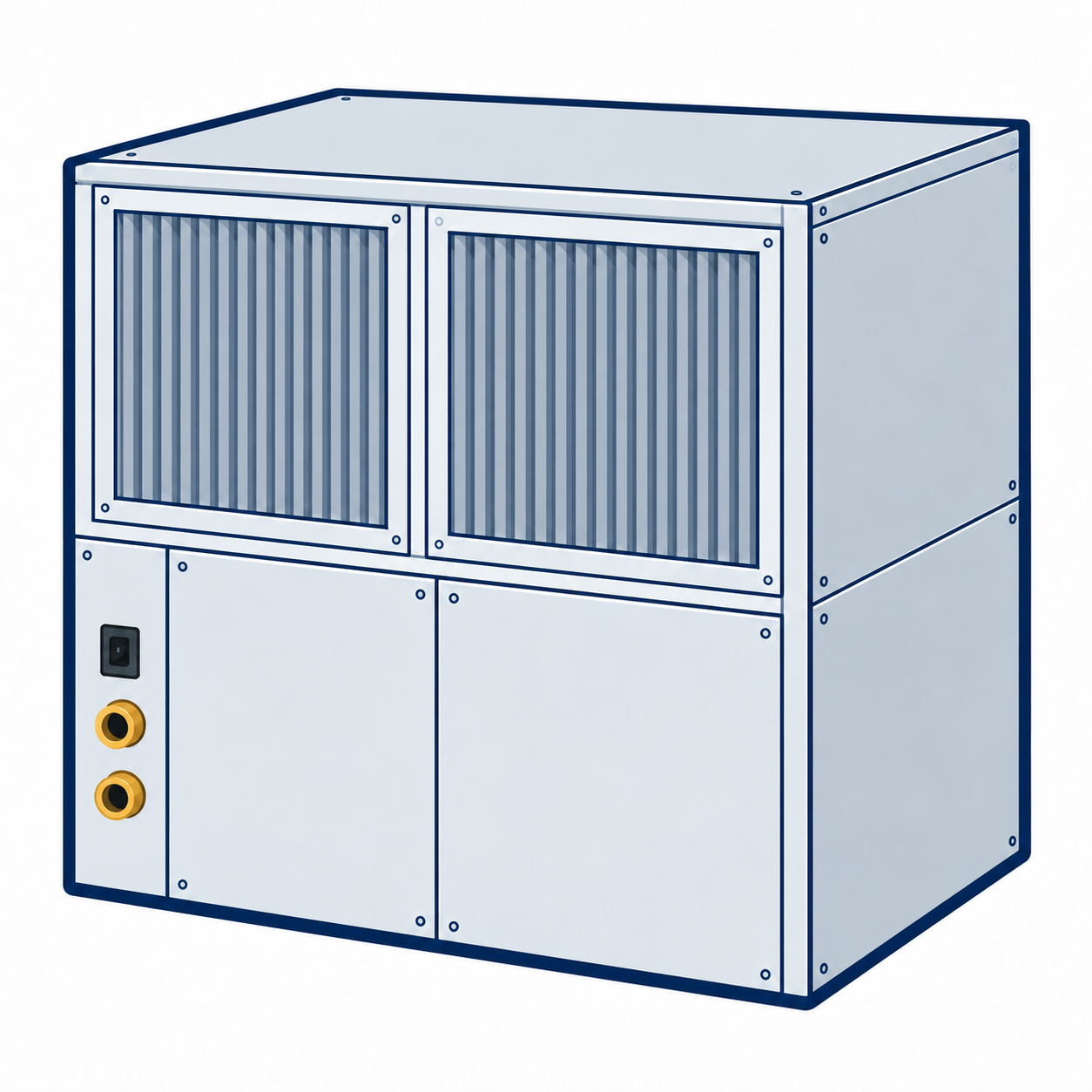
At 16 tons of capacity, a water source heat pump package unit is purpose-built for large conditioned spaces where a standard air-cooled system simply cannot do the job efficiently or reliably. These units pull heat energy from a water loop rather than outdoor air, which makes them a practical fit for multi-story commercial buildings, large retail or office spaces, hotels, and any facility already running a central hydronic loop. Whether you are replacing aging equipment on an existing loop, specifying for a new build, or sourcing units for a fleet or resale inventory, HVAC365 stocks a broad selection across this capacity class so that when a project calls for this specific equipment type, you are not left hunting across multiple suppliers or waiting on a special order.
Water source heat pump package units at this size sit firmly in the commercial and light-industrial segment of the Water Source Heat Pump Package Units lineup. The buyers who need them tend to fall into a few clear groups. Commercial building owners and facility managers replacing aging equipment in an existing hydronic loop system are one common case. Mechanical contractors and HVAC professionals specifying or installing units for a new build or renovation make up the bulk of orders. Distributors and wholesale buyers sourcing equipment for a regional fleet or resale inventory round out the picture. The needs across those groups are different, but the equipment is the same, and this page covers what you need to know to evaluate, select, and order correctly regardless of which role you are coming from.
Capacity is the starting point, but it is not the only factor. At the 16-ton mark you are already working with a large unit, and the most expensive mistake you can make is treating that tonnage as the only spec that matters. A few other decisions will shape which unit actually fits your application.
First, confirm that your load calculation genuinely calls for 16 tons. An oversized unit short-cycles, which means it runs in short bursts, never completes a full conditioning cycle, and puts unnecessary wear on the compressor. An undersized unit runs constantly and still cannot keep up on peak load days. Neither outcome is acceptable at this price point. Get a load calculation done before you commit, and make sure the number on the page matches what the math says the space needs.
Application type shapes several downstream spec decisions. A unit going into a hotel corridor fan-coil loop has different operating expectations than one anchoring a large office building's central plant. Water source heat pumps are rated to operate within specific entering water temperature (EWT) ranges, and the unit you select needs to match the temperatures your loop actually runs at across seasons. Check the manufacturer's published EWT limits against your system design, not just the nominal capacity.
Efficiency tier is worth a conversation with your utility before you finalize selection. At 16 tons, the energy cost difference between efficiency tiers compounds quickly over years of operation. Many utility programs offer rebates tied to minimum EER or COP ratings, and those thresholds vary by jurisdiction. Whether you are doing a like-for-like replacement or a full upgrade, look up what your utility and local energy code require before you lock in a model, because upgrading efficiency after purchase is not an option.
For distributors and contractors buying for a specific project or stocking a fleet, lead time and availability become part of the decision calculus as much as spec matching does. At this capacity tier, availability is not guaranteed across all configurations at all times, so confirming stock before committing to a project schedule is a practical step, not a precaution.
There are also site-readiness factors (electrical supply, water loop connections, controls integration) that will affect which unit you can actually install. Those are covered further down in the installation section so they stay in one place and are easy to reference when you are doing your pre-install walkthrough.
A 16-ton water source heat pump package unit is a self-contained system, meaning the compressor, heat exchanger, and air handler are all in one cabinet. That configuration simplifies installation compared to a split system and reduces the number of field refrigerant connections, which is a meaningful advantage on a commercial job where every hour of labor counts.
The most common application is a large commercial building that already has a central water loop. Hotels are a classic example: a building might run dozens of smaller zone units on a common loop, but a 16-ton unit is more likely serving a large ballroom, a conference center, or a significant retail anchor space within a mixed-use building. Office buildings with multi-floor open floor plates, large medical office suites, and university classroom buildings are other frequent applications.
It is also worth noting what this configuration is not. A water source heat pump is not the same as a geothermal heat pump, even though both use water loops. A water source unit depends on an existing building loop with a boiler and cooling tower (or fluid cooler) to maintain loop temperatures. If there is no existing loop infrastructure at the site, a water source heat pump is the wrong product category to be evaluating, and the project scope is fundamentally different.
In terms of configuration distinctions within this category, the most relevant splits tend to be around unit orientation (vertical vs. horizontal discharge), control package included vs. field-supplied, and voltage configuration. These are not universal across every manufacturer, but they are the variables most likely to matter when you are spec-matching to a specific building layout or electrical service. Where individual product listings within this category specify those configurations, use those details to narrow your selection rather than treating all 16-ton units as interchangeable.
A 16-ton water source heat pump package unit is a large, heavy piece of commercial equipment, and the site needs to be ready for it before it arrives. Working through these factors in advance is what separates a clean install from a costly delay.
Electrical supply. Verify the unit's nameplate voltage and phase requirements against the electrical service available at the installation point. At this capacity, three-phase power is typical, but do not assume, pull the spec sheet and check the nameplate data. The disconnect, breaker, and wire gauge all need to be sized to the unit's minimum circuit ampacity and maximum overcurrent protection ratings, not estimated. If the panel capacity or wire run is marginal, get an electrician involved before the unit is on site.
Water loop connections. Measure the supply and return connection sizes on the unit and match them to your loop piping. Check whether the unit requires isolation valves, a flow-control device, or specific balancing hardware at the connection points. The loop pressure and flow rate through the unit also need to fall within the manufacturer's specified range; running a unit outside of its design flow rate degrades performance and can cause long-term mechanical problems.
Airflow and ductwork. Even though the unit is self-contained, it still connects to a duct system on the air side. Look up the unit's rated external static pressure (ESP) and compare it against the resistance your duct system presents. Too much static pressure and the unit underperforms; too little (an open plenum application without proper design) and you may get airflow distribution problems. Make sure the supply and return connections are sized appropriately for the unit's rated CFM.
Condensate drainage. These units produce condensate during cooling operation. Confirm that a proper drain is accessible at the unit's drain pan connection point, that it is pitched correctly, and that it is not shared in a way that could cause backup. Some applications require a condensate pump if gravity drainage is not possible.
Physical clearances and mounting. Check the manufacturer's clearance requirements around the unit for service access before you finalize the installation location. A unit that is too close to a wall or a structural element may be unreachable for coil cleaning, filter changes, or compressor service. Also verify that the mounting surface or curb is rated for the unit's operating weight, not just its shipping weight.
Controls and building automation integration. As noted in the buying tips above, check what control interface comes standard and what requires a field-installed option. If the building runs a BAS (building automation system), the integration path needs to be confirmed before installation, not discovered afterward. Look up the available communication protocols in the unit's specification sheet and cross-reference with your BAS.
A: A water source heat pump package unit exchanges heat with a water loop rather than outdoor air. It contains the compressor, heat exchanger, and air handler in a single self-contained cabinet. Because it uses a water loop as its heat source and sink, it is not affected by outdoor ambient temperatures the way an air-cooled unit is, which makes it well-suited for large commercial buildings with central hydronic loop infrastructure.
A: Capacity must be determined by a proper load calculation — Manual J for residential, Manual N or an equivalent engineering load analysis for commercial. At 16 tons you are well into commercial territory, and rule-of-thumb estimates are not reliable at this scale. Oversizing causes short-cycling and excess humidity; undersizing means the unit cannot maintain setpoint on peak load days. Have the load calculation done before you select the unit.
A: Yes. A water source heat pump requires a central water loop — typically maintained by a boiler and cooling tower or fluid cooler — to function. If your site does not already have that infrastructure, a water source heat pump is not the right product type. The notes earlier on loop pressure, flow rate, and entering water temperature cover what to verify before you order.
A: EWT limits vary by manufacturer and model — there is no single standard range that applies across this category. Pull the spec sheet for the specific unit you are evaluating and compare its published EWT limits against your loop's actual operating temperatures across heating and cooling seasons. Installing outside that range hurts performance and can void the warranty.
A: Three-phase power is common at this capacity, but not universal. Check the nameplate voltage and phase specification on the specific unit before ordering. The electrical supply walkthrough covered earlier goes into more detail on how to size the disconnect, breaker, and wire run correctly.
A: No. Both use water as the heat exchange medium, but a water source heat pump operates on a closed building loop maintained by active mechanical equipment (boiler and cooling tower). A geothermal heat pump uses the ground or a groundwater well as the heat source and sink. The equipment and installation requirements are different. This category covers building-loop water source heat pump package units, not geothermal systems.
A: Required items vary by job, but commonly include isolation valves, a condensate drain (or pump if gravity drainage is not available), a properly sized disconnect and circuit breaker, and any control interface modules required for building automation integration. Loop balancing hardware and a startup commissioning report (often required by the manufacturer to activate the warranty) should also be planned for. Review the specific unit's installation manual for a complete list before finalizing the project scope.
HVAC365 ships 16-ton water source heat pump package units nationwide, and the catalog covers a broad range of configurations within this capacity class so that commercial replacements, new construction installs, and distributor volume orders can all be sourced from one place. At this size, having reliable access to the right unit when the project schedule demands it matters, and our stocked selection is built around exactly that kind of availability. Browse the listings above or reach out if you need help matching a specific unit to your application.
Comfort-aire
SKU: MBF192ALC30C01S

Fast Shipping

Easy Returns

Warranty Coverage

Financing Available
