The Brand Story
Amana: From an Iowa Colony’s Cold Room to the Hotel Wall
In 1934, in the small Iowa village of Middle Amana, a local man named George Foerstner accepted a challenge: build a beverage cooler that could be counted on to keep things cold. The Amana Colonies were a close-knit community, and Foerstner’s little refrigeration business soon became part of them. Ninety years later, the name of that community is stamped on the through-the-wall air conditioners humming beneath hotel windows, apartment sills and senior living rooms across the country.
Chapter 1 · 1934 to 1947
Walk-in coolers in Middle Amana
Foerstner's company started out building commercial walk-in coolers. In 1936 it was sold to the Amana Society, the community's governing body, and became its Electrical Department, which is how a village name became a brand name. The cold storage locker it introduced around that time found customers in grocery stores and restaurants. In 1947 Amana produced the first upright freezer designed for the home, the kind that would soon stand in garages and basements across America.
Chapter 2 · 1965 to 1967
The microwave years
In 1965 the defense and electronics giant Raytheon acquired Amana. Raytheon had invented the microwave oven in 1947, and in 1967 the company introduced the countertop Radarange, the first popular microwave oven for the home kitchen. For a generation of Americans, Amana meant the microwave.
Chapter 3 · 1997 to 2006
One name, two families
In 1997 Goodman, the Houston air conditioning manufacturer, bought Amana. Goodman kept the heating and air conditioning business and in 2001 sold the appliance side to Maytag, holding on to the right to use the Amana name on HVAC equipment. Whirlpool has owned the Amana home appliance business since 2006. The Amana trademark itself belongs to Maytag and its related companies and is used under license for heating, cooling and packaged terminal air conditioners. That is why an Amana refrigerator and an Amana PTAC can share a logo but come from entirely different companies.
Chapter 4 · 2015 to today
The R-32 PTAC
The Goodman company that builds Amana air conditioning equipment is now part of Japan's Daikin. In October 2015 Daikin announced at a White House stakeholder meeting on reducing HFCs that it would build R-32 PTACs in the United States under the Amana brand, starting at the Goodman plant in Fayetteville, Tennessee, where Amana PTACs had long been assembled. The United States accounted for more than 85% of the world's PTAC market at the time, about 442,000 units in 2014 alone.
In 2016 Daikin opened a 4.2-million-square-foot campus near Houston that consolidated manufacturing, engineering, logistics and sales. Amana's current Distinctions PTAC literature lists Daikin Comfort Technologies Manufacturing in Houston as its maker.
The Lineup
What Amana builds today
Under the Amana heating and air conditioning name, the Daikin family builds central air conditioners, heat pumps, furnaces and packaged units, along with packaged terminal air conditioners and heat pumps for hotels, apartments, dormitories and senior housing. HVAC365 focuses on the PTAC side of the brand:
- Amana PTACs: through-the-wall units on R-32 refrigerant from 7,000 to 15,000 BTU, with efficiencies up to about 12.8 EER.
- Distinctions by Amana: the DCP cooling-with-electric-heat and DHP heat pump families, with efficiencies up to 13.1 EER, independent dual fan motors, gold fin seacoast coil protection and automatic emergency heat on heat pump models.
- PTACs with electric heat: cooling units with 2.5 kW to 5 kW resistance heaters, in 208/230V configurations.
- PTAC heat pumps: reverse-cycle models that heat with the compressor in mild weather and switch to electric heat when it gets colder.
- By size: 9,000 BTU, 12,000 BTU and 15,000 BTU units for different room sizes.
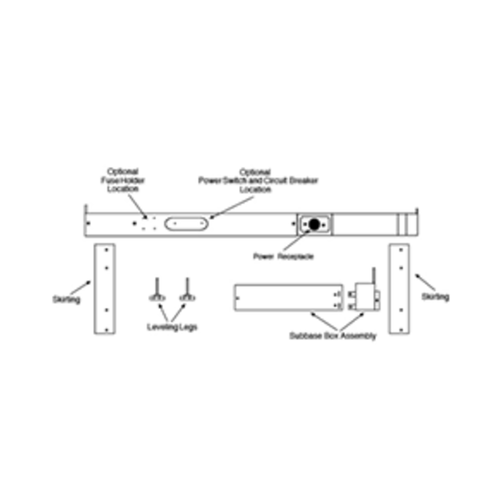
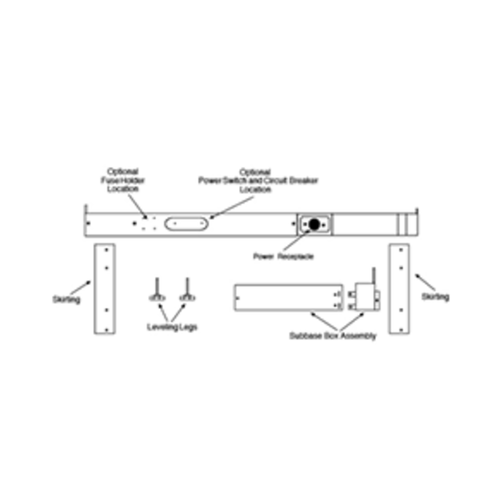
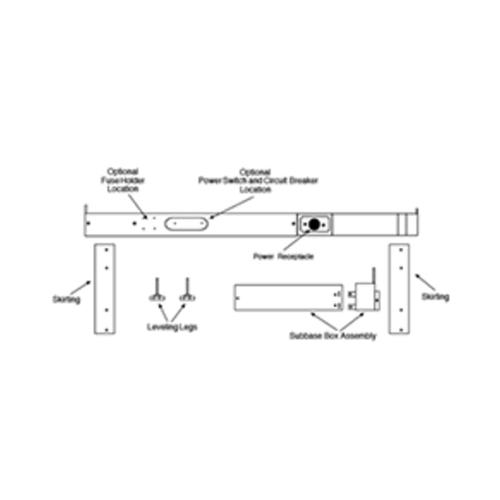
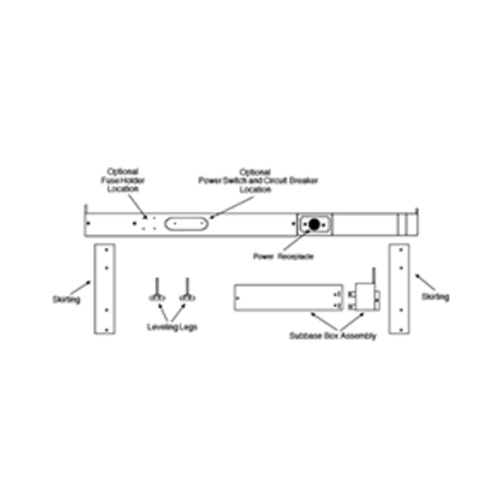
- Installation accessories: 42 by 16 inch insulated galvanized steel wall sleeves, terminal duct and grille kits for J and K series units, and electrical subbases with leveling legs.
In the Field
How a PTAC goes together
A PTAC is more than the chassis that slides into the wall. The installation starts with an insulated steel wall sleeve, typically 42 by 16 inches, set through the exterior wall. An outdoor grille covers the sleeve on the outside of the building. Inside, the chassis plugs into its own dedicated circuit, often with an electrical subbase that holds a receptacle and supports the unit on leveling legs. Current Distinctions models ship with an LCDI power cord, a safety cord that cuts power if it detects damage, and they spray condensate onto the hot outdoor coil, where it evaporates instead of dripping down the face of the building. Where a single unit has to serve more than one space, a terminal duct and grille kit carries conditioned air to an adjoining room.
The Promise
The Distinctions warranty
Amana's 2025 Distinctions PTAC literature lists a five-year limited warranty. The first year covers parts and labor. Years two through five cover parts and labor on certain sealed system components and certain functional parts only. Full terms are published by the manufacturer, and each unit's warranty certificate is the final word.
At a Glance
Amana by the numbers
- Founded
- 1934, Middle Amana, Iowa
- Founder
- George C. Foerstner
- First home upright freezer
- 1947
- Countertop Radarange
- 1967
- HVAC owner since
- 1997, Goodman
- Parent today
- Daikin
- Trademark
- Maytag, used under license
- PTAC refrigerant
- R-32
Questions
Frequently asked questions about Amana
Who makes Amana PTAC units?
Amana PTACs are built by the Goodman company, part of Daikin, under license to use the Amana name. Current Distinctions PTAC literature lists Daikin Comfort Technologies Manufacturing in Houston, Texas.
Is Amana HVAC the same company as Amana appliances?
No. Goodman bought Amana in 1997, kept the heating and cooling business and sold the appliance business to Maytag in 2001. Whirlpool now owns Amana appliances, while Daikin’s Goodman company builds Amana HVAC equipment and PTACs.
Where did the Amana name come from?
The name comes from the Amana Colonies in Iowa. George Foerstner’s refrigeration company, founded in Middle Amana in 1934, was sold to the Amana Society in 1936.
What refrigerant do Amana PTACs use?
Current Amana and Distinctions PTACs use R-32, a lower-GWP refrigerant. Daikin announced in 2015 that it would begin building R-32 PTACs in the United States under the Amana brand.
What is the difference between Amana and Distinctions PTACs?
Both come from the same manufacturer. Distinctions by Amana is a separate PTAC line with DCP and DHP model families, dual fan motors, gold fin seacoast coils and a five-year limited warranty.
What is a PTAC?
A PTAC, or packaged terminal air conditioner, is a self-contained through-the-wall unit that cools and heats a single room, common in hotels, apartments and senior housing.