
There are no products listed under this category.
Buying guidance
Individual Indoor & Outdoor Units
 Clearance Center
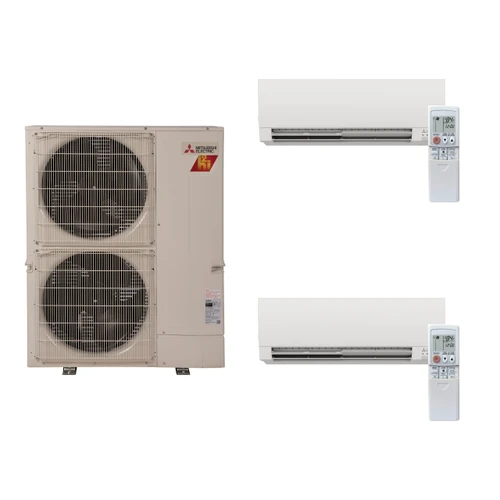
Mitsubishi R-410A Close-Outs
Remaining stock of Mitsubishi Electric R-410A ductless systems, priced to clear while quantities last.
Shop Mitsubishi Clearance
When a space needs precise, zoned climate control without the cost and complexity of running new ductwork, a commercial ductless mini split system is one of the most practical answers available. This category carries the individual indoor and outdoor units that make those systems work, and HVAC365 stocks a range of capacities and configurations so you can match the right equipment to whatever the job actually calls for, from a single server room to a multi-tenant commercial build-out.
These are the core components of a ductless system: the indoor air handler that conditions the space and the outdoor condensing unit that does the refrigeration work. Buying them as individual units (rather than as a matched set) is common when you are replacing one side of an existing system, spec-ing a custom multi-zone setup, or sourcing components separately to meet a specific project requirement. This category sits within the broader Commercial Ductless Mini Splits lineup, which covers the full range of commercial ductless equipment available at HVAC365.
The buyers who land here are not one type. Homeowners with a light commercial property handle their own replacements. Contractors and installers are pulling components for a specific job and need the right unit on hand before the crew shows up. Commercial facility managers are sourcing for a building they operate. And distributors are buying in volume to stock their own shelves or supply a fleet of installs. The right answers look a little different for each, but the questions that need answering first are mostly the same: right capacity, right application, right efficiency tier, and right fit for the site.
Picking the Right Indoor or Outdoor Unit
Capacity is the first decision and the one with the most downstream consequences. The right size unit for a space is not a guess or a rule of thumb; it comes from a proper load calculation that accounts for square footage, ceiling height, insulation, window area, occupancy, and internal heat loads like equipment or lighting. In a commercial context, those internal loads can be significant and easy to underestimate. An undersized unit runs constantly and still cannot keep up. An oversized unit short-cycles, which shortchanges dehumidification, wears components faster, and creates uncomfortable temperature swings. Confirm the BTU or tonnage your load calculation produces before you select a unit, not after.
Application type matters too, and it shapes more than just the capacity number. A light commercial space like a retail shop or small office has different operating demands than a server room, a medical suite, or a restaurant kitchen. Some of those environments need units rated for continuous-duty operation or for a wider operating temperature range. Others need specific unit styles, such as ceiling cassette, wall-mounted, or floor-console air handlers, because of how the space is configured and where the conditioned air needs to go. Think about the application before you narrow down to a unit style.
Efficiency tier is the third variable. Higher SEER and EER ratings reduce operating costs over the life of the equipment, and in many jurisdictions they are now a code floor, not just a nice-to-have. Utility rebate programs often tier incentives by efficiency level, so it is worth looking up what your utility offers before you finalize a spec, because the math sometimes closes the gap between a baseline-efficiency and a high-efficiency unit faster than buyers expect. If you are spec-ing for a client, ask them whether they want the lowest upfront cost or the lowest operating cost, because those are not always the same unit.
For distributors and contractors buying across multiple jobs, lead time and volume pricing factor into the selection decision just as much as specs do. A unit that is technically perfect but unavailable for six weeks is the wrong unit for a job that starts next week. That is a practical buying constraint worth building into the decision early, not an afterthought.
Buying Tips
- Do not mix and match indoor and outdoor units without confirming compatibility. Manufacturers certify specific indoor and outdoor unit combinations. Pairing components that were not designed to work together can void warranties, reduce efficiency, and in some cases cause the system to fail entirely. If you are replacing one side of an existing system, pull the model number of the unit staying in place and verify the match before ordering the new one.
- Check whether a matching line set is included or needs to be sourced separately. Individual units almost never include refrigerant line sets. The length and diameter of the line set need to match the manufacturer's specifications for the unit you are buying. Getting this wrong requires a service call before the system ever runs correctly.
- Think about the wall sleeve or mounting bracket before the unit ships. Some indoor unit styles require a specific bracket or wall sleeve that must be ordered at the same time. Finding that out after the unit arrives delays the install and sometimes means the crew has to make a second trip.
- Verify local refrigerant regulations before spec-ing. Some jurisdictions have restrictions or phase-out timelines for specific refrigerants. The unit you buy today needs to be serviceable in your area for its full expected life. Check local regulations and, if you are a contractor, check what refrigerants your recovery equipment handles before you commit to a unit.
Indoor Unit Styles and Outdoor Unit Types
The configuration choices in this category come down mainly to indoor unit style and, on the outdoor side, capacity class and whether the unit is designed for single-zone or multi-zone pairing.
Indoor air handlers come in several physical formats, and the right one depends on where conditioned air needs to go and what the space allows:
- Wall-mounted units are the most common style. They mount high on a wall and throw conditioned air horizontally across the room. They work well in most standard commercial spaces and are straightforward to install.
- Ceiling cassette units recess into a dropped ceiling and distribute air in multiple directions from a central point. They are a better fit for open floor plans where wall space is limited or where aesthetics matter, such as retail or hospitality settings.
- Floor-console units sit near the floor and push air upward. They work in spaces where ceiling or high-wall mounting is not feasible, or where the occupants benefit from air movement at a lower level.
- Ducted air handlers connect to short runs of ductwork to serve multiple outlets from a single indoor unit. These are worth considering when you need zoned distribution within a larger space without running a full conventional ducted system.
On the outdoor side, the key distinction is whether the unit is a single-zone condenser (paired with one indoor unit) or a multi-zone condenser (capable of connecting to multiple indoor units). Multi-zone outdoor units are a larger upfront investment but cost significantly less than installing separate single-zone systems for each space. If the project involves three or more zones in a single building, the multi-zone outdoor unit calculation usually favors consolidation. If you are buying for a single room or a one-for-one replacement, a single-zone condenser is typically the simpler and more cost-effective path.
What It Takes to Install One of These Units
Ductless mini split installations look straightforward from the outside, but the site conditions need to be right before the equipment ships, not after it arrives.
Electrical supply is one of the first things to verify. Measure the voltage and amperage available at the install location and compare that against the unit's minimum circuit amperage and maximum overcurrent protection requirements from the spec sheet. Most commercial mini split outdoor units require a dedicated circuit with a properly sized disconnect. Check whether the existing panel has an open breaker slot and sufficient capacity before you order. If a panel upgrade or new circuit pull is needed, that work has to be scheduled alongside, not after, the equipment order.
Look at where the condensate drain will go. Indoor mini split units produce condensate that has to be routed somewhere. Wall-mounted units typically drain by gravity if the install allows it, but low-ambient conditions, tight routing, or unfavorable building geometry sometimes require a condensate pump. Know the routing before the install day.
Line set length and routing affect system performance. Manufacturers publish maximum and minimum line set lengths for each unit. Exceeding the maximum requires additional refrigerant charge and may still affect efficiency and reliability. Measure the actual routing distance (not straight-line distance) between the indoor and outdoor unit locations before selecting equipment, and account for bends and elevation changes.
Operating temperature range is a real constraint, not a footnote. Ductless mini split outdoor units have rated heating and cooling operating limits. If the outdoor unit will be exposed to temperatures outside those limits (whether extreme cold in a northern climate or high ambient heat on a rooftop in a southern one), verify that the specific unit you are considering is rated for that environment. Units that operate outside their rated range run poorly or not at all.
Controls and integration vary by unit and manufacturer. Some units accept third-party thermostats or building automation system integration; others are limited to the manufacturer's own remote or wired controller. If the project requires integration with an existing BAS or a specific control interface, pull the controls specifications from the product documentation before finalizing the selection. This is easier to resolve at the spec stage than after the equipment is in place.
Clearances matter for both indoor and outdoor units. The outdoor condenser needs adequate clearance on all sides for airflow and service access. The indoor unit needs clearance above, in front, and at the sides per the manufacturer's installation manual. Check these requirements against the proposed mounting location before the install team shows up.
Things You Should Know
Q: Can I buy just an indoor unit or just an outdoor unit, or do I have to buy a matched set?
A: You can buy them individually, which is exactly the point of this category. Individual unit purchases are common for one-side replacements, custom multi-zone configurations, and jobs where the contractor is sourcing components separately. The critical requirement is that any indoor and outdoor unit you pair must be manufacturer-certified as compatible. Confirm compatibility before ordering using the manufacturer's submittal or engineering guide.
Q: How do I know what capacity I need?
A: Capacity comes from a load calculation for the specific space — not from square footage alone. The selection guidance above covers what goes into that calculation and why sizing errors are costly in both directions. If you do not have a load calculation in hand, that step comes before equipment selection.
Q: What is the difference between a single-zone and multi-zone outdoor unit?
A: A single-zone outdoor condenser pairs with one indoor air handler. A multi-zone condenser connects to multiple indoor units simultaneously, each potentially a different style or capacity, within the manufacturer's rated limits. The outdoor unit type section above covers when each option makes financial sense.
Q: Do these units come pre-charged with refrigerant?
A: Outdoor condensing units typically ship with a factory refrigerant charge sufficient for a line set up to a specified length. Line sets longer than that require additional refrigerant charged during installation by a certified technician. Check the spec sheet for the factory charge and the additional charge rate before the install. Indoor units do not contain refrigerant independently; the refrigerant circuit runs through both units via the line set.
Q: What electrical work is typically required before installation?
A: Most commercial mini split outdoor units require a dedicated circuit with a correctly sized breaker and a disconnect switch mounted near the outdoor unit. The installation section above walks through how to verify your panel can support that before the install date. Check the unit's nameplate and installation manual for the specific amperage and voltage requirements.
Q: Can a commercial mini split work in very cold or very hot outdoor temperatures?
A: Every outdoor unit has a rated operating temperature range for both heating and cooling mode. The installation section above covers how to find those limits and why checking them against your climate data matters. A unit that is not rated for your conditions will underperform or shut down on the days you need it most.
Q: Are line sets included with individual unit purchases?
A: Line sets are almost always sold separately. Source one in the correct diameter and length for your specific unit and install. Manufacturers publish the required specifications in the installation manual. The buying tips above flag this as a pre-ship item specifically to avoid install-day delays.
HVAC365 ships individual indoor and outdoor commercial ductless mini split units nationwide, with a broad, stocked catalog that covers a range of capacities and unit styles. Whether you are a homeowner handling a single-room replacement, a contractor pulling components for a commercial job, or a distributor sourcing in volume, the catalog is available without the friction of a regional distributor relationship or a minimum order requirement. If you need help matching a unit to a specific application or confirming compatibility with an existing system, reach out before you order, not after.


