null

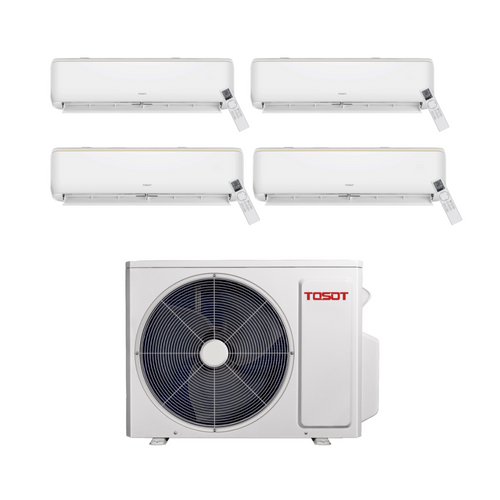
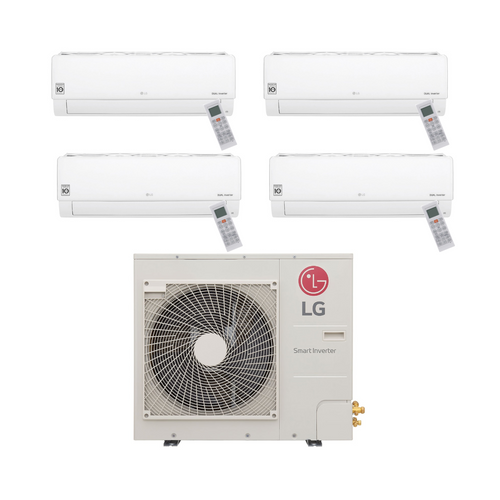
Ductless Mini Split Quad Zone

Running four rooms or zones off one outdoor unit solves a problem that ducted systems and window units simply cannot: independent temperature control in every occupied space, without tearing into walls or ceilings to add ductwork. When a job calls for exactly that, having the right system in stock matters, and HVAC365 carries the quad zone lineup specifically so contractors and homeowners are not waiting on a backorder when the project is ready to move. A quad zone ductless mini split heat pump connects one outdoor condenser to four separate indoor air handlers, letting each zone operate at its own setpoint independently of the others. That setup covers a wide range of real applications, from a homeowner who wants to condition four bedrooms without a whole-home duct overhaul to a contractor spec-ing a light commercial buildout where zoning flexibility is non-negotiable. Professional installers buying for a specific job, distributors sourcing inventory, and residential buyers tackling a retrofit are all working in this category, and the considerations that matter most to each of them differ enough to be worth unpacking.

Picking the Right Quad Zone System

The first thing to settle is total capacity and how it distributes across the four zones. A quad zone system's outdoor unit carries an aggregate capacity rating, and each indoor head contributes its own capacity to that total. The key is making sure the sum of indoor heads does not exceed what the outdoor unit is rated to handle, and that each individual head is appropriately sized for the space it conditions. A load calculation for each zone is not optional; guessing on capacity leads to short-cycling on mild days and insufficient conditioning on peak ones. Oversizing is a particularly common mistake in multi-zone installs because buyers size each head for worst-case and then add them up without accounting for simultaneous load diversity.

Application type shapes which system tier is worth considering. A residential replacement in a tight, well-insulated home has different operating demands than a light commercial space with high occupancy, large glass areas, or a kitchen generating its own heat load. Some systems are rated and listed specifically for commercial use; others are residential-only. Pulling the right system for the application matters beyond just capacity, so matching the equipment's rated application to the actual job is a step that should happen before anything else.

Efficiency is the other sizing-adjacent decision. Systems in this category span a range of efficiency ratings, and the right tier for a given job depends on local utility rebate thresholds and any minimum-efficiency requirements in the applicable energy code. Buyers who are eligible for rebates or tax incentives should look up the qualifying threshold before committing to a system, because efficiency is cheap to get right at the purchase stage and expensive to revisit after installation. Higher-efficiency systems cost more upfront and recover that cost over time in operating savings; the math on that tradeoff depends on local utility rates and how many hours per year the system actually runs. Distributors sourcing for volume stock, and professionals working across multiple jobs in different jurisdictions, often need to carry more than one efficiency tier for exactly this reason.

Buying Tips

  • Do not mix and match indoor heads from different manufacturers. Most quad zone systems are engineered as matched sets. The outdoor unit's refrigerant circuit, control logic, and capacity tables are calibrated for the indoor units the manufacturer certifies with it. Mixing in an off-brand head is likely to void the warranty and may produce a system that does not function correctly.
  • Check that the four indoor units you select are all compatible with the specific outdoor unit, not just the brand. Within a single brand, not every indoor head pairs with every outdoor unit. The compatibility matrix matters, and it is worth verifying against the manufacturer's published documentation before ordering.
  • Think about where each head will sit before you finalize the capacity split. A head rated for a certain capacity in a standard installation may not perform the same way in an unusual mounting position or a confined space. If one of your four zones is a server room, a sunroom, or a space with unusually high or low internal loads, factor that in when selecting that zone's head capacity, not after the fact.
  • Confirm refrigerant compatibility if you are adding zones to an existing system. If this is an expansion of an existing install rather than a new system, the refrigerant in the existing outdoor unit must match what the new heads require. Mixing refrigerant types is not a field fix.

How Quad Zone Systems Are Configured

Quad zone ductless systems share a common architecture: one outdoor unit, four indoor air handlers, refrigerant line sets connecting them. Within that framework, the main configuration decisions involve the type of indoor unit for each zone, since not all four heads have to be the same.

The most common indoor unit types found in quad zone setups include:

  • Wall-mount cassettes: The standard choice for most residential and light commercial zones. They mount high on the wall, distribute air horizontally, and work in most room layouts. This is the baseline configuration for the majority of quad zone installs.
  • Ceiling cassettes: Installed flush in a drop ceiling or framed-in opening, they distribute air in four directions and suit open-plan commercial spaces, hotel rooms, or any zone where wall space is limited or aesthetics matter. They require sufficient ceiling depth and access for installation and service.
  • Concealed duct (slim duct) heads: These hide inside a small plenum or soffit and connect to short duct runs, allowing the system to condition a space without a visible unit in the room. They suit applications where a finished interior cannot accommodate a visible head, such as a bedroom in a high-end renovation.
  • Floor-mount heads: Installed near floor level, these work in spaces where high-wall mounting is not practical, such as rooms with sloped ceilings, sunrooms with full-height glass, or zones where occupants prefer low-level air delivery.

A single quad zone outdoor unit can often support a mix of these head types across its four zones, which makes the platform flexible enough to handle a house with varied room types or a commercial space that has both open and enclosed areas. The key is to verify that the specific head types you select are all on the outdoor unit's approved compatibility list, not just that they carry the same brand name.

What It Takes to Install a Quad Zone System

Quad zone mini split installs involve more site prep than a single-zone unit, and getting that prep right before equipment arrives saves real time and money on the job.

Electrical is usually the first thing to sort out. A quad zone system's outdoor unit draws more current than a single or dual zone unit, and it typically requires a dedicated circuit sized to the unit's nameplate amperage. Check the equipment's electrical data sheet against what the panel can supply; verify the breaker size and wire gauge the installation manual specifies, and measure the run length from the panel to the outdoor unit location, since a long run may require upsizing the wire gauge. If the existing panel does not have capacity for a new dedicated circuit, that is a pre-installation task that has to happen before equipment is on site.

Each indoor head needs its own line set run from the outdoor unit. Four zones means four refrigerant line sets, four sets of communication wiring, and four condensate drain runs. Line set length and routing are not trivial on a quad zone install: the outdoor unit has a maximum allowable line set length per zone, and some units also specify a maximum elevation difference between the outdoor unit and the highest indoor head. Pull these limits from the installation manual before finalizing the outdoor unit location and routing plan.

Condensate drainage gets more complicated with four indoor units. Each head produces condensate that has to drain somewhere, either by gravity to a floor drain or exterior wall penetration, or with a condensate pump where gravity drainage is not feasible. Look at the drainage situation for each zone individually before the install, because retrofitting a condensate pump after the fact is easier to do right the first time.

Operating temperature range is worth checking early if the system will run in heating mode through a cold winter. Not all mini split outdoor units are rated for the same minimum ambient temperature in heating mode. In climates where outdoor temperatures drop significantly, verify the outdoor unit's rated heating performance at the expected low-temperature extreme, not just its rated capacity under standard test conditions.

Wall penetrations for four zones, plus the outdoor unit mounting surface, clearances, and access for service are the remaining physical site factors. The outdoor unit needs adequate clearance on its air inlet and discharge sides per the manufacturer's specifications; restricting those clearances degrades performance and can cause the unit to fault. Mount it on a surface or pad that can support the unit's operating weight and that keeps it level, since refrigerant oil return depends on the unit being level in operation.

Things You Should Know

Q: Can I mix different indoor head types across the four zones of a single outdoor unit?

A: Often yes, but compatibility is not automatic. Verify each specific combination against the manufacturer's published compatibility matrix — same-brand heads are not automatically approved for every same-brand outdoor unit. The head types available and how to confirm compatibility are covered in the configuration section above.

Q: How do I know what capacity outdoor unit I need for four zones?

A: Run a load calculation for each zone individually, then confirm the sum of your selected indoor head capacities does not exceed the outdoor unit's aggregate rated capacity. Why guessing on capacity causes problems — short-cycling, insufficient conditioning, and oversizing errors — is explained in the sizing section above.

Q: Do all four zones have to run at the same time?

A: No. Each zone operates independently, and most quad zone systems allow any combination of heads to run simultaneously or one at a time. The outdoor unit modulates to match the combined demand of whichever heads are active. This is one of the core operating advantages of a multi-zone system over a single-zone setup with multiple heads.

Q: What refrigerant do these systems use?

A: Refrigerant type varies by system and manufacturer. Check the outdoor unit's specification sheet for the refrigerant it is charged with and designed to operate on. If you are adding to or replacing components on an existing system, the refrigerant in the new equipment must match what is already in the circuit — as noted in the buying tips above.

Q: Can a quad zone mini split be used for heating only, or cooling only?

A: Most ductless mini split systems in this category are heat pumps, meaning they provide both heating and cooling in a single system. If you need heating-only or cooling-only equipment, verify the system type before purchasing; heat pump systems are the standard configuration in this category.

Q: What is the difference between a quad zone system and buying four separate single-zone units?

A: A quad zone system uses one outdoor unit shared across four indoor heads, which generally means lower total equipment cost, a smaller outdoor footprint, and a single refrigerant circuit to maintain. Four separate single-zone units require four outdoor units, four dedicated circuits, and four independent refrigerant systems to service. The tradeoff is that a single outdoor unit is a shared point of failure; if the outdoor unit goes down, all four zones are offline.

Q: Is a permit required for a quad zone mini split installation?

A: In most jurisdictions, yes. A quad zone system involves electrical work, refrigerant handling, and in many cases wall penetrations, all of which typically require permits and licensed contractor work. Check the requirements in your specific jurisdiction before the install begins, since permit requirements vary by location.

HVAC365 ships quad zone ductless mini split systems nationwide, with a stocked selection covering the capacity and configuration options that residential replacements and commercial installs actually call for. Whether you are a homeowner replacing aging equipment one zone at a time or a distributor sourcing inventory for a regional fleet, the same catalog is available for the same reliable fulfillment.

Compare
Show: 12 24 48

Fast Shipping

Easy Returns

Warranty Coverage

Financing Available