-
$189.62Ships in 1-2 Business Days3 in stock
-
$178.38Ships in 1-2 Business Days69 in stock
-
$208.05Ships in 1-2 Business Days42 in stock
-
$225.34Ships in 1-2 Business Days29 in stock

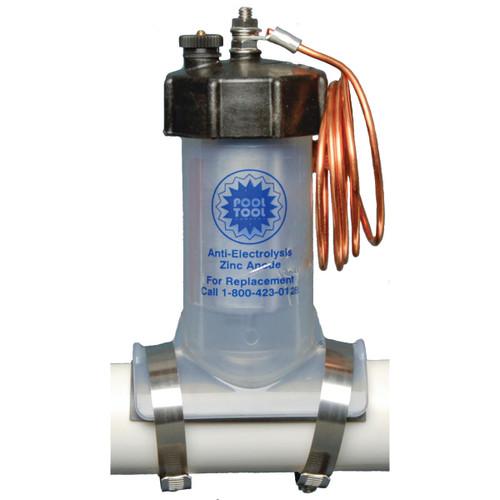
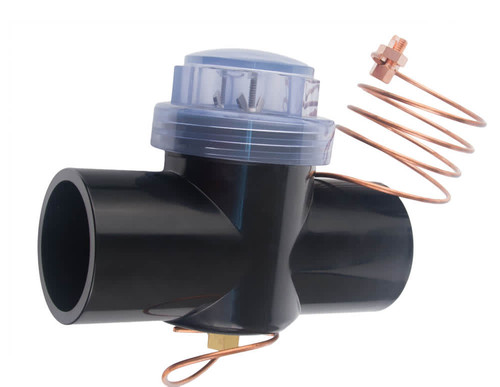
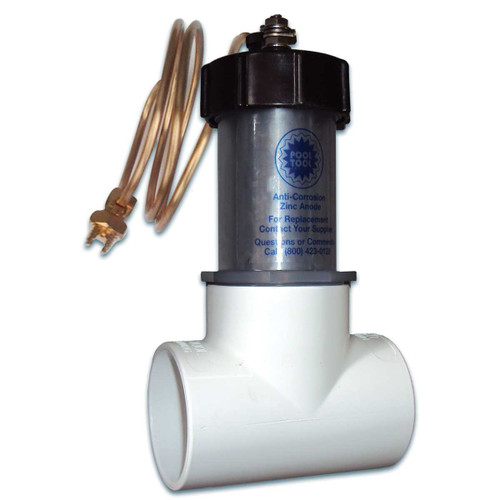
A zinc anode is a sacrificial piece of metal that corrodes on purpose so the more valuable metal in and around a pool does not. Salt chlorine generators made saltwater pools mainstream, and with them came a familiar set of complaints: pitted ladder rails, rust stains around light niches, corroded heater headers, crumbling stone coping and stained plaster near metal fittings. A properly installed zinc anode, on a pool that is already correctly bonded, gives the electrochemical process a cheaper target.
This category covers sacrificial zinc anodes for pools and spas: inline anodes that install in the plumbing, skimmer basket anodes, and equipment-pad or bonding-grid anodes that tie into the existing bonding system. Service techs add them during salt conversions and heater replacements, builders install them on new salt pools, and homeowners usually find this category after noticing their stainless ladder or light ring starting to stain.
When two different metals are connected electrically and sit in a conductive liquid, they form a battery. The more reactive metal, called the anode, gives up electrons and corrodes. The less reactive metal, the cathode, is protected. Saltwater is a far better conductor than fresh water, so the effect is much stronger in a salt pool.
A typical pool has a lot of dissimilar metals in contact with the water: stainless steel ladders and rails, copper heater heat exchangers, brass or bronze light niches and fittings, steel rebar in the shell and sometimes copper bonding wire. Through the bonding system they are all electrically connected, which is required by NEC Article 680 to keep everything at the same voltage potential for shock protection. The side effect is that they become one big galvanic circuit.
Zinc sits near the reactive end of the galvanic series, more reactive than steel, stainless, copper and brass. When a zinc anode is bonded to the system and in contact with pool water, the zinc becomes the preferred anode and corrodes first, protecting the other metal. The zinc slowly wastes away and must be replaced on schedule.
| Anode Type | Where It Goes | Bonded? | Best For |
|---|---|---|---|
| Inline | Return plumbing at the equipment pad | Yes, via bonding lug | Whole-system protection on salt pools |
| Skimmer | Skimmer basket or throat | Often not | Simple add-on; easy inspection |
| Equipment / bonding grid | Ground or water contact near equipment | Yes | New construction or major renovation |
| Heater / heat pump | Inside the appliance water path | Per manufacturer | Protecting a specific heat exchanger |
HVAC365 carries brand-new zinc anodes and replacement elements in original packaging with full manufacturer warranty. Product pages list pipe size, gallon rating and bonding provisions so you can choose the right style for the pool. Orders ship in 1-2 business days. If you need help deciding between an inline and a skimmer anode, or matching a replacement element to an existing housing, send us what you have and we will help.
It is not required by code, but many builders and service pros recommend one on salt pools, especially those with stainless rails, metal lights, copper heat exchangers or natural stone. It is extra insurance on top of proper bonding and balanced chemistry.
It depends on salt level, pool size, the amount of exposed metal and water chemistry. Many last a season to a few years. Inspect it regularly and replace when roughly half the zinc is gone or per the manufacturer.
Inline and equipment anodes are designed to be bonded to the pool's bonding grid so they can protect bonded metal. Unbonded skimmer anodes offer more limited protection.
It can slow new corrosion, but existing stains need to be treated with the appropriate stain remover and the water rebalanced.
No. Bonding is a safety requirement that keeps all metal at the same potential. A sacrificial anode is added to a properly bonded system for corrosion control only.
No. Very rapid loss suggests high salt, low pH or possible stray electrical current. Check chemistry and have a licensed electrician inspect the bonding and equipment wiring.

Fast Shipping

Easy Returns

Warranty Coverage

Financing Available