null
Handheld & Portable Pool Vacuums

Handheld & Portable Pool Vacuums

Not every cleaning job needs a robot or a full vacuum hose run through the skimmer. Handheld and portable pool vacuums fill the gap: battery-powered handheld vacs for spot cleaning a spa, a step or a small above-ground pool, and portable service vacuums that pool pros carry from pool to pool on a route. They work without tying into the pool's plumbing, which means no priming, no hose full of air and no dumping a season's worth of silt into a customer's filter.

This category covers battery-powered handheld vacuums for pools and spas, portable and cart-style service vacuums for commercial pools and service routes, and their parts: filter bags and canisters, vacuum heads, telescoping pole adapters, batteries, chargers, hoses and wheels. Homeowners buy the handheld units for hot tubs and quick touch-ups. Service techs and commercial facility staff buy portable units for faster vacuuming between swim sessions and for pools where the filter system cannot handle heavy debris loads.

How Handheld and Portable Pool Vacuums Work

Battery handheld vacuums

A sealed motor and rechargeable battery drive a small impeller inside the vacuum body. Water and debris are drawn in through the vacuum head, pass through an onboard filter bag or canister, and the clean water exits the unit. Most attach to a standard telescoping pole and come with interchangeable heads for floors, corners and steps. Because they are fully self-contained, there is nothing to connect to the skimmer and nothing to prime.

Portable service vacuums

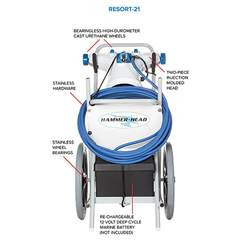
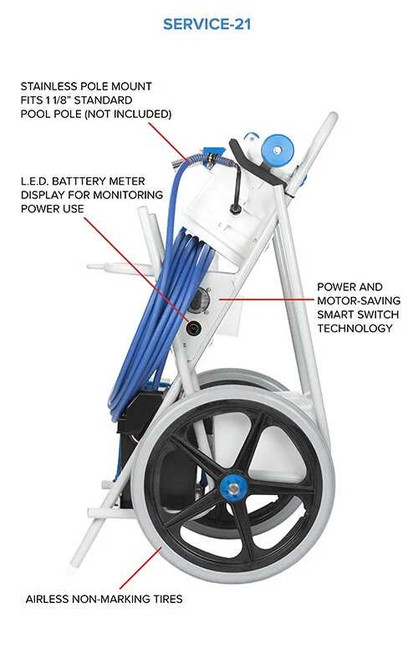
Larger units built for professional use. Some are battery powered with a vacuum head on a pole and a larger debris bag. Others are cart-mounted systems with a pump, hose and filter that run on their own power and return filtered water to the pool. Commercial and route-service units are designed to move more water and hold more debris than consumer handhelds, so a tech can vacuum a large pool without stopping to empty the bag every few minutes.

Where They Make Sense

  • Spas and hot tubs. A handheld vac pulls sand, hair and debris from the spa floor and seats without draining.
  • Steps, benches and tanning ledges. Areas where robots and suction cleaners struggle.
  • Above-ground and small pools. Handheld units can handle the whole pool.
  • Service routes. A portable vacuum keeps debris out of the customer's filter, saves time on priming hoses and moves easily from pool to pool.
  • Commercial pools. Portable units let staff vacuum between swim sessions without changing the main filtration setup.
  • Heavy debris cleanups. After storms, a portable vac with a large bag keeps leaves and silt out of the filtration system.

Signs a Vacuum Needs Service or Replacement

  • Weak suction. A full or clogged filter bag is the usual cause. Next, check for debris in the intake or impeller.
  • Short battery runtime. Batteries lose capacity with age and heat. Replacement batteries are available for many models.
  • Debris passing back into the pool. Torn filter bag, worn seals or a missing O-ring.
  • Unit won't power on. Check the battery charge, charger lights and battery contacts.
  • Worn vacuum head brushes or wheels that no longer seal against the floor.
  • Water inside the motor or battery compartment. Seals have failed; stop using the unit and contact the manufacturer.

How to Choose the Right Vacuum

  1. Job size. Spa and spot cleaning calls for a compact handheld. Full pools, commercial pools and routes call for a portable service vacuum with more flow and debris capacity.
  2. Runtime. Check rated battery runtime and charge time. Route techs often carry a spare battery.
  3. Debris capacity. Larger bags and canisters mean fewer interruptions.
  4. Filtration. Fine filter bags capture silt and sand; coarse bags handle leaves without clogging.
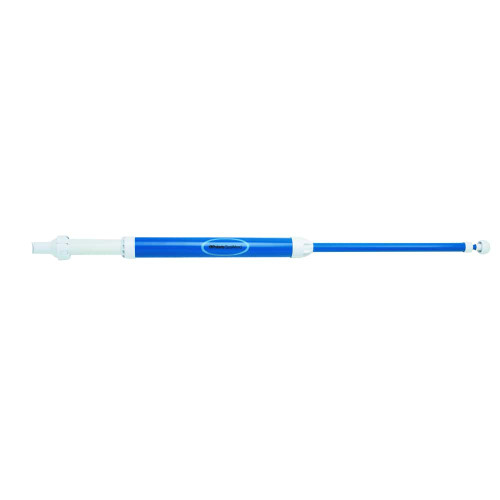
  5. Pole compatibility. Most use standard telescoping pole connections, but confirm before ordering.
  6. Durability. Commercial units should have rugged housings and replaceable wear parts.
  7. Parts availability. Batteries, filter bags and heads are the parts you will replace most.
Vacuum Type Power Best For Debris Capacity Main Wear Parts
Handheld battery vacuum Rechargeable battery Spas, steps, small pools Small Filter bags, batteries
Portable battery service vacuum Larger rechargeable battery Full pools and service routes Medium to large Filter bags, batteries, heads
Cart-style commercial vacuum Battery or line power Commercial pools, heavy cleanups Large Filters, hoses, heads, wheels
Manual vacuum head and hose Pool pump suction Routine vacuuming through skimmer Uses pump basket and pool filter Head brushes, hose

Vacuuming Technique That Saves Time

A good vacuum still needs a good technique, especially on a route where every pool is on the clock.

  • Brush first, then wait a few minutes on fine silt so it settles, rather than chasing a cloud around the pool.
  • Move slowly and overlap passes. Fast strokes kick debris up faster than the vacuum can pull it in.
  • Start shallow and work toward the deep end, so loosened debris drifts ahead of you and not behind.
  • Net the big leaves first. A leaf rake removes the bulk in a few passes and saves the vacuum bag for sand and fine dirt.
  • Switch bags for the job. Carry both coarse and fine bags so you are not emptying a clogged fine bag every few minutes in fall.

Use, Care and Safety Tips

  • Follow the manufacturer's battery and charging instructions. Charge in a dry, ventilated area away from pool chemicals, and use only the supplied or approved charger.
  • Do not submerge components that are not rated for it. Many handheld vacs are designed for the vacuum body to go underwater but not the handle or battery compartment beyond a certain depth.
  • Line-powered commercial units must be plugged into GFCI-protected outlets, and cords should be kept away from the water per the manufacturer's instructions. Pool-area electrical work, including adding outlets, should be done by a licensed electrician per NEC Article 680.
  • Keep swimmers out of the area while vacuuming, especially with powered commercial units.
  • Empty and rinse the filter bag after every use, and let it dry before storage to prevent mildew.
  • Store out of direct sun and away from chlorine and acid storage, which corrode batteries and contacts.
  • Inspect seals and O-rings regularly, since leaks can reach the motor.
  • Never use a pool vacuum near drain covers that are damaged or missing. Damaged covers are a suction entrapment hazard and must be replaced with compliant VGB / ANSI/APSP-16 covers before the pool reopens.

Shopping This Category at HVAC365

HVAC365 carries brand-new handheld and portable pool vacuums and replacement parts with full manufacturer warranty. Product pages list runtime, debris capacity, filter options and pole compatibility so you can match the vacuum to the job. Orders ship in 1-2 business days. If you are outfitting a service route or matching a replacement battery or filter bag, send us the model and we will help.

Frequently Asked Questions

Can a handheld vacuum clean a whole pool?

For spas and small pools, yes. For larger pools, a handheld is best for spot cleaning. A portable service vacuum or robotic cleaner handles full pools more efficiently.

Do battery pool vacuums need the pool pump running?

No. They are self-contained and do not use the pool's circulation system.

How long does the battery last?

Runtime varies by model, commonly from under an hour on compact handhelds to longer on larger service units. Check the product page and consider a spare battery for route work.

Why does my vacuum lose suction quickly?

The filter bag is filling or clogging. Fine bags clog faster with leaves; use a coarse bag for heavy debris.

Can I use a handheld vacuum in my hot tub?

Yes. Handheld vacs are a common way to clean spa floors and seats without draining. Turn off the spa jets first.

Can I replace the battery myself?

Many models use a removable battery pack designed for owner replacement. Use only the manufacturer's battery and follow its instructions; sealed units may need factory service.

Why use a portable vacuum instead of vacuuming through the skimmer?

It keeps heavy debris and silt out of the filter, avoids priming hoses, and moves quickly from pool to pool.

Compare

Fast Shipping

Easy Returns

Warranty Coverage

Financing Available