null
Pool Pump Motors

Pool Pump Motors

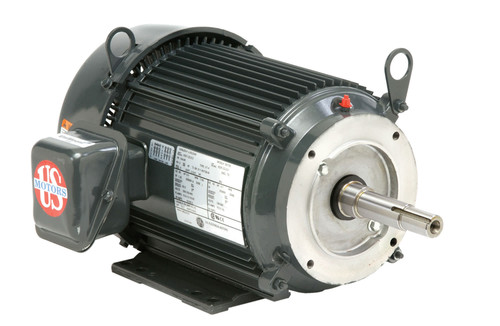
When a pool pump dies, the motor is usually what failed. The wet end, meaning the strainer pot, housing and impeller, often has years of life left, so replacing only the motor is a common and cost-effective repair. The catch is that pool pump motors are not one-size-fits-all. Frame type, shaft style, horsepower rating, service factor, voltage and speed type all have to line up with the pump you are putting it on, and since 2021 federal efficiency rules have changed what replacement motors can be sold for many pumps.

This category covers replacement pool and spa pump motors from Century (Regal Rexnord, formerly A.O. Smith) and Nidec (US Motors), among others. You will find square-flange and C-face motors, threaded-shaft and keyed-shaft motors, 48Y and 56J frame motors, single-speed, two-speed and variable-speed designs. Pool service techs buy motors here almost daily. Homeowners shop here too, but the motor connects to line voltage and the pool bonding grid, so wiring should be done by a licensed electrician or qualified pool professional.

How Pool Pump Motors Work

Most single-speed and two-speed pool motors are single-phase induction motors with a capacitor-start design. A start capacitor and centrifugal switch help the motor get up to speed, then the switch drops the start circuit out. Some motors use a run capacitor as well. Variable-speed motors are permanent-magnet motors controlled by an electronic drive mounted on the motor.

The details you need to know when matching a motor:

  • Frame. The NEMA frame describes how the motor mounts and the shaft dimensions. Pool motors are mostly 48Y and 56J. The 48Y frame is common on smaller and above-ground pumps; 56J is common on inground pumps.
  • Square flange vs C-face. Square-flange motors bolt to the pump seal plate with a square flange. C-face (round flange) motors use a machined face with bolt holes. Which one you need depends on the pump.
  • Threaded shaft vs keyed shaft. A threaded-shaft motor has the impeller threaded directly onto the shaft. A keyed-shaft motor uses a keyway and needs the right impeller and hardware. Most residential pool pumps use threaded shafts.
  • Full-rated vs up-rated. These terms describe service factor. A full-rated motor has a higher service factor and more total horsepower than an up-rated motor with the same nameplate HP.
  • Service factor (SF). How much extra load the motor can handle above its nameplate horsepower. A 1.5 HP motor with a 1.65 SF can deliver about 2.48 total horsepower.
  • Total horsepower (THP). Horsepower times service factor. THP is the most reliable number to match when replacing a motor.

Signs the Motor Is Failing

  • Humming but won't start. Check the start capacitor and centrifugal switch on capacitor-start motors. A seized impeller or shaft can also cause it. Spin the shaft by hand with power off and locked out.
  • Loud screeching or grinding. Bad bearings. On many motors, bearing replacement is possible, but if the motor is older or the bearings failed from water damage, replacing the motor is usually smarter.
  • Running hot and shutting off. Thermal overload trips from low voltage, a failing motor, poor ventilation or a blocked impeller.
  • Tripping the breaker or GFCI. Often a shorted winding or water in the motor from a failed shaft seal. Have it diagnosed by a qualified person.
  • Rust and water stains on the motor. A leaking shaft seal has been dripping into the motor. Replace the seal when you replace the motor.
  • Drive faults on variable-speed motors. Some faults point to the drive, some to the motor. Check manufacturer fault codes before ordering parts.

How to Choose the Right Replacement Motor

Read the old motor's nameplate before you order. If the nameplate is unreadable, the pump model can usually point you to the right motor.

  1. Frame (48Y or 56J). Must match the pump.
  2. Flange type. Square flange or C-face. These are not interchangeable without changing parts.
  3. Shaft type. Threaded or keyed. Match the impeller.
  4. Total horsepower. Match THP rather than nameplate HP. Matching the old motor's THP keeps the motor matched to the impeller. Too small a motor will overload; too large wastes energy and may not match the impeller.
  5. Voltage. 115 V, 230 V or dual-voltage. Confirm with the existing circuit.
  6. Speed type. Single-speed, two-speed or variable-speed. The DOE dedicated-purpose pool pump standards took effect in July 2021, and a separate DOE efficiency standard for replacement pool pump motors followed, with compliance starting in 2025. In the common horsepower range, that pushes most new replacement motors toward variable-speed designs. Check that the motor is listed as compliant for your application.
  7. Enclosure. Most pool motors are open drip-proof, made to stay dry on the equipment pad. Some applications need totally enclosed fan-cooled motors.
  8. Brand or OEM match. Century and Nidec both make direct replacements for many Pentair, Hayward, Jandy and Sta-Rite pumps. Many OEM pumps ship with motors made by these same manufacturers, so a matching Century or Nidec model is a common, accepted replacement.
SpecWhat It MeansHow to Match
Frame (48Y / 56J)Mounting and shaft dimensionsSame frame as old motor or as specified by the pump
Square flange / C-faceHow the motor bolts to the seal plateSame flange style as the pump
Threaded / keyed shaftHow the impeller attachesMatch the impeller type
Nameplate HPRated horsepowerStarting point only
Service factorExtra capacity above nameplate HPUse to calculate THP
Total HP (THP)HP times SFMatch the old motor's THP
VoltageSupply voltage115 V, 230 V or dual-voltage per circuit
Speed typeSingle, two or variable speedChoose a compliant option for the pump size

Installation and Safety Tips

  • Lock out power first. Turn off the breaker and verify the motor is de-energized before disconnecting anything.
  • Use a licensed electrician. The motor must be wired per NEC Article 680 with GFCI protection where required and bonded to the equipotential bonding grid with a solid copper conductor of at least 8 AWG at the motor's bonding lug.
  • Set voltage correctly. Dual-voltage motors ship set for one voltage. Confirm the selector or jumper before power-up.
  • Replace the shaft seal. Install a new mechanical seal every time you change the motor. A new motor with an old seal is asking for a repeat failure.
  • Handle the seal faces carefully. Keep them clean and dry, don't touch the ceramic face, and lubricate only with water or a light soap solution unless the seal manufacturer says otherwise.
  • Hold the shaft properly. Use the shaft flats or a wrench slot behind the motor end cover to hold the shaft while threading the impeller. Never clamp on the shaft surface.
  • Check rotation. Most pool motors are single-direction. Confirm the impeller rotation before running.
  • Never run dry. Prime the pump before starting.

Shopping This Category at HVAC365

Every motor here is brand-new with the full manufacturer warranty. Product pages list frame, flange type, shaft type, horsepower, service factor and voltage so you can match your nameplate. Most items ship in 1-2 business days. If you are not sure which motor fits your pump, send HVAC365 the old motor's nameplate or the pump model and we will help you cross-reference it.

Frequently Asked Questions

What does "full-rated" vs "up-rated" mean?

Both terms describe service factor. A full-rated motor has a higher service factor and more total horsepower than an up-rated motor with the same nameplate HP. Matching total horsepower avoids confusion.

Can I replace a single-speed motor with a variable-speed motor?

Often yes, and on many pump sizes it may be required under the DOE rules. Make sure the motor fits the frame, flange and shaft, and that the impeller is suited for it. Variable-speed motors also need correct control setup.

Why does matching THP matter?

The impeller is matched to a specific horsepower. Too small a motor overloads; too large wastes energy and may not perform as expected. THP is the best single number to match.

Do I need to replace the seal when I replace the motor?

Yes. The seal is cheap compared to the motor, and a worn seal is a common reason motors fail.

Can I buy an OEM motor or a Century/Nidec equivalent?

Both work when the specs match. Century and Nidec supply many pool OEMs, and their replacement motors are built to match common pumps.

What is a 48Y frame?

A NEMA frame size used on many smaller and above-ground pumps. It has different mounting dimensions than 56J and cannot be swapped without changing parts.

Compare
Show: 12 24 48

Fast Shipping

Easy Returns

Warranty Coverage

Financing Available