null
Rooftop Unit Economizers

Rooftop Unit Economizers

Rooftop Unit Economizers: Control Types, Code Requirements, and Selection

An economizer lets a rooftop unit cool a building with outdoor air whenever the outdoor air is cool and dry enough to do the job. Instead of running the compressor on a 60°F spring morning, the unit opens its outdoor air damper, closes down the return air damper, and uses outside air to carry away heat from people, lights, and equipment. The same assembly also provides the minimum ventilation air required by code during occupied hours. In climates with many mild hours, an economizer can noticeably reduce cooling energy, which is why energy codes require them on most mid-size and larger units.

Economizers are also one of the most frequently failed components on a rooftop unit when they are poorly selected or never commissioned. Stuck dampers, failed actuators, and bad sensors can leave a unit bringing in hot, humid air all summer or no outdoor air at all. This guide explains how economizers work, the difference between dry-bulb and enthalpy control, the main controller platforms, code requirements, and how to choose between downflow and horizontal configurations.

How does a rooftop unit economizer work?

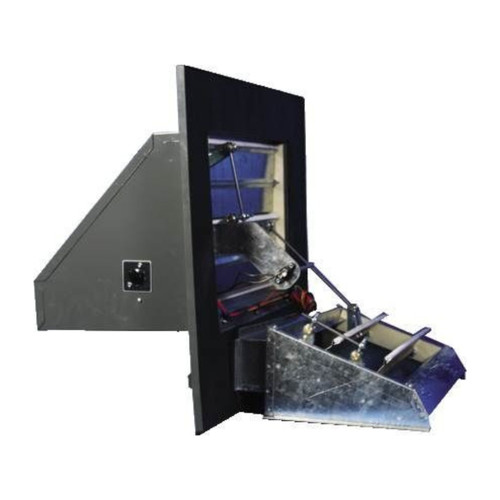
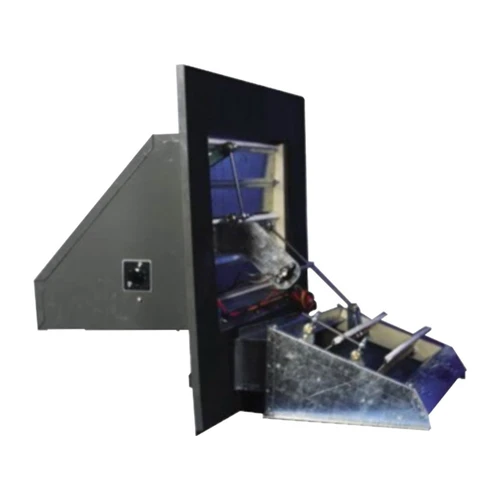
A typical RTU economizer has three main parts: an outdoor air damper, a return air damper mechanically linked to it so one opens as the other closes, and an actuator driven by an economizer controller. A mixed air or discharge air temperature sensor sits downstream so the controller can modulate the dampers to hold a target supply temperature, commonly in the 50 to 56°F range. When the thermostat calls for first-stage cooling and outdoor air is suitable, the economizer becomes the first stage of cooling. If it cannot satisfy the load alone, the compressor stages on while the economizer stays open, which is called integrated economizer operation.

When outdoor conditions are not suitable, the controller closes the outdoor damper to the minimum position, which is set to deliver the required ventilation air. When the building is unoccupied, the damper closes fully.

What is the difference between dry-bulb and enthalpy economizers?

The changeover strategy, also called the high-limit control, decides when outdoor air is too warm or humid for free cooling.

Control typeHow it decidesBest suited for
Fixed dry-bulbEconomizes when outdoor temperature is below a fixed setpointDry climates such as the Mountain West and much of the West Coast
Differential dry-bulbEconomizes when outdoor air is cooler than return airDry and moderate climates
Single (fixed) enthalpyEconomizes when outdoor heat content is below a fixed limitClimates with significant humidity
Differential enthalpyEconomizes when outdoor heat content is lower than return air heat contentHumid climates where the most accurate decision pays off

Enthalpy is the total heat content of air, including both temperature (sensible heat) and moisture (latent heat). A 68°F day at 90 percent relative humidity carries more heat than a 72°F day at 30 percent. A dry-bulb economizer would bring in the humid air because it is cooler; an enthalpy economizer would recognize that the drier air is the better choice. ASHRAE 90.1 restricts which high-limit types may be used in each climate zone, and some jurisdictions prohibit certain types, so check the table in your adopted code.

What economizer controllers are common: JADE, Honeywell, Siemens, DDC?

  • Honeywell JADE (W7220): A widely used stand-alone economizer controller with an LCD menu, setup wizard, and built-in fault detection and diagnostics that report alarms such as damper not modulating, excess outdoor air, and sensor faults. It uses Sylk bus or conventional sensors and supports dry-bulb and enthalpy strategies.
  • Legacy Honeywell controllers (W7212, W7459, and similar): Older analog controllers found on many existing units. They lack FDD, which is one reason they have been superseded.
  • Siemens and Belimo economizer controllers: Alternative stand-alone controllers with similar functions and FDD capability, used by several RTU manufacturers.
  • DDC / building automation control: On networked units, the unit's own controller or the building automation system runs the economizer logic directly, using its own sensors and analytics. This is common in larger campuses and chain retail.

The right choice usually comes down to what the unit manufacturer supports, what the building's controls contractor prefers, and whether the economizer must report to a BAS.

Is an economizer required by code?

Current editions of ASHRAE 90.1 and the International Energy Conservation Code generally require an air-side economizer on individual cooling systems of roughly 54,000 Btu/h (about 4.5 tons) and larger in most U.S. climate zones. Climate Zones 0A and 1A, very hot and humid areas that include South Florida, Hawaii, and parts of the Gulf Coast, are exempt from the general requirement under recent editions, and both codes allow other exceptions such as certain spaces with humidification needs or where higher-efficiency equipment is installed instead. Code editions differ, and states such as California use Title 24, which has its own requirements.

ASHRAE 90.1 and Title 24 also require fault detection and diagnostics on economizers for air-cooled DX units of 54,000 Btu/h and larger. FDD must monitor sensor readings, report when the economizer is not economizing when it should, economizing when it should not, damper problems, and excess outdoor air. Controllers such as the JADE are designed to meet these requirements.

Downflow vs horizontal economizer: which do I need?

The economizer must match the airflow configuration of the unit. On a downflow unit, return air enters from the curb below and the economizer sits in the return air section, typically with an outdoor air hood on the side of the cabinet. On a horizontal unit, return air comes in through a side duct connection, and the economizer is designed to mount in that duct path. Economizers are also cabinet-specific, so match the full model number, not just tonnage. Ordering a downflow economizer for a unit that will be installed horizontally is a common and avoidable mistake.

Factory-installed or field-installed economizer?

Factory-installed economizers arrive pre-wired and tested, which saves field labor and reduces wiring errors. Field-installed kits give flexibility for replacement projects, for units already on the roof, or when the code requirement is confirmed late in the project. Either way, the economizer must be commissioned: verify damper travel, set the minimum position for the design ventilation rate, confirm sensors read correctly, and test the changeover logic.

Why do economizers need building pressure relief?

An economizer that opens to 100 percent outdoor air is pushing a large volume of air into the building. Without a path out, the building pressurizes and the economizer cannot deliver full flow. Barometric relief dampers or powered exhaust fans provide that path. Many economizer kits include barometric relief; larger or tighter buildings may need power exhaust. See Rooftop Unit Power Exhaust for more detail.

What about demand-controlled ventilation?

Demand-controlled ventilation (DCV) uses a CO2 sensor in the space or return air to reduce the minimum outdoor air when occupancy is low. Energy codes require DCV for spaces with high design occupant density, such as assembly areas, above certain size and airflow thresholds. Most modern economizer controllers accept a CO2 sensor input and adjust the minimum damper position accordingly.

How do I keep an economizer working?

  • Inspect damper blades and linkages for binding, especially in coastal and dusty locations.
  • Check actuator operation through full stroke during each maintenance visit.
  • Verify sensor readings against a calibrated instrument; outdoor air sensors exposed to sun can read high.
  • Clean or replace outdoor air hood filters and screens.
  • Review FDD alarms on the controller display or BAS.

Which units do these economizers fit?

This category includes economizers for Rheem Commercial Renaissance Line Classic packaged units, including the RACCYB, RACDYB, RACGYB cooling-only units, the RGECYB, RGEDYB, RGEGYB gas/electric units, and the RHPCYB, RHPDYB heat pumps, as well as Daikin light commercial packaged units. Each product page lists compatible cabinet sizes, airflow configurations, and controller type.

Rooftop Unit Economizer FAQ

Do I need an economizer in South Florida?

Climate Zone 1A, which includes South Florida, is generally exempt from the economizer requirement under recent ASHRAE 90.1 and IECC editions. Florida adopts its own building code based on the IECC, so confirm with the local building department.

What is integrated economizer operation?

It means the economizer and compressor can run at the same time, so the unit can use outdoor air to handle part of the cooling load while the compressor handles the rest. Energy codes generally require integrated operation.

Can an economizer cause humidity problems?

Yes, if it is a dry-bulb type in a humid climate or if its sensors fail. Enthalpy control and a working FDD system reduce that risk.

What is the minimum position on an economizer?

It is the damper setting that delivers the code-required ventilation air during occupied hours, whether or not the unit is economizing. It is set during commissioning based on the design outdoor airflow.

Does a heat pump RTU use the same economizer as a gas/electric unit?

Often the same economizer fits any unit on the same cabinet, but some manufacturers have different part numbers. Confirm compatibility by model number.

Compare
Show: 12 24 48

Fast Shipping

Easy Returns

Warranty Coverage

Financing Available