null
Rooftop Unit Power Exhaust

Rooftop Unit Power Exhaust

Rooftop Unit Power Exhaust: Building Pressure, Barometric Relief, and Powered Exhaust

Every cubic foot of outdoor air a rooftop unit brings into a building has to leave again. Most of the time that happens without anyone noticing: through kitchen hoods, restroom exhaust fans, door openings, and small leaks in the building envelope. But when an economizer opens wide to cool with outdoor air, the volume of incoming air can jump from a small ventilation minimum to most or all of the unit's supply airflow. If the building has no way to relieve that air, it pressurizes, and the economizer cannot deliver the free cooling it was installed to provide. That is the job of barometric relief dampers and powered exhaust.

This guide explains why building pressure matters, how barometric relief and powered exhaust differ, how to decide which one a project needs, and how powered exhaust is controlled and sized on packaged rooftop units.

Why does building pressure matter with an economizer?

Commercial buildings are usually designed to run at a slight positive pressure relative to outdoors, often in the range of about 0.02 to 0.05 inch of water column. A slight positive pressure keeps unconditioned, humid, or dusty outdoor air from infiltrating through cracks and doorways. Too much positive pressure, however, causes problems:

  • Entry doors stand open or are hard to close, and closers wear out.
  • Air whistles through door gaps and around windows.
  • Conditioned air is forced into wall cavities and ceiling spaces, where it can cause condensation and moisture damage.
  • The economizer cannot reach full outdoor airflow because the building pushes back, so the unit runs the compressor more than it should.
  • Exhaust hoods and flues may be affected by pressure imbalances between spaces.

Negative pressure is a problem too. A building that exhausts more air than it takes in will pull in unconditioned air through every gap, which leads to humidity problems in summer and drafts in winter. In restaurants, negative pressure from kitchen hoods can interfere with gas appliance venting. Good pressure control means the relief system removes only the excess air the economizer adds.

What is barometric relief on a rooftop unit?

Barometric relief is a passive gravity damper, usually mounted in the return air section of the rooftop unit or in the economizer hood. Its lightweight blades are held closed by gravity or a light counterweight. When the building pressure rises, return air pushes the blades open and escapes to the outdoors. When pressure drops, the blades fall closed. There is no fan, no motor, and no control wiring.

Barometric relief works well when:

  • The return duct system has low pressure drop, so building pressure can push air back through it.
  • The unit is a smaller packaged RTU with a modest economizer airflow.
  • Other exhaust in the building, such as restroom fans, already removes part of the incoming air.

Many economizer packages include a barometric relief damper as standard or as a low-cost option.

What is powered exhaust on a rooftop unit?

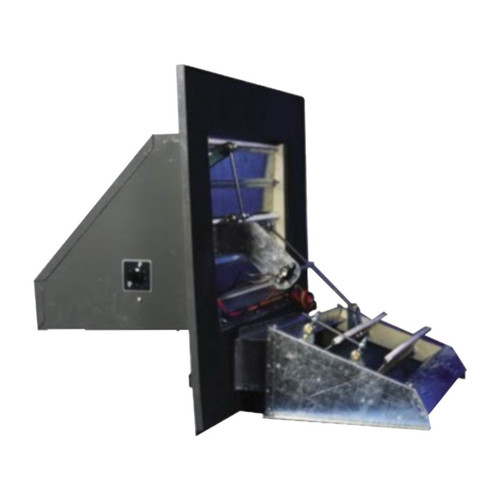
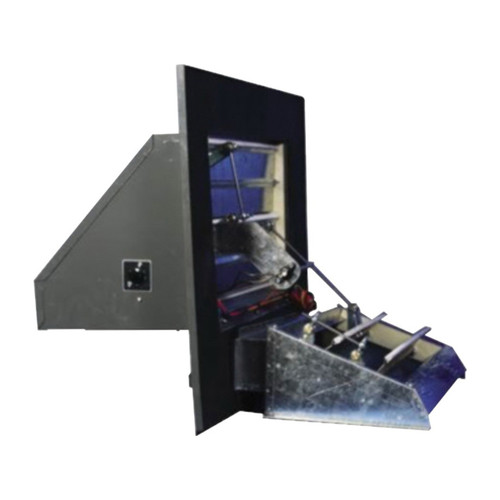
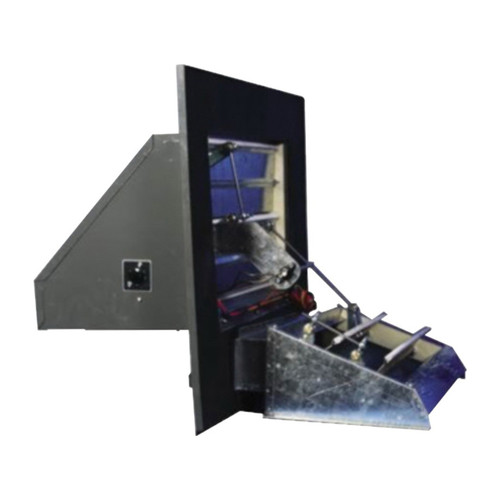
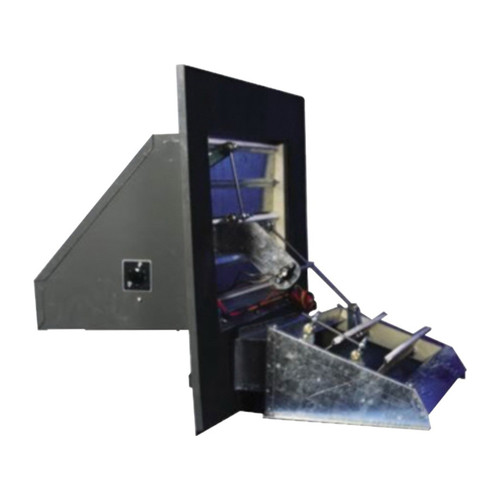
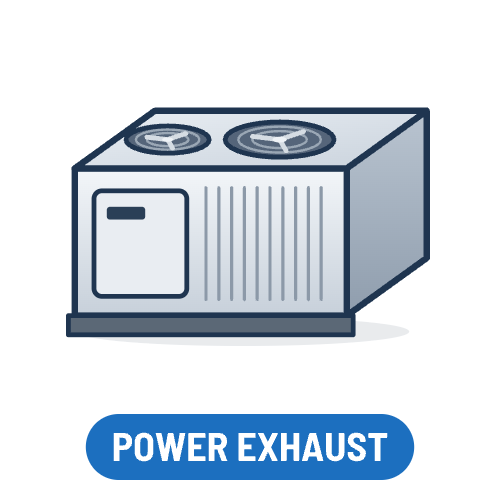
Powered exhaust adds one or more exhaust fans in the return air section of the unit. When the economizer opens beyond a set point, or when a building pressure sensor indicates excess pressure, the fan starts and actively pulls return air out of the building. Powered exhaust is used when the return path has too much resistance for barometric relief to move the required air, or when the economizer airflow is large.

Powered exhaust fans are generally sized to remove a portion of the unit's supply airflow, often around half, because some air leaves through other exhaust and leakage. Fans are typically direct-drive propeller or centrifugal fans, and they add to the unit's electrical load, so the unit's MCA and MOP must reflect the powered exhaust option.

Barometric relief vs powered exhaust: how do I choose?

FactorBarometric reliefPowered exhaust
How it worksPassive gravity damper opened by building pressureFan actively removes return air
Return duct resistanceLow resistance requiredHandles higher resistance
Economizer airflowSmall to moderateModerate to large
Electrical loadNoneAdds fan motor amps to unit electrical data
ControlsNoneDamper position setpoint or building pressure sensor
Cost and maintenanceLowerHigher; fan motor and controls need service

A practical rule used by many designers: if the return air system's static pressure is low enough that the building can push air back through the return and out the relief damper at a modest building pressure, barometric relief is enough. Long return ducts, ducted returns with filters and grilles, or large economizer airflows usually push the project to powered exhaust. ASHRAE 90.1 also requires that systems with economizers have a means to relieve excess outdoor air during economizer operation to prevent over-pressurizing the building.

How is powered exhaust controlled?

  • Economizer position: The simplest method starts the exhaust fan when the outdoor air damper opens beyond an adjustable position, such as 25 to 50 percent. Most economizer controllers, including the Honeywell JADE, have an exhaust fan output with an adjustable setpoint.
  • Building pressure: A differential pressure sensor compares indoor and outdoor pressure and starts the fan, or modulates it with a variable-speed drive, to hold a setpoint. This gives more precise control in tight buildings and in buildings with varying exhaust loads, such as restaurants.
  • Building automation: On networked units, the BAS can control exhaust based on pressure, occupancy, or other inputs.

Whatever the method, the exhaust fan should not run when the economizer is at minimum position unless the building specifically needs it, because that would pull the building negative.

What about restaurants and kitchens?

Restaurants are a special case. Kitchen hoods exhaust large volumes of air, and makeup air units or dedicated outdoor air paths are usually required to replace it. The RTU's economizer and relief must be coordinated with the hood exhaust and makeup air so the dining room and kitchen stay at the intended pressures, with the kitchen typically slightly negative relative to the dining area. In these buildings, adding powered exhaust to the RTU without looking at the whole air balance can make problems worse.

How do I size and select powered exhaust?

Start with the unit's maximum outdoor airflow during economizer operation. Subtract the air removed by other exhaust systems and an allowance for envelope leakage at the target building pressure. The remainder is the air that the relief system must handle. Compare that airflow with the barometric relief capacity at the expected building pressure and return duct resistance. If barometric relief falls short, select a powered exhaust option rated for the required airflow at the return static pressure. Powered exhaust is cabinet-specific and often voltage-specific, so match it to the unit model and power supply.

Does powered exhaust work with all rooftop units?

Powered exhaust is offered for most light commercial packaged units in downflow configuration, mounted in the return section or economizer hood. Horizontal installations often use a separate exhaust fan in the return ductwork instead. Check the unit's accessory list for factory and field options. Because powered exhaust fans are not part of the refrigerant circuit, the change to R-454B and R-32 refrigerants does not affect their selection.

Which units do these power exhaust kits fit?

This category includes power exhaust and relief accessories for Rheem Commercial Renaissance Line Classic packaged units, including RACCYB, RACDYB, RACGYB, RGECYB, RGEDYB, RGEGYB, RHPCYB, and RHPDYB families, and for Daikin light commercial packaged units. Product pages identify compatible cabinet sizes, voltages, airflow capacity, and whether the kit is factory or field installed.

What maintenance does powered exhaust need?

  • Verify the fan starts at the correct economizer position or pressure setpoint.
  • Inspect the fan blade, motor, and mounting for vibration and debris.
  • Check that the exhaust damper opens and closes freely and seals when closed.
  • Confirm that the pressure sensor tubing is clear and properly located.
  • Measure building pressure periodically, especially after tenant changes or added exhaust fans.

How do I know if my building has a pressure problem?

A simple test is to watch the entry doors and listen at gaps while the unit is economizing. A digital manometer with one tube indoors and one outdoors gives a direct reading of building pressure, and readings well above about 0.05 inch of water column point to over-pressurization.

Rooftop Unit Power Exhaust FAQ

Do I need power exhaust if I have an economizer?

You need some form of relief. Smaller units with low-resistance returns often work with barometric relief. Larger airflows or high-resistance return systems usually need powered exhaust.

Why are my doors hard to close when the rooftop unit is running?

The building is likely over-pressurized, often because the economizer is bringing in outdoor air without enough relief. Check the relief damper, exhaust fan operation, and economizer minimum position.

Can powered exhaust make my building negative?

Yes, if it runs when the economizer is at minimum or if it is oversized. Proper setpoints or pressure-based control prevent that.

Is powered exhaust the same as a return fan?

No. Powered exhaust fans run only when relief is needed and discharge air outdoors. Return fans run continuously to move air back to the unit, and are used mainly on larger built-up systems.

Compare

Fast Shipping

Easy Returns

Warranty Coverage

Financing Available