null
Rooftop Unit Roof Curbs

Rooftop Unit Roof Curbs

Rooftop Unit Roof Curbs: Heights, Sizing, Adapters, and Installation Basics

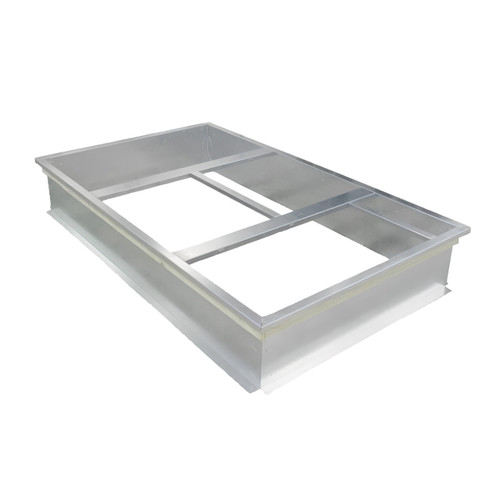
The roof curb is the least glamorous part of a rooftop unit installation and one of the most important. It carries the weight of the unit, ties it to the building structure, creates the weathertight opening where supply and return ducts pass through the roof, and gives the roofer something to flash against. A properly matched and installed curb keeps water out of the building for the life of the unit. A poorly matched one causes leaks, air bypass, vibration, and callbacks that can be expensive to fix once the unit is sitting on top of it.

This guide covers what a roof curb does, how curbs are sized to rooftop unit cabinets, the difference between 14-inch and 24-inch curbs, insulation and gasketing, curb adapters for replacement projects, and the structural and flashing basics every installer and owner should understand.

What does a roof curb do for a rooftop unit?

  • Supports the unit. The curb transfers the unit's weight to the roof structure, usually by bearing on the roof deck and spanning between joists or sitting on supplemental framing.
  • Creates the duct penetration. Supply and return openings inside the curb line up with the unit's bottom duct connections in downflow installations.
  • Keeps water out. The curb's outer walls are flashed into the roof membrane, and a gasket between the curb rail and the unit base seals the top.
  • Raises the unit. Height keeps the unit above standing water and snow and provides room for proper flashing.
  • Separates airstreams. Many curbs include a divider that keeps supply and return air separate inside the curb.

How do I size a roof curb for a rooftop unit?

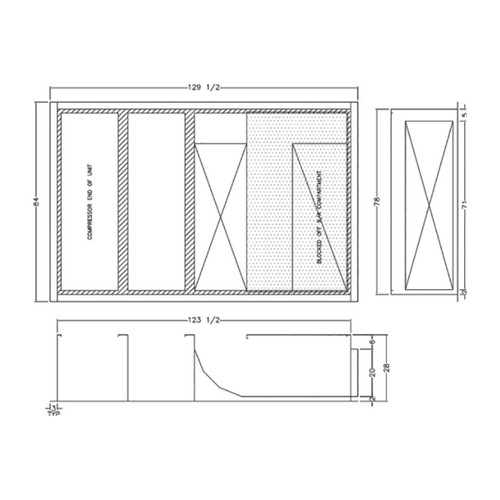
Curbs are not sized by tonnage. They are sized by the cabinet footprint of the specific unit. Manufacturers build their packaged units on a limited number of cabinet sizes, and several tonnages often share one cabinet. A 7.5-ton and a 10-ton unit might share a curb; two 10-ton units from different efficiency tiers might not. Always select the curb from the unit's full model number and the manufacturer's accessory table.

The curb must also match the unit's duct opening locations. A curb from one manufacturer will rarely fit another manufacturer's unit, and sometimes even different generations from the same manufacturer have different footprints.

14-inch vs 24-inch roof curb: which height do I need?

Curb heightTypical useConsiderations
14 inchesStandard height for most installationsProvides room for typical roof insulation and flashing
24 inchesSnow country, thick roof insulation, tapered roofs, extra flashing heightHigher center of gravity; check wind load anchoring
Custom heightsSloped roofs, unusual conditions, equipment railsUsually built to order by curb fabricators

The key number is flashing height. NRCA guidance and most roof membrane manufacturers call for base flashing to extend at least 8 inches above the finished roof surface. If the roof has thick rigid insulation and a cover board, a 14-inch curb may leave less flashing height than that, and a taller curb is the fix. In heavy-snow areas, a 24-inch curb keeps the unit's outdoor air intake and condenser coil above drifting snow. A roofer's warranty may also dictate minimum flashing heights.

Do roof curbs need insulation?

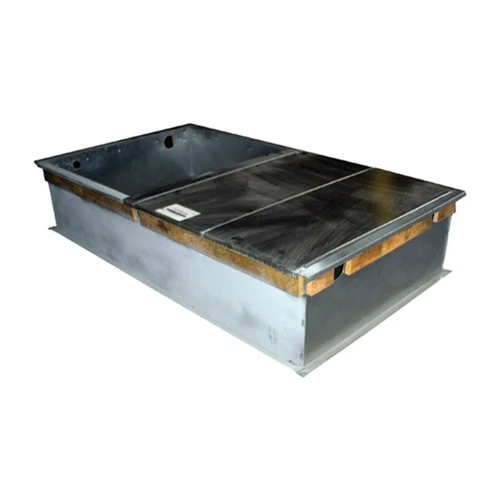
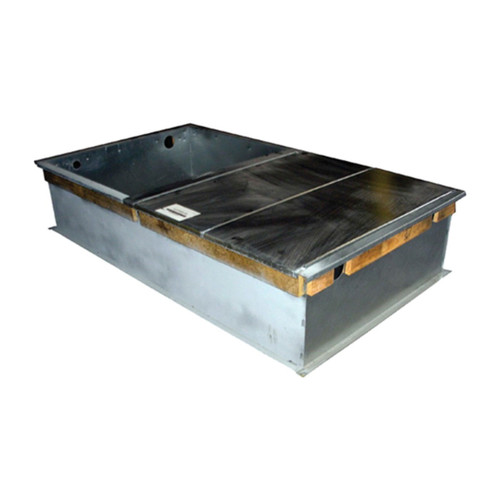
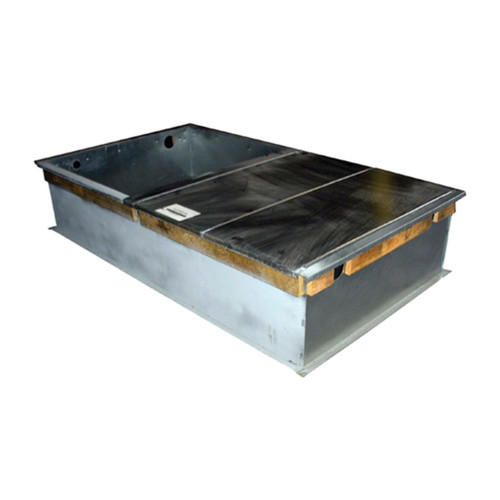
Factory curbs from equipment manufacturers are typically built from galvanized steel with insulated walls or an insulation option. Insulation reduces heat transfer and prevents condensation on the inside of the curb, which is important when cold supply air passes through it in humid climates. Some installers also insulate or line the duct drops within the curb. Check that the curb insulation is compatible with the space below, especially in plenum returns where materials must meet flame and smoke ratings.

What is a curb adapter, and when do I need one?

A curb adapter, sometimes called a transition curb, sits on top of an existing curb and provides a new top rail and duct openings that match the new unit. It lets a contractor replace an older rooftop unit with a newer model that has a different footprint, without removing the old curb, cutting new roof openings, or disturbing the roof membrane. That saves roofing cost and avoids voiding the roof warranty on newer roofs.

Adapters are made for specific old-unit to new-unit combinations. To select one, you need the existing unit's make and model (or the curb's measured dimensions and duct opening locations) and the new unit's model number. Adapters add height, so check that the combined height still provides required service and code clearances, and confirm that the added weight and wind exposure are acceptable.

How is a roof curb attached to the building?

The curb must be anchored to the roof structure, not just set on the deck. In new construction, curbs are usually set on the deck over framing installed by the structural trade, with the curb flanges fastened to the deck or framing. Many jurisdictions, especially in hurricane-prone areas like Florida, require engineered attachment of rooftop equipment for wind uplift, and the unit itself must be secured to the curb with approved clips or fasteners. The Florida Building Code and ASCE 7 wind load provisions are commonly referenced for this. Seismic regions have similar requirements for equipment restraint.

Before setting a curb, confirm that the roof structure can support the unit's operating weight plus the curb and accessories. Upsizing or adding an economizer can increase weight beyond what the original framing was designed for.

What are the basics of roof curb flashing?

  • The curb must be level, even on a sloped roof. Many curbs are built with a pitch built in, or are shimmed during installation, so the unit sits level for proper condensate drainage and compressor oil return.
  • The roof membrane is turned up the curb walls and terminated under a counterflashing or the curb's built-in cant and nailer, per the membrane manufacturer's details.
  • Provide at least the minimum flashing height, typically 8 inches above the finished roof.
  • Place crickets on the upslope side of large curbs so water flows around them rather than ponding behind them.
  • Coordinate with the roofer early. On roofs under warranty, the roofer may need to perform or approve the flashing.

What gasket goes between the curb and the unit?

Curbs ship with a closed-cell foam gasket that runs along the top rail. When the unit is set, its weight compresses the gasket to seal against air and water. The gasket must be continuous, and the unit must be set squarely on the curb; dragging it across the rail can tear the gasket. Duct connections inside the curb should be sealed so conditioned supply air does not leak into the curb cavity.

Are curbs needed for horizontal rooftop units?

Horizontal units with side duct connections can be set on a full curb, on equipment rails, or on a slab at grade. If ducts run through the roof elsewhere, the unit may sit on rails, and the duct penetrations are flashed separately. A full curb still provides better support and weather protection on many roofs.

Which roof curbs are offered here?

This category includes roof curbs and curb adapters for Rheem Commercial Renaissance Line Classic packaged units (RACCYB, RACDYB, RACGYB, RGECYB, RGEDYB, RGEGYB, RHPCYB, RHPDYB) and Daikin light commercial packaged units, including DSH and DHH rooftop heat pumps. Product pages list compatible cabinet sizes, curb heights, and whether the curb ships flat or assembled.

What information do I need to order the right roof curb?

Before ordering, gather the complete model number of the new rooftop unit, its airflow configuration (downflow or horizontal), and the required curb height. For a replacement, add the make, model, and serial number of the existing unit, plus field measurements of the existing curb: outside length and width, rail width, and the size and position of the supply and return openings measured from a fixed corner. Photos of the curb interior help confirm duct locations. Note the roof type and insulation thickness so you can confirm flashing height, and note whether gas piping or electrical conduit will pass through the curb, since some curbs have knockouts or chases for utilities. Finally, check local wind and seismic requirements; in Florida and other high-wind regions, the curb and its attachment may need to carry a product approval or an engineered attachment detail. Getting these details right the first time prevents the most common curb problems: openings that do not line up, a unit that overhangs the rail, or a curb that is too short to flash properly.

Rooftop Unit Roof Curb FAQ

Can I reuse my old roof curb with a new rooftop unit?

Yes, if the new unit uses the same footprint and the curb is structurally sound, level, and properly flashed. If the footprint differs, use a curb adapter.

Do roof curbs come assembled?

Many factory curbs ship knocked down, flat-packed for freight, and are assembled on site with bolts or screws. Some are available fully assembled or welded.

Does the refrigerant type affect the curb?

No. R-454B and R-32 packaged units use the same curb design approach as previous units. What matters is the cabinet footprint of the specific model.

How much does curb height matter for snow?

In heavy-snow regions, a taller curb keeps the unit's coils, outdoor air intake, and service panels clear of accumulated and drifting snow. Many installers in those regions use 24-inch curbs as standard.

Compare
Show: 12 24 48

Fast Shipping

Easy Returns

Warranty Coverage

Financing Available