


Description
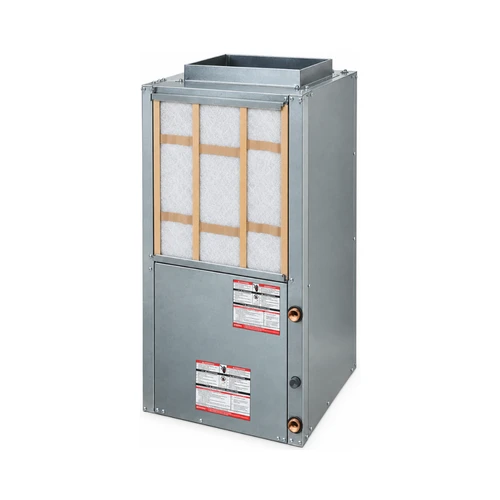
The Comfort-aire MBF120BKC30C01S is a 10-ton, 13.7 EER water source heat pump package unit built for commercial and industrial buildings where a central water loop is already in place. If you're replacing an aging WSHP in a mid-rise office, hotel, or school, this unit drops into the same footprint with belt-driven fan performance and the flexibility of front or top return airflow. It runs on 230V three-phase power and backs the compressor with a 5-year warranty — a real number, not a marketing claim.
Key Features
- 10-Ton Capacity: Handles large commercial zones — conference wings, floor-by-floor hotel corridors, or open industrial spaces — without stacking multiple smaller units.
- 13.7 EER Efficiency: Delivers strong part-load efficiency on a water loop, which directly cuts operating costs in buildings where the unit runs long hours.
- Belt-Driven Fan: Belt-drive lets you adjust fan speed at the sheave to fine-tune airflow for the duct system — useful on retrofits where static pressure doesn't match the old unit's specs.
- Front or Top Return: Two return configurations mean you can match the existing duct penetration without reframing the mechanical closet or rerouting ductwork.
- Vertical Package Design: Self-contained vertical cabinet keeps refrigerant, water coil, and air handling in one unit — no remote condenser, no refrigerant line sets to run between floors.
- 5-Year Compressor Warranty: Manufacturer-backed 5-year compressor coverage reduces long-term ownership risk on a large commercial investment.
Is this the right unit for your project?
The MBF120BKC30C01S is sized for large commercial zones — typically 3,500 to 5,000 square feet of open office or corridor space, depending on building envelope, occupancy load, and climate. It's a poor fit for residential or light commercial applications; 10 tons in a space that needs 3 will short-cycle and wear the compressor fast. Run a proper commercial load calculation before specifying — rule-of-thumb square footage is a starting point, not a substitute.
Water source heat pump vs. split system in a commercial building
A split system needs an outdoor condenser on the roof or ground — that means refrigerant line sets through the building, rooftop penetrations, and a visible outdoor unit. A water source heat pump like the MBF120BKC30C01S rejects heat to the building's water loop instead, so there's no outdoor unit at all. In a multi-tenant building with an existing water loop, WSHP is almost always the right call: lower installed cost per zone, quieter operation, and easier floor-by-floor replacement. If your building doesn't already have a water loop and cooling tower or boiler system, the infrastructure cost of adding one makes a WSHP a harder sell — talk to a mechanical engineer before going that direction.
Where it fits best
- Floor-by-floor replacement in hotels and motels with existing water loops
- Mid-rise office buildings with zone-by-zone WSHP systems
- Schools and universities with central plant infrastructure
- Industrial facilities needing large-zone heating and cooling from a single vertical cabinet
- Retrofit installations where front or top return duct configuration must be preserved
Why 13.7 EER matters in a water-loop building
EER measures how efficiently a unit converts electricity to cooling at a fixed operating condition — higher is better. At 13.7 EER, the MBF120BKC30C01S runs more output per watt than many older commercial units it replaces, which matters when you're running 10 tons of capacity across thousands of annual operating hours. In a building where dozens of WSHP units share one loop, the aggregate efficiency of each zone unit directly affects what the central plant has to do — better zone efficiency means a smaller load on the cooling tower and boiler. That compounds across a building's lifetime.
Installation & what else you’ll need
The MBF120BKC30C01S requires a 230V three-phase electrical supply — confirm panel capacity and wire sizing before ordering. You'll need properly sized supply and return water connections tied into the building loop, with flow rates matched to manufacturer specs. Choose front or top return before rough-in; duct connections need to align with your mechanical room or closet layout. A licensed commercial HVAC contractor should handle refrigerant handling, water coil connections, and commissioning. Belt tension and sheave alignment should be verified at startup to protect the fan motor. Bring in a controls technician if you're integrating with a building automation system.
Frequently Asked Questions
How many tons is the Comfort-aire MBF120BKC30C01S?
The MBF120BKC30C01S is a 10-ton water source heat pump package unit. That's 120,000 BTU of capacity, designed for large commercial zones in buildings with an existing water loop. Confirm your zone load with a commercial load calculation before specifying.
What EER rating does the Comfort-aire MBF120BKC30C01S have?
The MBF120BKC30C01S is rated at 13.7 EER. EER measures cooling efficiency at a fixed operating condition — 13.7 is a solid number for a 10-ton commercial water source heat pump and will outperform most older units it replaces in an existing building loop system.
What voltage and phase does this water source heat pump require?
The MBF120BKC30C01S runs on 230V three-phase power. This is a commercial unit — it is not compatible with standard single-phase residential service. Confirm your electrical panel capacity and have a licensed electrician verify wire sizing before installation.
What is the compressor warranty on the Comfort-aire MBF120BKC30C01S?
Comfort-aire backs the MBF120BKC30C01S with a 5-year compressor warranty. That's manufacturer-confirmed coverage on the most expensive component in the unit — meaningful protection on a 10-ton commercial investment with long annual run hours.
Can a water source heat pump be used without an existing water loop?
Technically yes, but practically it almost never makes sense. A water source heat pump like this one requires a building water loop — typically fed by a cooling tower and boiler — to reject or absorb heat. Installing that infrastructure from scratch in a building that doesn't have it usually costs more than a conventional split or VRF system.
What is the difference between front return and top return on a vertical water source heat pump?
Front return draws air into the unit through the front panel; top return pulls air from a ceiling duct above the cabinet. The MBF120BKC30C01S supports both configurations. The right choice depends on your existing duct layout — pick the one that matches your mechanical room penetrations to avoid rerouting ductwork.