
-
$21.69
- 📦$9.95 Flat-Rate Shipping
- ⚡Fast Shipping
Ships in 1-2 Business Days10 in stock -
$21.00
- 📦$9.95 Flat-Rate Shipping
- ⚡Fast Shipping
Ships in 1-2 Business Days10 in stock -
$20.20
- 📦$9.95 Flat-Rate Shipping
- ⚡Fast Shipping
Ships in 1-2 Business Days10 in stock -
$12.22
- 📦$9.95 Flat-Rate Shipping
- ⚡Fast Shipping
Ships in 1-2 Business Days10 in stock -
$25.27
- 📦$9.95 Flat-Rate Shipping
- ⚡Fast Shipping
Ships in 1-2 Business Days223 in stock -
$29.98
- 📦$9.95 Flat-Rate Shipping
- ⚡Fast Shipping
Ships in 1-2 Business Days223 in stock -
$23.71
- 📦$9.95 Flat-Rate Shipping
- ⚡Fast Shipping
Ships in 1-2 Business Days223 in stock -
$29.58
- 📦$9.95 Flat-Rate Shipping
- ⚡Fast Shipping
Ships in 1-2 Business Days223 in stock -
$41.13
- 📦$9.95 Flat-Rate Shipping
- ⚡Fast Shipping
Ships in 1-2 Business Days223 in stock -
$53.09
- 📦$14.95 Flat-Rate Shipping
- ⚡Fast Shipping
Ships in 1-2 Business Days223 in stock -
$28.47
- 📦$9.95 Flat-Rate Shipping
- ⚡Fast Shipping
Ships in 1-2 Business Days223 in stock -
$40.31
- 📦$9.95 Flat-Rate Shipping
- ⚡Fast Shipping
Ships in 1-2 Business Days223 in stock
Buying guidance
Register Boxes & Duct Boots




 Clearance Center
Mitsubishi R-410A Close-Outs
Remaining stock of Mitsubishi Electric R-410A ductless systems, priced to clear while quantities last.
Shop Mitsubishi Clearance
Insulated Register Boxes and Duct Boots: A Practical Buying Guide
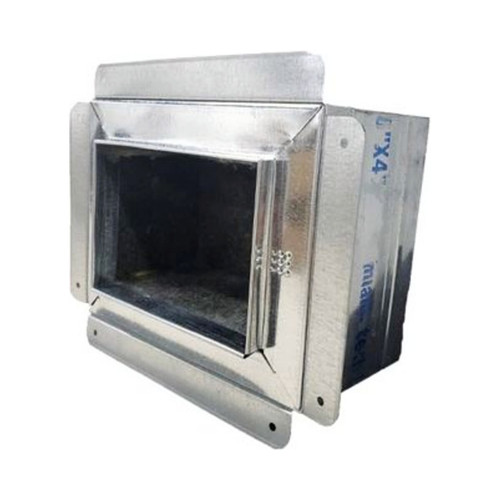
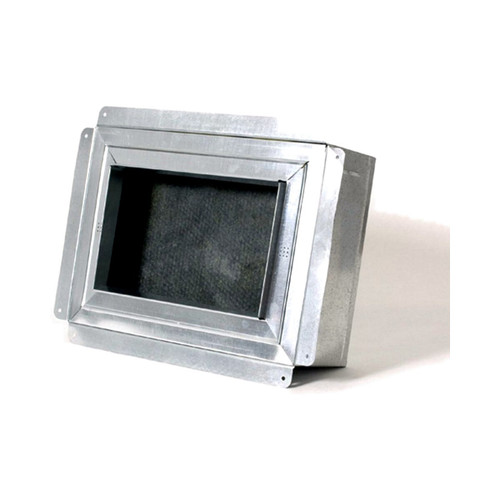
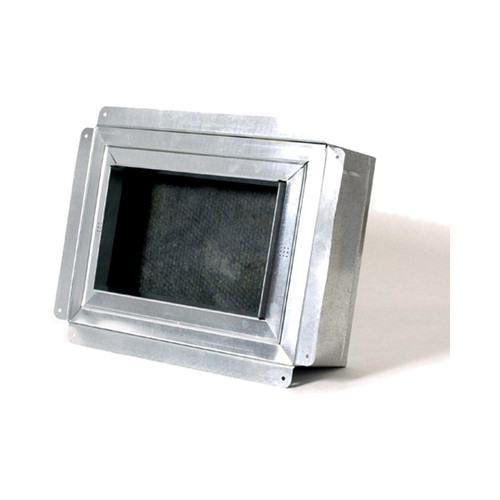
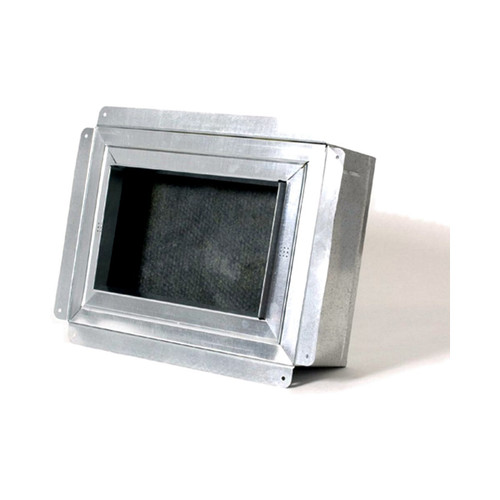
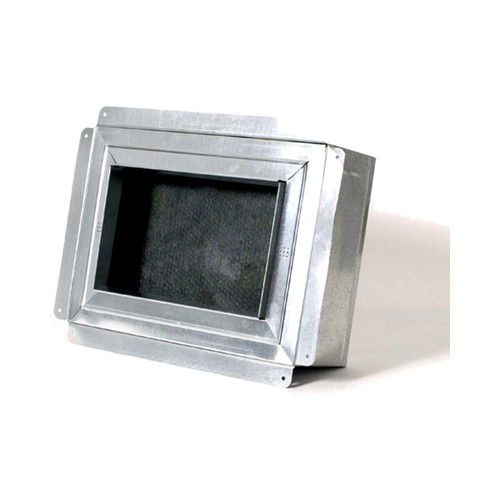
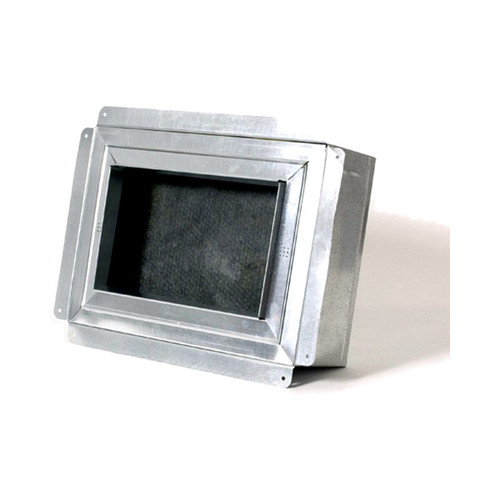
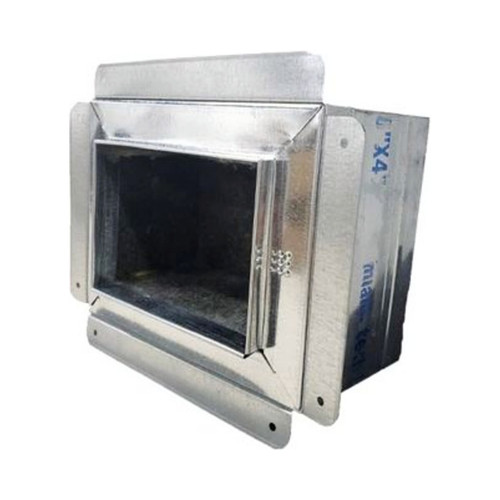
Every supply register in a ducted home ends at a register box, also called a duct boot or register boot. It is the short sheet metal transition that takes the round branch duct coming from the trunk or plenum and turns it into the rectangular opening your grille or register screws into. Because it sits right at the ceiling, wall or floor, the register box is also the point where conditioned air meets the hot, humid air of an attic or crawlspace. Choosing the right box, and installing it well, has a direct effect on comfort, energy use and whether you ever see condensation stains around your vents.
This category brings together insulated register boxes from Snap-Rite and MTI, in the sizes installers use most on residential and light commercial jobs. Use the guide below to choose the right size, insulation level and flange style for your project.
What a register box does
A register box has three jobs. First, it gives the branch duct a solid connection point, usually through a round start collar fastened to the top or side of the box. Second, it spreads the airflow from that round duct across the full face of the register so air leaves the grille evenly instead of shooting out one corner. Third, it frames the opening in the drywall or flooring so the register sits flat and square against the finished surface.
In a home where the ducts run through an unconditioned attic, the box also has to be insulated. A bare sheet metal boot carrying 55 degree supply air through a 120 degree attic will drip condensation onto the drywall within a season, especially in humid climates like Florida and the Gulf Coast. Insulated boxes keep the metal surface above the dew point of the surrounding air and stop that moisture before it starts.
Sizing a register box
Register boxes are sized by their register opening, written width by height, such as 10 x 6 or 12 x 8. That opening should match the nominal size of the register or grille you plan to install. A 10 x 6 register needs a 10 x 6 box; the register face itself is larger than the opening so it covers the edges of the cut in the drywall.
The inlet, the round connection for the branch duct, is sized to the duct. On boxes with a duct board or foil top, like the Snap-Rite 3800 series, you cut the inlet hole where you need it and install a start collar that matches the branch duct diameter, typically 4 to 8 inches for residential supply runs. On boxes with a factory collar, the collar size is fixed, so match it to the duct you are running.
As a rough starting point for residential supply registers:
- 4 x 10 or 4 x 12 boxes are common for floor registers and small rooms fed by 5 or 6 inch duct
- 8 x 4 and 10 x 4 boxes are common on 6 inch branches to bedrooms and baths
- 10 x 6 and 12 x 6 boxes are common on 6 to 8 inch branches to larger rooms
- 12 x 8, 14 x 8 and larger boxes are used for big rooms, open areas and higher airflow outlets
The right size for your job depends on the room load, the airflow you need at that outlet and the throw and noise characteristics of the register itself. Your duct design or Manual D calculation should be the final word.
Insulation levels: R-4.2, R-6 and R-8
Register boxes are insulated to match the duct system around them. R-6 is the most common choice for supply boxes in attics and is the level most energy codes call for on ducts outside the conditioned space in many parts of the country. Some regions and some high performance homes call for R-8. R-4.2 is still used in conditioned or semi-conditioned spaces where code allows it.
Building codes and minimum duct insulation levels vary by state and even by county, so always confirm what your local code requires before you buy. As a general rule, match the box insulation to the flex duct or duct board you are using on the branch run.
Flanged, gasketed and straight boxes
Most residential ceiling and wall boxes have a flange around the opening. The flange laps over the edge of the drywall so the box sits square and the register has a solid surface to pull against. Flanged boxes like the Snap-Rite 3800F carry a half inch drywall flange.
Gasketed boxes add a factory gasket to that flange. When the drywall goes up and the register is installed, the gasket seals the gap between the box and the ceiling. That matters more than it sounds: an unsealed boot is one of the most common sources of duct leakage in a house, because conditioned air escapes into the wall or attic around the outside of the box. Where a duct leakage test is required, or where you simply want a tighter system, the gasketed version (3800FG in the Snap-Rite line) is the better choice.
Straight or unflanged boxes are used where the register is installed against a framed opening or where a different trim detail is planned.
Foil top and duct board top boxes
Snap-Rite 3800 series boxes use a foil-faced duct board top over a 30 gauge wrapper. The duct board top is insulated in its own right and lets the installer place the inlet exactly where the branch duct lands, which is handy when framing or other trades leave less room than planned. The top accepts start collars insulated to R-4.2, R-6 or R-8, so the same box works across different duct systems.
Metal top boxes with a factory collar, like many MTI models, are quicker to set when the layout is predictable and the duct comes straight down into the box.
Return air boxes
Larger boxes such as a 30.5 x 18.5 inch return air box are used behind ceiling return grilles. They work the same way as a supply box but are sized for the much larger return grille and the lower velocity air moving back to the air handler. Insulation still matters on returns in hot attics, because warm return air raises the load on the system.
Installation tips
- Set boxes tight to the framing and fasten them securely so the box does not move when the drywall is hung or the register is screwed in
- Seal every seam and the collar connection with UL 181 rated mastic or tape before the ceiling goes up; you will not get another chance
- Pull the inner core of the flex duct over the collar, clamp it, seal it, then pull the insulation and jacket over and secure them separately
- Keep the branch duct as straight as possible into the box; a tight bend right at the boot robs the outlet of airflow and adds noise
- Cover box openings during drywall and paint so dust does not end up in the duct system
Related parts
A complete branch run usually also needs a start collar or take-off at the trunk, insulated flexible duct, a sleeve connector if you are splicing two lengths of flex, and the register or grille itself. You will find collars, sleeve connectors and flexible duct in the Air Distribution section of HVAC365, sized to work with the boxes in this category.
Frequently asked questions
Is a duct boot the same as a register box?
Yes. Duct boot, register boot and register box all describe the same part: the fitting between the branch duct and the register opening.
Do I need an insulated register box?
If the box sits in an unconditioned attic, crawlspace or wall, an insulated box is strongly recommended and is often required by code. It prevents condensation and keeps the supply air at the temperature the system produced.
What is the difference between the 3800F and 3800FG?
Both are Snap-Rite R-6 foil top insulated boxes with a half inch drywall flange. The 3800FG adds a gasket on the flange to seal the box to the drywall and reduce air leakage around the register.
How do I pick the inlet size?
Match the start collar or inlet to the diameter of the branch duct feeding that outlet. Your duct design determines the branch size; the box size follows the register you choose.


