Heat Pump Rooftop Units for All-Electric and Electrifying Buildings
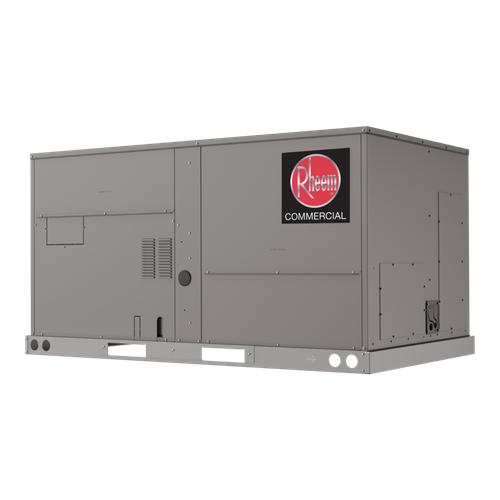
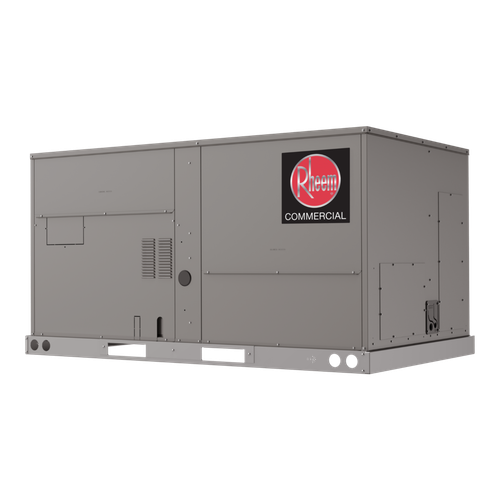
A heat pump rooftop unit uses its refrigeration circuit in both directions: it cools in summer and reverses to move heat into the building in winter. There is no burner and no gas line, which makes heat pump RTUs the standard packaged choice for all-electric buildings and the main option for owners replacing gas/electric units as part of an electrification plan. This category holds packaged heat pumps from 3 to 10 tons from Daikin, Rheem, and Comfortstar. For gas-fired units see Gas/Electric Rooftop Units, and for cooling-only units with optional strip heat see Air Conditioner Rooftop Units.
What Is in This Category
| Brand and series | Tonnage range listed | Refrigerant | Electrical options listed | Notes |
|---|
| Daikin DSH | 3 to 10 tons | R-32 | 208/230V-1, 208/230V-3, 460V-3, 575V-3 | Widest size range here; 13.7 to 14 SEER2 on smaller sizes, 15.2 to 16.7 IEER on larger |
| Daikin DHH | 3 to 6 tons | R-32 | 208/230V-1, 208/230V-3, 460V-3, 575V-3 | Higher-efficiency line; 16.4 to 16.8 SEER2, 17.2 IEER at 6 tons |
| Daikin DP3 heat pump | 3 to 5 tons | R-32 | 208/230V-3, 460V-3 | 13.4 SEER2 |
| Comfortstar Star Pro (CSV) | 3 and 4 tons | R-32 | 208/230V-1 | Inverter-driven; 13.8 and 14.6 SEER2 |
| Rheem RHPCYB | 3 to 6 tons | R-454B | 208/230V-3, 460V-3 | Convertible airflow, direct drive; 13.4 SEER2 and 14.1 IEER listed |
| Rheem RHPDYB | 7.5 and 10 tons | R-454B | 208/230V-3 | 14.1 IEER |
Heat pump RTUs above 10 tons are not currently listed in this category. If you need a larger all-electric packaged unit, ask us, or look at a cooling-only unit with electric heat in Air Conditioner Rooftop Units, keeping in mind that resistance heat costs considerably more to operate than heat pump heat.
When a Heat Pump RTU Fits
- The building has no gas service, or the gas service to the roof is being abandoned.
- Mild and moderate heating climates, where the heat pump can carry most of the heating hours on its own and backup heat runs only on the coldest days.
- Owners with electrification or emissions goals, or jurisdictions that restrict new gas equipment.
- Spaces with modest outside air requirements, such as offices and light retail, where the heating load is driven mostly by the envelope rather than by heating large volumes of cold ventilation air.
Where to be careful: cold climates with long stretches below freezing, high outside air applications such as restaurants or assembly spaces, and buildings that set back hard overnight and need fast morning recovery. A heat pump can still work in those cases, but the backup heat, controls, and possibly a dedicated outdoor air solution need to be designed, not guessed.
Climate and Heating Performance
Heat pump heating capacity falls as the outdoor temperature drops, while the building's heat loss rises. The outdoor temperature where the two lines cross is the balance point. Below it, the heat pump cannot keep up by itself and supplementary heat makes up the difference. Heat pumps also run periodic defrost cycles in cold, humid weather, and during defrost the unit temporarily stops heating the space unless backup heat is energized.
To judge how a specific model will perform, look at the manufacturer's extended heating performance data, which shows capacity and power at several outdoor temperatures. Smaller units under 65,000 Btu/h publish a seasonal heating rating (HSPF2); larger units publish COP at standard rating temperatures. These numbers are on the spec sheet and the AHRI certificate rather than in the product titles here, so download them before you finalize a selection for a cold-climate job.
Pairing Backup Electric Heat
Most packaged heat pumps are installed with electric resistance heat for supplementary and emergency heating. Sizing it correctly matters both for comfort and for the electrical service.
- Find the heating load at design temperature, including ventilation air.
- Subtract the heat pump's capacity at that temperature using the manufacturer's extended performance data. The difference is what the electric heat needs to cover.
- Decide on emergency heat coverage. If the compressor fails in January, does the owner need the electric heat alone to keep the space above freezing, or to maintain full comfort? That decision can push the kit size up.
- Select a kit approved for the exact unit, matched to voltage and phase. Heat kits are listed in the Commercial HVAC category with the unit family in the title, for example Rheem electric heat kits for 6 ton packaged heat pumps.
- Recalculate the circuit. The unit's minimum circuit ampacity and maximum overcurrent protection change with the heat kit. Use the combination values from the installation manual.
Controls matter as much as size. A thermostat or controller that stages electric heat only when the heat pump cannot keep up, and that limits electric heat during recovery from setback, will keep operating costs down. Check the controller's outdoor temperature lockout settings during commissioning.
Converting From Gas/Electric to Heat Pump
Swapping a gas/electric RTU for a heat pump RTU of the same cooling tonnage is a common electrification project. Plan for these items:
- Electrical capacity. The heat pump plus electric heat will usually draw more current than the gas/electric unit it replaces. Confirm the panel, feeder, and service can carry it before you sell the job.
- Gas line. Cap and abandon the gas line to the unit according to the local fuel gas code.
- Curb and footprint. Check the curb dimensions of the new unit; a curb adapter may be needed.
- Thermostat. A heat pump requires a thermostat or controller that can operate the reversing valve and stage supplementary heat.
- Owner expectations. Supply air from a heat pump is cooler than from a gas furnace. Occupants used to hot air from the diffusers may notice the difference even when the space holds setpoint.
Voltage, Efficiency, and Refrigerant
Single-phase 208/230V options here are 3 to 5 tons from Daikin and the Comfortstar Star Pro. Three-phase 208/230V and 460V are available across most of the range, and 575V is available on Daikin DSH and DHH models. Cooling efficiency in this category runs from 13.4 to 16.8 SEER2 on units under 65,000 Btu/h, and from 14.1 to 17.2 IEER on larger units.
Daikin and Comfortstar units here use R-32, and Rheem units use R-454B. Both are A2L refrigerants. Technicians need A2L-rated recovery machines, vacuum pumps, and leak detectors, plus training on A2L handling. Follow the manufacturer's installation manual for any refrigerant detection or mitigation requirements.
Ordering Notes
Order the heat kit, curb adapter, economizer, and thermostat together with the unit so the job is not held up waiting on one part. Heat kits are voltage and phase specific, so double-check that the kit matches the unit you are ordering, not the unit coming off the roof. Three-phase 208/230V units in the 3 to 6 ton range are generally the easiest to source; 460V and 575V configurations and the larger sizes may take longer, so confirm availability before you schedule the crane. When an owner is weighing a heat pump against a gas/electric replacement, send us both options to price side by side with their kits and accessories.
Frequently Asked Questions
Can a heat pump rooftop unit heat a building in a cold climate?
It can, with properly sized backup heat and controls. Check the model's heating capacity at low outdoor temperatures in the extended performance data and size supplementary heat for the gap.
What size electric heat kit do I need?
Size it from the design heating load minus the heat pump capacity at design temperature, then adjust for how much emergency heat the owner wants. Choose a kit approved for that unit family, voltage, and phase.
Will my electrical service handle a heat pump RTU?
Compare the unit's minimum circuit ampacity and maximum overcurrent protection with the heat kit installed to the existing circuit and panel capacity. Converting from gas often requires a larger circuit.
Is a single-phase heat pump package unit available?
Yes, from 3 to 5 tons in Daikin DSH and DHH, and in 3 and 4 tons in the Comfortstar Star Pro inverter line.
Why does a heat pump RTU blow cooler air than a gas unit?
Heat pumps deliver lower supply air temperatures and run longer cycles. The space still reaches setpoint; the air from the diffusers simply feels less hot.
Do these units need an economizer?
Energy codes require economizers on many units above a certain cooling capacity, depending on climate zone. Check the locally adopted code and the model-specific economizers listed in Commercial HVAC.