Replacing a Commercial AC Condensing Unit: From the Old Nameplate to the Right Part Number
Most commercial condensing units are bought as replacements. The building already has an air handler, a line set, a disconnect, and a thermostat, and the outdoor unit has failed or reached the end of its life. Getting the replacement right means reading what is already there and matching it on five things: capacity, voltage, refrigerant, the indoor coil it will work with, and the controls. This page walks through that process for the cooling-only condensers listed here and explains how the Rheem and Daikin part numbers tell you what you are looking at.
What Is Listed Here
| Series | Sizes | Power | Rating shown | Refrigerant |
|---|
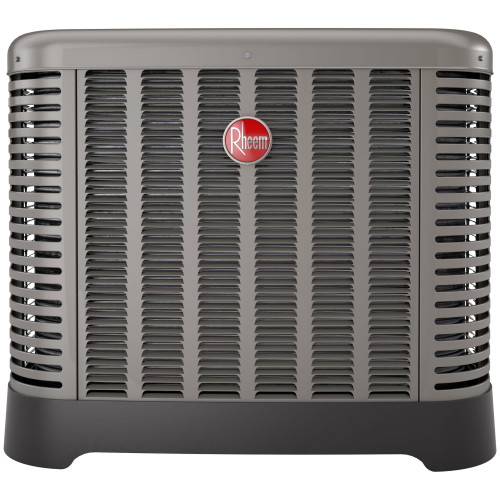
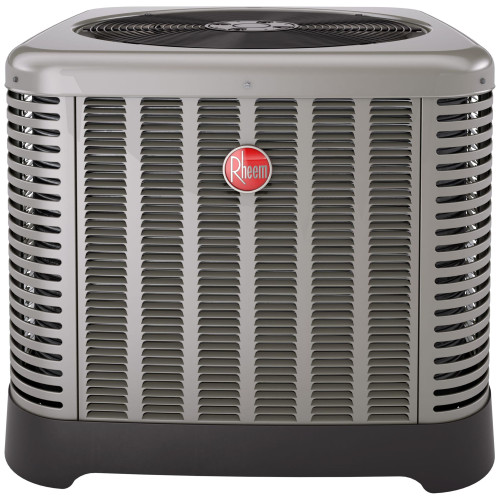
| Rheem RA14AY, RA15AY, WA14AY | 3, 3.5, 4, 5 tons | 208/230V or 460V 3-phase | SEER2 (13.8 to 14.3 on current listings) | R-454B |
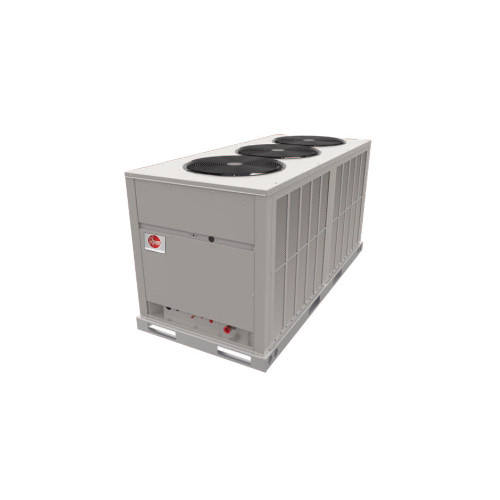
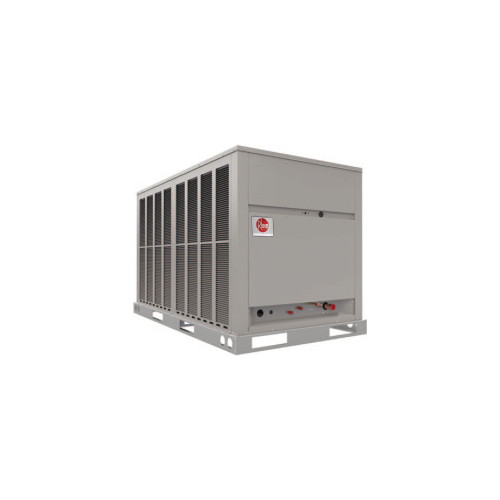
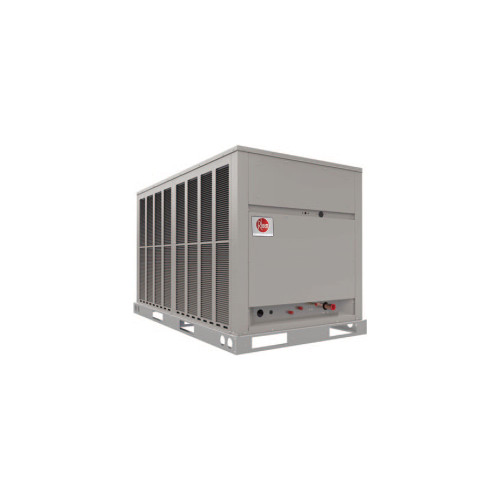
| Rheem Commercial Classic RACY | 6.5, 7.5, 10, 12.5, 15, 20 tons | 208/230V or 460V 3-phase | EER and IEER | R-454B |
| Daikin DC3SEA | 3, 4, 5 tons | 208/230V or 460V 3-phase | 13.4 SEER2 | R-32 |
| Daikin DC6TE | 7.5, 10 tons | 208/230V or 460V 3-phase | 16.4 IEER | R-32 |
| Daikin DX13SA, DX14XA (earlier models) | 3 to 10 tons | 208/230V or 460V 3-phase | Older SEER or IEER listings | Check the spec sheet |
You will also see a few Daikin DZ-prefix models on this page. Those are heat pump condensers, not cooling-only units; the full heat pump lineup is on Commercial Heat Pump Condensers. Surfsil SeaCoast coil coating options for 7.5 and 10 ton condenser coils are listed here as well for coastal sites.
Step 1: Read the Existing Nameplate
Before anything else, photograph the nameplate on the old condenser and on the indoor air handler or coil. You want the model and serial numbers, the voltage and phase, the refrigerant type and factory charge, the minimum circuit ampacity (MCA), and the maximum overcurrent protection (MOP). The model number usually gives nominal capacity; the serial number often gives the manufacture date, which tells you how old the indoor coil is and whether it is worth keeping.
Also note the disconnect size and the wire gauge feeding it. A new unit with a higher MCA or MOP than the old one may need a breaker or wire change. Catching that before the install day keeps the electrician from making a second trip.
Step 2: Decode the New Part Numbers
Both brands build capacity and voltage into the part number, which makes it easy to confirm you have the right version before you order.
- Rheem RACY: the three digits after RACY2 are nominal capacity in thousands of Btu/h, so RACY2090 is 90,000 Btu/h (7.5 tons) and RACY2240 is 240,000 Btu/h (20 tons). The letter that follows is the voltage code on these listings: C is 208/230V 3-phase and D is 460V 3-phase.
- Rheem RA14AY, RA15AY, WA14AY: the two digits after the series are capacity in thousands of Btu/h (36 is 3 tons, 60 is 5 tons), followed by AC for 208/230V 3-phase or AD for 460V 3-phase on these listings.
- Daikin DC3SEA and DC6TE: the digits give capacity (DC3SEA36 is 3 tons, DC6TE120 is 10 tons), and the last two digits give voltage: 30 for 208/230V 3-phase and 40 for 460V 3-phase.
- Daikin DX13SA and DX14XA: capacity in the middle (0363 is 36,000 Btu/h) with a final 3 for 208/230V or 4 for 460V.
Always cross-check the decoded voltage against the product name and spec sheet. If a listing and a decode ever disagree, the spec sheet wins.
Step 3: Decide Whether the Indoor Coil Can Stay
This is where most replacement jobs are won or lost. A condenser only delivers its published capacity and efficiency when it is installed with an approved indoor coil, and manufacturers expect approved pairings in their installation instructions. Three questions decide it:
- Is the existing coil the same refrigerant? If the old system is R-410A or R-22, it cannot simply be reconnected to an R-454B or R-32 condenser. The metering device, coil, and in many cases the safety controls are specific to the refrigerant. An A2L condenser needs an indoor section listed for that A2L refrigerant.
- Is the combination approved? Look up the pairing in the AHRI Directory or in the condenser’s installation literature. If the existing air handler is not listed with the new condenser, plan on replacing it.
- Is the coil in good condition? An old coil with pinhole leaks or heavy fouling will undo a new condenser in a season.
When the coil has to go, the cleanest path is often a matched bundle from Commercial AC Split System Bundles, or a new indoor section from Commercial Air Handlers. On 6.5 to 20 ton Rheem RACY condensers, the matching indoor section is the RHCYA belt-drive VFD air handler; on 3 to 5 ton Rheem condensers, it is the RH2TY multi-position air handler.
Step 4: Check the Line Set
Reusing an existing line set saves time, especially when it runs through finished ceilings or up a building. Whether you can reuse it depends on three things in the new condenser’s installation manual: the required suction and liquid line sizes for your capacity and length, the maximum allowed equivalent length and vertical lift between sections, and the manufacturer’s guidance on cleaning or flushing lines that held a different refrigerant and oil. If the old lines are undersized for the new unit, or the run exceeds the limits, replace them. Long runs and large lifts can also require oil traps on the suction riser, so check the long-line guidance on the spec sheet before you commit.
Step 5: Match the Controls and Staging
Most of the 3 to 5 ton condensers on this page are listed as single-stage and run from a standard Y call. The Rheem RACY units and the Daikin DX14XA units are listed as two-stage, and you should check the Daikin DC6TE spec sheet for its staging. A two-stage condenser means the thermostat or building controller needs two cooling stages wired to the condenser and the air handler’s VFD or blower set up to change airflow with the stage. A single-stage thermostat on a two-stage condenser leaves part-load efficiency on the table and may not meet the system’s published IEER. If the building is on a BAS, confirm the controller outputs before install day.
On a straight replacement, also confirm the thermostat wire count. A two-stage condenser fed by a run that only has enough conductors for a single stage will need a new cable pulled, and that is easier to price in now than to discover with the ceiling tiles already back in place.
Placement Details That Affect the Order
- Roof versus grade: roof-mounted condensers usually sit on rails or dunnage rather than a curb, since there is no duct penetration. Check roof load and crane access. Grade-mounted units need a level pad and protection from vehicle traffic.
- Clearances: condensers move a lot of air. Units boxed into a corner or under an overhang recirculate their own discharge and lose capacity. The installation manual lists side and top clearances.
- Low ambient cooling: buildings with year-round internal loads, such as restaurants, data rooms, and interior offices, may need cooling on cold days. Check whether the condenser supports a low-ambient accessory and what the minimum operating outdoor temperature is.
- Coastal exposure: consider a coil coating on any condenser within a few miles of salt water.
Frequently Asked Questions
How do I tell if a Rheem RACY condenser is 208/230V or 460V?
On the listings here, the letter after the capacity digits is the voltage code: C for 208/230V 3-phase, D for 460V 3-phase. The product name states it as well.
Why is the 6.5 ton RACY rated in EER instead of SEER2?
At 78,000 Btu/h it is above the 65,000 Btu/h cutoff, so it is tested and rated in EER and IEER like other larger commercial equipment.
Can I put an R-454B condenser on my existing R-410A air handler?
Not as a simple swap. The indoor coil and metering device must be listed for R-454B and approved with that condenser. In most replacements of older R-410A systems, the air handler is replaced too.
The old unit was 7.5 tons. Should I replace it with 7.5 tons?
Only if the load has not changed. Changes in occupancy, lighting, or equipment can shift the load. A quick load review avoids carrying an old sizing mistake forward.
What is the difference between Daikin DC6TE and the earlier DX14XA?
The DC6TE is Daikin’s current R-32 model listed at 16.4 IEER; the DX14XA is an earlier model listed at 14.8 IEER. Confirm refrigerant and indoor pairing for either on the spec sheet.
Do I need a new disconnect when I replace the condenser?
Only if the existing disconnect or breaker does not fit the new unit’s MOP and MCA, or if the old disconnect is damaged. Compare the new nameplate values to what is installed.