null

Ductless Mini Split Dual Zone

Running two separate rooms from one outdoor unit is the core idea behind a dual zone ductless mini split, and it is also where most of the buying complexity lives. Whether you are adding cooling to a garage and a home office, conditioning two bedrooms on the same floor, or fitting out a small commercial space with individual room control, the dual zone configuration handles situations where a single indoor head is not enough and a full ducted system is not practical. HVAC365 stocks the capacity and application options this kind of install actually calls for, so you are not guessing at lead times when a job is already in progress.

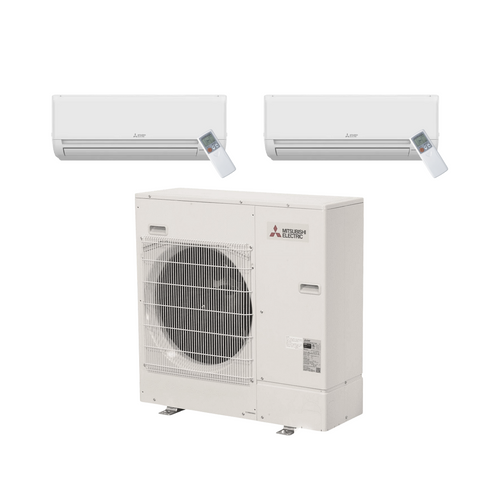
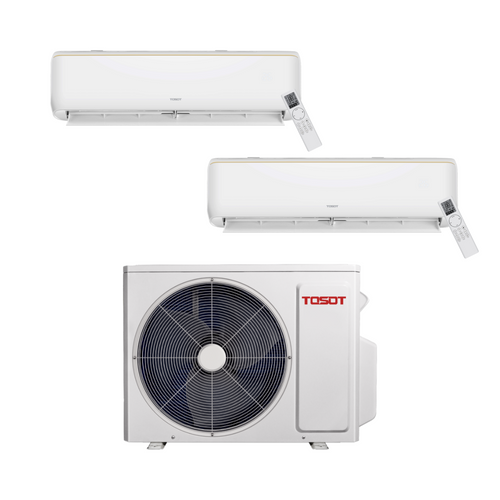
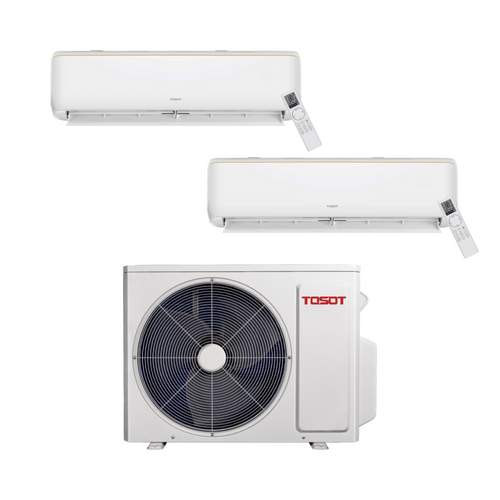
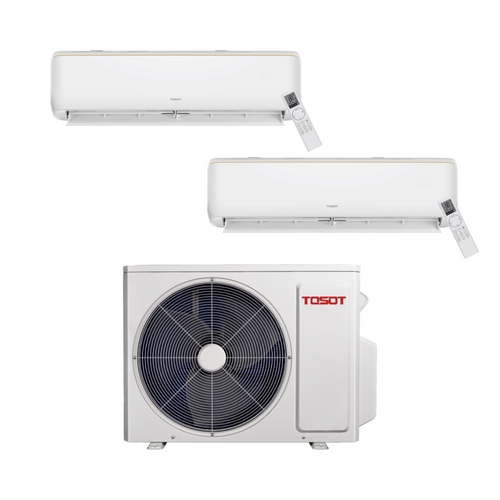
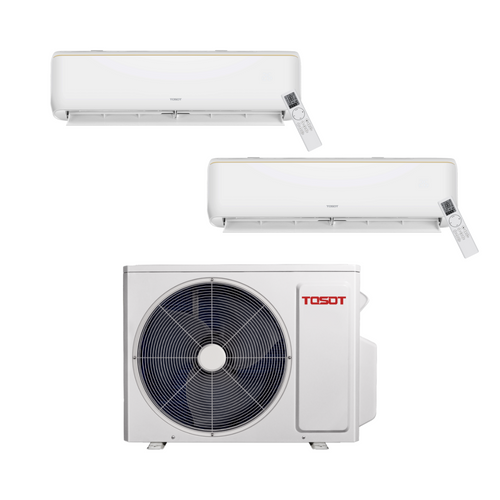
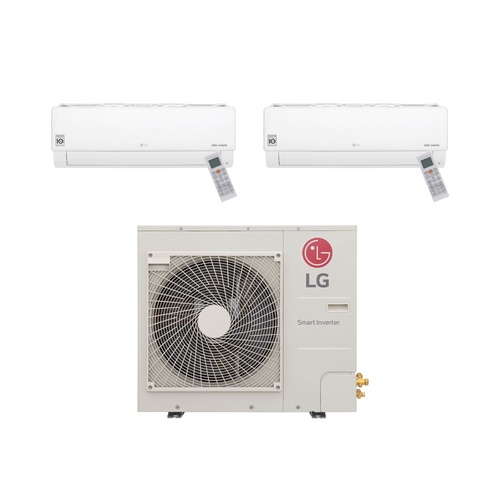
This category covers multi-head ductless heat pump systems configured specifically for two indoor zones, each independently controlled, served by a single matched outdoor condensing unit. Buyers who land here range from homeowners managing a comfort problem in their own house, to contractors spec-matching a system to a specific job, to light commercial operators adding zoned climate control to a small office or studio, to distributors sourcing volume for a fleet of installs. The considerations shift slightly across those groups, but the equipment itself is the same starting point for all of them.

Picking the Right Dual Zone System

Sizing is the single most important decision, and it is also the one most often shortcut in ways that cause long-term problems. A dual zone system has to be sized at two levels: the total capacity of the outdoor unit, and the individual capacity of each indoor air handler. Both need to match the actual loads of the spaces they serve, not a rough guess based on square footage alone. A proper load calculation (Manual J or equivalent) accounts for insulation, window area, ceiling height, local climate, and occupancy. Without one, you are gambling on a number. An oversized outdoor unit will short-cycle; undersized indoor heads will run continuously and never hit setpoint.

The balance between the two zones also matters. If one room is significantly larger or has more solar gain than the other, the indoor heads may need to be different capacities. Most dual zone systems support mixed indoor unit sizes, but you need to verify that the specific outdoor unit you are considering supports the combination you intend to use. Compatibility is not universal across brands or even within a brand's own product lineup.

Application type shapes the choice at a high level. A residential bedroom-plus-office setup has different duty cycles, ambient temperature requirements, and installation constraints than a light commercial space running all day. Some outdoor units are rated for lower ambient temperatures and are genuinely useful in cold-climate heating applications; others are not, and that distinction matters a great deal if heating is a primary function rather than a secondary one. If you are relying on the system for heat, check the rated heating capacity and operating range at your actual low-temperature design day, not just the nominal tonnage number.

Efficiency tier is worth thinking through before you choose, not after. Higher-efficiency systems carry a higher upfront cost, but utility rebate programs in many regions offset part of that difference if the unit meets a minimum efficiency threshold. Those thresholds vary by utility and by state, so look up the specific program that applies to your installation address before you lock in a model. A unit that just misses a rebate cutoff can end up costing more in total than a slightly more expensive unit that qualifies. For distributors and contractors handling multiple installs, that calculation compounds quickly.

The installation-readiness factors that go along with these decisions, things like electrical service, line-set routing, and drainage, are covered in the buying tips below. If a buying decision depends on site conditions you have not yet assessed, that is the place to start.

Buying Tips

  • Do not split the system across brands. The outdoor unit and both indoor heads need to be a matched system from the same manufacturer, verified compatible with each other. Mixing components from different brands or different product families within one brand, even if the connections look compatible, typically voids the warranty and may not function correctly. Buy the system as a set and confirm compatibility before anything ships.
  • Account for the refrigerant line set length to each head separately. The maximum line set length from the outdoor unit to each indoor head is specified by the manufacturer, and the two runs are almost never identical in a real installation. If either run exceeds the rated maximum, the system will underperform or fail to operate correctly. Measure the actual routing path, not the straight-line distance, before ordering.
  • Check whether a branch box (or manifold) is required for your configuration. Some dual zone outdoor units connect directly to two indoor heads via independent line sets; others require a branch box that splits refrigerant flow from a single outdoor connection. These are not interchangeable approaches, and the required components differ. Confirm the connection architecture for the specific model you are ordering before you plan the line-set routing.
  • Verify electrical requirements before ordering. Dual zone outdoor units typically require a dedicated circuit. Voltage, amperage, and phase requirements vary by model and capacity range. Check the unit's nameplate data against your available electrical service before the equipment ships, not after it arrives on site.
  • Confirm drainage for each indoor head independently. Wall-mounted indoor heads produce condensate that has to drain somewhere. Each head in a dual zone system has its own drain connection. If gravity drainage is not possible at one or both locations, you will need a condensate pump at that head. Plan this before installation, not during it.
  • Look up rebate eligibility before you finalize the model. Efficiency-based rebate thresholds vary by utility and state program. A model that qualifies can meaningfully reduce net cost compared to one that falls just short — the sizing and efficiency considerations covered earlier in this page apply directly here.

Common Questions

Q: Can I mix indoor head types — for example, a wall-mount in one zone and a ceiling cassette in another?

A: Yes, most dual zone outdoor units support different indoor head styles across the two zones. The constraint is capacity compatibility, not style. You need to confirm that the specific outdoor unit you are considering lists both head models as approved indoor units in its compatibility documentation. Do not assume approval based on connector type or brand alone.

Q: What happens if one zone does not need conditioning while the other does?

A: Each zone operates independently. You can run one indoor head while the other is off. The outdoor unit modulates to serve only the active zone. This is one of the practical advantages of a dual zone system over a single larger unit serving both spaces simultaneously.

Q: Do dual zone systems work for heating as well as cooling?

A: Most dual zone ductless systems are heat pumps and provide both heating and cooling. Heating performance in cold weather varies significantly by model — some units are rated to operate and deliver useful heat at very low outdoor temperatures, others are not. If heating is a primary function, check the rated heating capacity and low-ambient operating range for your design-day temperature before selecting a model. This is covered in more detail in the sizing guidance above.

Q: Does HVAC365 ship dual zone systems complete, or do I need to source components separately?

A: HVAC365 stocks dual zone systems as matched sets — outdoor unit plus both indoor heads — so you are not piecing together compatibility on your own. Nationwide shipping is available. If you have questions about a specific configuration or lead time, contact HVAC365 directly before ordering.

Compare
Show: 12 24 48

Fast Shipping

Easy Returns

Warranty Coverage

Financing Available