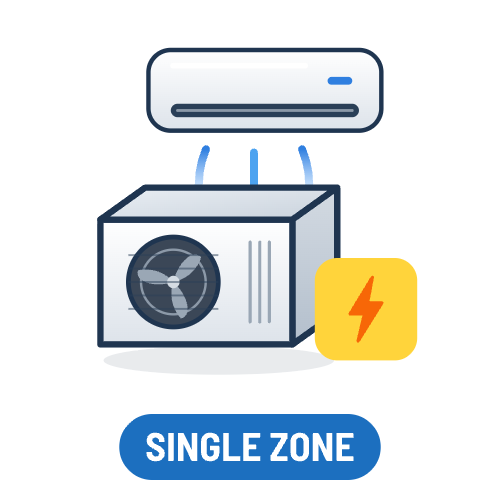
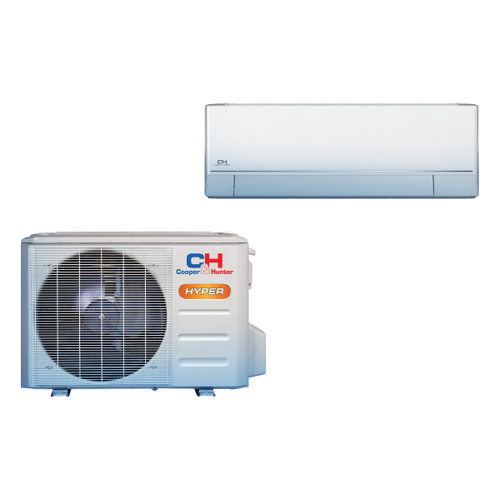
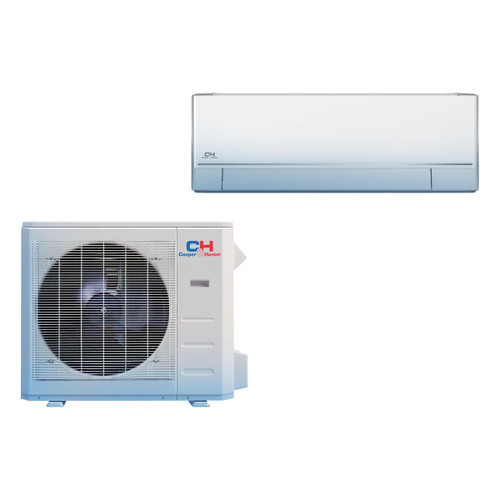
Adding comfort to a room that has no ductwork — a converted garage, a home addition, a back office — is exactly the kind of problem a single-zone ductless mini split is built for. You get heating and cooling in one compact system with no duct runs to engineer or punch through walls, and HVAC365 stocks the capacity and efficiency options to match the actual job, whether that job is a quick residential swap or a light commercial install where the lead time cannot slip. Single-zone ductless mini splits are among the most straightforward HVAC investments a building can make: one indoor air handler, one outdoor condensing unit, a refrigerant line set connecting them, and dedicated comfort for a defined space. HVAC365 ships to contractors and homeowners across the continental United States.
The buyers who land here cover real ground. Homeowners replacing an aging window unit or conditioning a new addition make up a big share of the traffic — they want a system that works reliably and qualifies for local rebates. Contractors and HVAC installers come here to spec the right capacity for a specific job and confirm availability before they schedule the install. Light commercial operators — a small office, a server closet, a retail addition — need a system sized and rated for continuous or demanding duty. And distributors buying in volume for regional resale or fleet stock will find the breadth here to fill multiple orders without juggling multiple suppliers. The category serves all of them; the equipment and the buying logic differ by application, but the product type is the same.
Choosing the Right Single-Zone System
Capacity is the first decision and the most consequential. The right BTU or tonnage rating for a space comes from a proper load calculation — Manual J or an equivalent method — not from square footage alone. Ceiling height, insulation quality, window area, orientation, and internal heat loads all shift the number meaningfully. Oversizing is a common and expensive mistake: an oversized system short-cycles, which means it reaches setpoint quickly, shuts off, and never runs long enough to pull humidity out of the air. You end up with a space that feels clammy even when the temperature reads correctly. Undersizing is the opposite problem — the unit runs constantly, falls short on the hottest or coldest days, and wears out faster. Confirm the capacity your load calculation actually calls for before you order.
Application type shapes the decision just as much as capacity. A system designed for standard residential duty is rated and tested under residential assumptions about run time and ambient conditions. A space with higher internal loads — a server room, a restaurant prep area, a space that sees continuous occupancy — may need a unit rated for those conditions. Ask whether the system you're considering is rated for the operating environment of the actual space, not just the square footage.
Efficiency tier is the third buying-decision axis, and it has both a cost dimension and a compliance dimension. Higher SEER and HSPF ratings generally mean lower operating costs over the system's life, but they also carry a higher upfront price. The crossover point where the efficiency premium pays back depends on local utility rates and how many hours the system runs per year — a room that runs 24/7 in a hot climate has a very different payback curve than a seasonal-use space in a mild one. Beyond the economics, check your local jurisdiction's minimum efficiency requirements and whether the utility serving the building offers rebates for hitting a specific efficiency threshold. Those thresholds change; look them up for the specific install address rather than assuming. The installation-readiness factors covered further down — particularly the electrical supply already on site — can also bear on which efficiency tier is practical for a given retrofit.
For contractors matching a system to a specific job, the buying judgment often also includes lead time and availability. A unit that is technically perfect but backordered past the install date is not a solution. Distributors buying in volume should weigh whether the line they're stocking is consistently available, not just available today.
Buying Tips
- Match the line set length to the actual run, not a round number. Line set length affects system capacity and efficiency, and a run that is too long for the rated unit can hurt performance in ways that are not obvious until the system is under load. Measure the actual distance — including any vertical rise — before you order the line set.
- Check whether the system ships as a matched set or requires separate component ordering. Some single-zone mini splits ship as a complete package (indoor unit, outdoor unit, sometimes the line set); others require you to order components individually and match them yourself. A mismatched indoor/outdoor combination voids most manufacturer warranties and can cause refrigerant-side problems that are not immediately obvious.
- Factor in the mounting location of the outdoor unit before you order. A unit installed in a confined space, against a wall with inadequate clearance, or in a location that restricts airflow will underperform and may fail early. That decision is cheaper to get right on paper than after delivery.
- Verify the warranty registration requirements before the install is complete. Many manufacturers require online registration within a specific window after install, and some require a licensed contractor registration to activate the extended warranty. Missing that window typically drops you to the base warranty, which can be significantly shorter.
How Single-Zone Mini Splits Are Configured
Within this category, the primary configuration distinction is the indoor unit type. The most common is a wall-mounted air handler — the high-wall cassette style most people picture when they think of a ductless system. It mounts high on the wall, distributes air across the room, and is the right choice for most residential and light commercial spaces where a ceiling or floor installation is not practical or not desired.
Ceiling cassette indoor units are the alternative for spaces where a flush-ceiling presentation matters — a retail space, a conference room, a finished basement where a wall unit would look out of place. They distribute air in four directions from the center of the ceiling, which gives more even coverage in open, roughly square rooms. They require ceiling plenum space above the mounting point and a slightly more involved installation, but in the right room they work better than a wall unit.
Floor-mounted and ceiling-suspended indoor units fill in the rest of the configuration map — floor units suit spaces where high-wall mounting is not possible (rooms with mostly glass walls, spaces where the unit needs to sit below a window), and suspended ceiling units work in taller commercial spaces where neither a wall nor a flush-ceiling mount is practical.
- Wall-mounted (high-wall cassette): Most common, straightforward installation, suits most residential and light commercial spaces.
- Ceiling cassette: Flush-ceiling install, four-way air distribution, best in open square rooms with available plenum depth.
- Floor-mounted: Low-wall or floor-level install, suited to glass-wall rooms or spaces with height restrictions.
- Ceiling-suspended: Hangs from the ceiling structure, suited to taller commercial or industrial spaces where wall or flush-ceiling mounting is not feasible.
The outdoor condensing unit pairs one-to-one with the indoor unit in a single-zone system. That is the defining feature of this category relative to multi-zone systems: one outdoor unit, one indoor unit, one dedicated space. If you are conditioning multiple separate rooms, that is a different product category — a multi-zone system with one outdoor unit serving several indoor heads.
What It Takes to Install a Single-Zone Mini Split
Single-zone ductless systems do not use ductwork, but they are not plug-and-play. Before the unit arrives on site, several site conditions need to be verified against the specific model's requirements.
Electrical supply is the starting point. Mini splits require a dedicated circuit — not a shared one — with the correct voltage, amperage, and breaker rating for the specific outdoor unit. Pull the electrical specifications from the model's spec sheet or nameplate and compare them against what the panel can actually supply. A retrofit that requires a panel upgrade or a new circuit run is a real cost item that belongs in the project estimate before the unit is ordered, not after.
The refrigerant line set connects the indoor and outdoor units through a small penetration in the wall or ceiling. Measure the actual distance and vertical rise of that run carefully, because line set length affects both performance and which line set diameter the manufacturer specifies. Check the manufacturer's documentation for maximum and minimum line set lengths — some systems have a minimum length as well as a maximum, particularly at low ambient temperatures.
Condensate drainage is straightforward on most mini split systems compared to central air, but it still needs a plan. The indoor air handler produces condensate during cooling operation. Most units gravity-drain through a small line; verify where that line will terminate and whether the pitch is adequate. In situations where gravity drainage is not possible, a condensate pump is the fix — that is an accessory to plan for, not improvise around.
Operating temperature range is a real consideration, especially for heating applications in cold climates. Mini splits are heat pumps, and their rated heating capacity at a given outdoor temperature drops as temperatures fall. Look up the rated low-temperature heating performance for the specific model you are considering and compare it against the design heating temperature for the install location. A system rated for moderate cold-climate use may not be adequate in a region that sees sustained deep-cold temperatures — check the spec sheet, not just the marketing summary.
Controls and integration deserve a look before the order is placed. Most single-zone mini splits include a wireless remote; some offer wired wall controls, smart home integration (Wi-Fi control via an app or third-party smart home platforms), or compatibility with building automation systems. If the building or homeowner has a specific controls requirement, verify that the model supports it — adding aftermarket controls is possible in some cases and not in others, and the time to sort that out is before the install, not during it.
Clearances around the outdoor unit — sides, top, and front — must meet the manufacturer's minimum specifications. A unit tucked too close to a wall, fence, or building structure restricts airflow across the condenser coil, reduces efficiency, and can cause high-pressure faults in hot weather. Check the installation manual for the specific clearance requirements before choosing the mounting location.
Things You Should Know
Q: How do I determine the right capacity for my space?
A: Run a proper load calculation — Manual J or equivalent — for the specific space. The sizing section above covers why square footage alone is not enough and what the real inputs are. The output you need is a calculated BTU or tonnage figure, not a rule-of-thumb estimate.
Q: Can I install a single-zone mini split myself, or do I need a licensed contractor?
A: The refrigerant-side work — connecting line sets and commissioning the refrigerant charge — requires an EPA Section 608 certification in the United States. Many jurisdictions also require a licensed HVAC contractor for the full installation and a permit for the electrical work. Even if a pre-charged system is used, check your local permit and licensing requirements before scheduling the install.