null
Tube Heaters

Tube Heaters

Cold, drafty spaces that are too large or too open for forced-air heating are exactly where tube heaters earn their keep. Instead of trying to heat every cubic foot of air in a high-bay warehouse or a wide-open garage, a tube heater radiates warmth directly at the floor, the equipment, and the people who actually occupy the space. That focused delivery means occupants feel comfortable without the energy waste of conditioning air that immediately escapes every time a door opens. HVAC365 stocks tube heaters across a range of capacities and configurations so the equipment matches the actual job, whether that's a single-car garage or a large commercial facility, and the catalog runs deep enough that a contractor or buyer doesn't have to compromise on fit just to find something in stock. Browse the broader heaters lineup if you're still deciding which heating type fits your situation.

Tube heaters are radiant heating units, most commonly gas-fired, that use a long metal tube to generate and radiate infrared heat. The burner heats the tube, the tube radiates that heat downward and outward, and the objects and surfaces in the path absorb it rather than relying on circulating warm air. That's why tube heaters work so well in spaces that see constant air movement: docks, hangars, shops, and facilities with high open ceilings where a forced-air unit would spend most of its output heating dead air that never reaches anyone. The buyer types that gravitate toward this category reflect the applications: homeowners finishing a detached garage or workshop, commercial facility managers specifying supplemental or primary heat for a loading area, contractors sourcing equipment for a commercial or industrial install, and distributors stocking for a regional portfolio of similar accounts.

Choosing the Right Tube Heater

The most important question to settle before buying is capacity, and the right way to settle it is a proper heat-loss calculation for the specific space, not a rule-of-thumb estimate. A calculation accounts for ceiling height, insulation values, wall construction, door and window area, local design temperature, and ventilation rate. Those variables interact in ways that make rough guessing unreliable, and tube heaters are often going into large, poorly insulated, or partially open structures where the margin for error is narrow. Getting a calculation done before specifying the unit is cheap; replacing an undersized unit after the install is not.

Fuel type is the next fork in the road. Most tube heaters are natural gas or propane, and the choice is usually dictated by what's available at the site. If neither gas line nor a propane tank is practical, electric radiant tube heaters exist, though they're less common in larger commercial applications. Verify what's on site before specifying, because switching fuel types after the fact involves infrastructure work that can exceed the cost of the heater itself.

Mounting height and tube length affect how evenly heat is distributed across the floor. A longer tube or a series configuration spreads heat across more floor area; a shorter or straight configuration concentrates it more. The right choice depends on the shape of the space and where occupants actually work or spend time. A narrow, deep bay has different requirements than a wide, open floor plate, and the heater's published coverage specifications should be compared against the actual layout, not just the square footage.

Efficiency ratings matter both for operating cost and, increasingly, for code compliance and utility rebate eligibility. Local codes in some jurisdictions now set minimum thermal efficiency thresholds for permanently installed gas appliances, and utility rebate programs often require a specific rating before a rebate applies. Check both the local code requirement and any applicable utility program before finalizing a model, because selecting a unit that misses the rebate threshold by a small margin may cost more over its lifetime than a more efficient unit would have cost upfront. The installation-readiness factors covered further down also feed directly into which configurations are practical for a given site, so it's worth reading through those before locking in a choice.

For distributors or contractors sourcing for multiple accounts, lead time and volume pricing are decision inputs alongside product specs. A model that's consistently in stock and available at favorable volume pricing may outperform a nominally superior model that has to be special-ordered every time.

Buying Tips

  • Don't neglect the reflector. The reflector above the tube directs radiant output downward. A low-quality or improperly configured reflector wastes a significant share of that output toward the ceiling instead. Verify that the unit you're specifying includes a quality reflector and that it's sized and angled for the mounting height you're actually planning to use.
  • Venting matters more than buyers expect. Gas tube heaters produce combustion byproducts that need to be exhausted. Unvented installations are only appropriate in certain applications and often not permitted at all. Confirm the venting requirement for the specific unit and account for the flue run in the installation budget before purchase.
  • Match the controller to the use case. A basic on/off thermostat is fine for a space that's heated continuously during operating hours, but a garage or shop that sits cold between uses benefits from a programmable or setback control. The control isn't always included with the heater, and adding it later is an extra step that's easy to plan for upfront.
  • Overhead clearances are fixed once the unit is hung. Tube heaters require specific minimum clearances to combustibles on all sides and below. Those clearances are published in the installation manual and in local codes, and they're not negotiable. Measure before ordering, not after the unit arrives.

How Tube Heaters Are Configured

The most practical configuration distinction in this category is between straight (linear) tube heaters and U-tube (or recirculating) heaters. Understanding which fits a space is one of the first decisions a buyer makes.

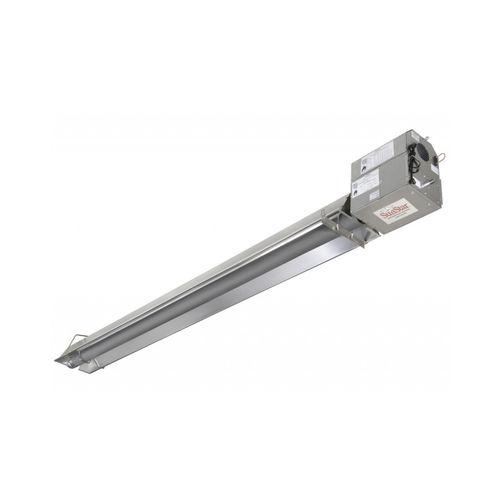
  • Straight tube heaters run the tube in a single line from the burner end to the exhaust end. They're well suited to long, narrow bays, and the heat distribution follows that linear path. They tend to be simpler mechanically and are a common choice for single-bay garages, loading docks, and similar applications.
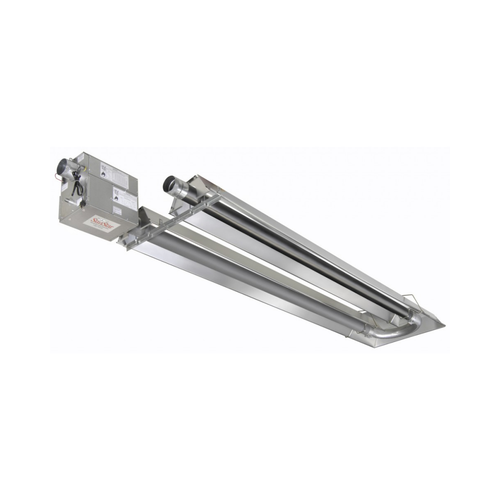
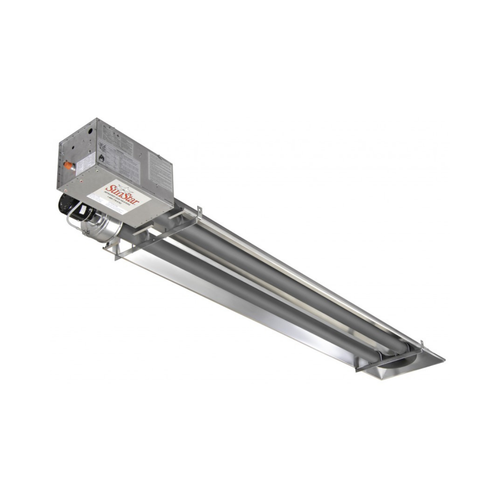
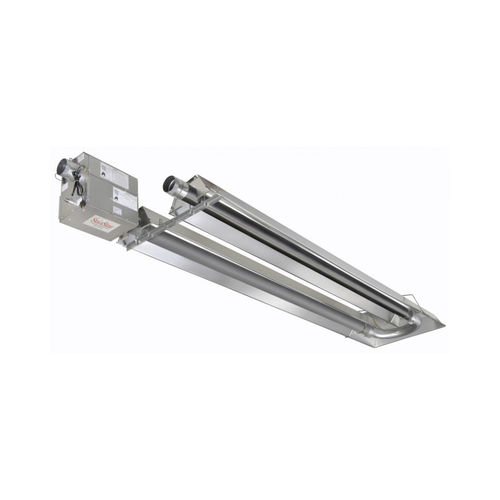
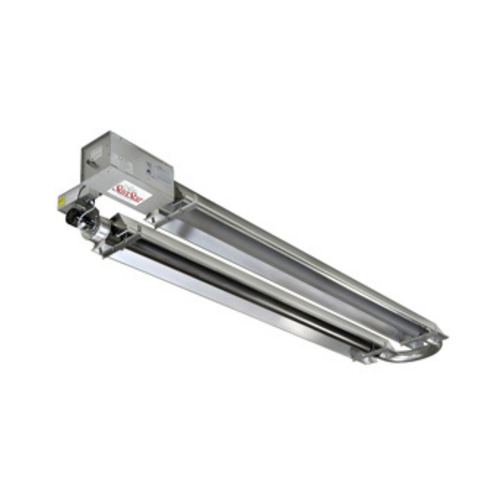
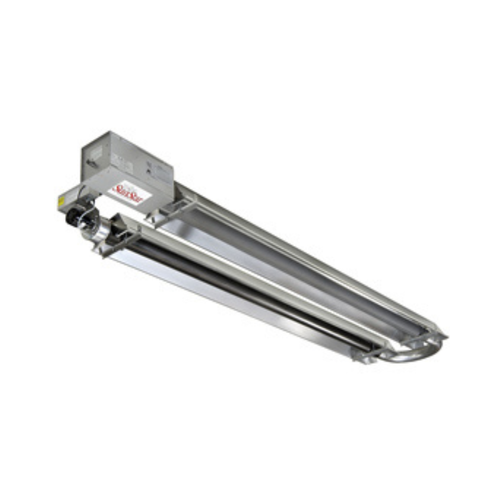
  • U-tube heaters fold the tube back on itself so the burner and exhaust are at the same end. The double-pass design recirculates combustion gases through a second tube run before exhausting them, which recovers more heat from the combustion process and improves thermal efficiency. It also concentrates the heat output in a more compact footprint, which suits wider spaces or situations where the flue has to exit from one end of the unit. U-tube configurations are often the choice for higher-efficiency applications or where the flue routing makes a single-pass design impractical.

Beyond that core split, tube heaters vary by burner capacity, tube length, and whether they're designed for natural gas or propane. Some models are designed for high-bay mounting and built to heat large open volumes from significant heights; others are designed for lower residential or light-commercial ceilings. The right combination depends on the space dimensions, the mounting height available, and the fuel source on site, all of which should be confirmed against the specific product's installation requirements before purchase.

What It Takes to Install a Tube Heater

Gas tube heaters require a gas line sized for the BTU input of the unit being installed. The existing line may or may not have adequate capacity, especially in a space that's being converted or upgraded. Pull the gas meter rating and check the existing line size against the new unit's input requirements before assuming the existing supply is adequate. If a line needs to be run or upsized, that work should be scoped and priced before the equipment is ordered, not after.

Venting is a non-negotiable part of the installation. Most gas tube heaters vent through a standard flue pipe to the outside, though the specific flue diameter, material, and connector type vary by unit. Measure the available flue run, note any offsets or restrictions, and verify the flue specification matches the unit before purchasing. Some high-efficiency models have specific venting requirements that differ from standard practice, and using the wrong flue material or configuration can void the warranty and create a safety issue.

The electrical requirement for a gas tube heater is typically a standard 120-volt circuit for the igniter and controls, but verify the actual unit spec against what's available at the mounting location. A circuit that's already loaded from other shop equipment may need its own dedicated circuit for the heater. Electric tube heaters, by contrast, draw significantly more electrical load and typically require a dedicated circuit sized to their rated amperage; check the unit's electrical requirements against the existing panel capacity before specifying.

Mounting hardware and suspension systems are an installation consideration that's easy to underestimate. Tube heaters are heavy, and they need to be suspended from structural members capable of supporting the load, not just from drywall or lightweight framing. Verify that the mounting points in the planned location can handle the weight of the unit plus the suspended flue run. The manufacturer's installation manual will specify the required support spacing and hardware ratings.

Operating clearances to combustibles are published in the installation manual and typically in the listing certification for the unit. These clearances apply to walls, ceilings, overhead doors, stored materials, and anything else in the proximity of the tube and burner assembly. They are fixed requirements, not guidelines, and should be measured against the actual space before the unit is ordered rather than assumed to fit after delivery.

Controls and thermostats are often sold separately. Look up whether the specific unit includes a controller, and if not, verify compatibility between the heater and any control you plan to use. Some units have proprietary control connections; others accept standard low-voltage thermostat wiring. If a remote thermostat or programmable control is part of the plan, sort that out at the time of purchase.

Things Worth Knowing Before You Buy

Q: What kind of spaces are tube heaters best suited for?

A: Tube heaters work best in large, open, or poorly sealed spaces where forced-air heating is inefficient: garages, workshops, warehouses, loading docks, aircraft hangars, and similar high-bay environments. Because they radiate heat directly at objects and occupants rather than heating air, they stay effective even when doors open frequently or the space has a high ceiling.

Q: How do I determine what capacity tube heater I need?

A: A proper heat-loss calculation is the right method — not a square-footage rule of thumb. As covered above, that calculation accounts for ceiling height, insulation, construction type, local design temperature, and air infiltration. A mechanical engineer, your gas utility, or the heater manufacturer's sizing tool can run the numbers for your specific space.

Q: What's the difference between a straight tube heater and a U-tube heater?

A: The configuration section above covers this in detail. Short version: a straight tube heater runs burner-to-exhaust in a single line and suits narrow bays; a U-tube folds the tube back so both ends are at the same side, recovering more heat from combustion and suiting wider spaces or higher-efficiency applications.

Q: Do tube heaters need to be vented?

A: Gas tube heaters produce combustion byproducts and must be vented to the outside in virtually all applications. The installation section above covers flue type, diameter, and run-length considerations. Some jurisdictions permit unvented radiant heaters under specific conditions, but this is the exception — verify local code requirements and the specific unit's installation instructions before planning an unvented setup.

Q: What fuel types do tube heaters use?

A: Most tube heaters run on natural gas or propane, and many models are convertible between the two with the appropriate orifice kit. Electric tube heaters are available but less common in larger applications. The right fuel type is usually determined by what's already available or practical to supply at the installation site.

Q: What electrical supply does a gas tube heater require?

A: Most gas tube heaters need a standard 120-volt circuit for ignition and controls — modest draw, but the circuit should be dedicated if the panel at the mounting location is already loaded. Electric tube heaters have substantially higher electrical demands and require a dedicated, appropriately sized circuit. The installation section above has more detail on confirming capacity before specifying.

Q: Can I install a tube heater myself, or do I need a licensed contractor?

A: Gas appliance installation requirements vary by jurisdiction, but most areas require that gas connections be made by a licensed plumber or HVAC contractor, and some require a permit and inspection for permanently installed gas heating equipment. Even where DIY installation is technically permitted, working with gas lines and combustion appliances carries real risk if the work isn't done correctly. Check your local code requirements before starting.

HVAC365 ships tube heaters nationwide, so whether you're sourcing a single unit for a residential garage or fulfilling a multi-site commercial project, the catalog is available to you without geographic restriction. A broad, stocked selection means you're not waiting on a special order for a standard configuration, which matters when a facility is sitting without heat or a contractor needs to stay on schedule. Orders are available to residential buyers, commercial accounts, and distributor volume orders alike, and the team can help match a unit to a specific application if you're working through the selection.

Compare
Show: 12 24 48

Fast Shipping

Easy Returns

Warranty Coverage

Financing Available