
-
Daikin
Daikin OEM Discharge Grille Louver Blade for FTXM Ductless Indoor Units | 2530205
SKU: 2530205
$368.56- 🚚Qualifies for FREE Shipping
- ⚡Fast Shipping
Ships from Mfg 7-10 Business Days3 in stock -
Daikin
Daikin OEM Discharge Grille Louver Blade for FAA/FTXM Ductless Indoor Units | 2534860
SKU: 2534860
$368.56- 🚚Qualifies for FREE Shipping
- ⚡Fast Shipping
Ships from Mfg 7-10 Business Days3 in stock -
$246.44
- 🚚Qualifies for FREE Shipping
- ⚡Fast Shipping
Ships from Mfg 7-10 Business Days3 in stock -
$18.38
- 📦$9.95 Flat-Rate Shipping
- ⚡Fast Shipping
Ships from Mfg. in 3-5 Business Days10 in stock -
Daikin
Daikin OEM Discharge Grille Louver Blade for FTXM Ductless Indoor Units | 2534864
SKU: 2534864
$368.56- 🚚Qualifies for FREE Shipping
- ⚡Fast Shipping
Ships from Mfg 7-10 Business Days3 in stock -
Daikin
Daikin OEM Discharge Grille Louver Blade for FTXM Ductless Indoor Units | 2534865
SKU: 2534865
$368.56- 🚚Qualifies for FREE Shipping
- ⚡Fast Shipping
Ships from Mfg 7-10 Business Days3 in stock -
$274.64
- 🚚Qualifies for FREE Shipping
- ⚡Fast Shipping
Ships from Mfg 7-10 Business Days3 in stock -
Daikin
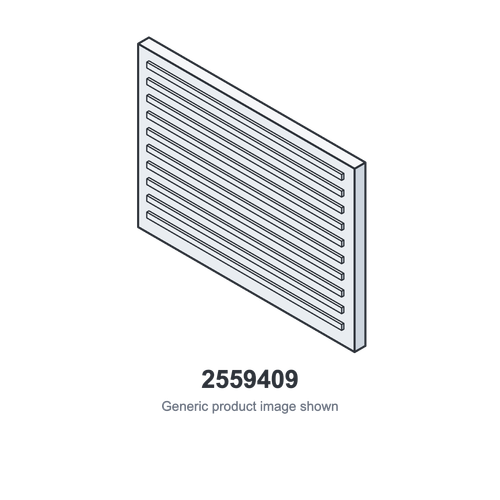
Daikin OEM Discharge Grille Louver Blade for FVXV Ductless Indoor Units | 2559409
SKU: 2559409
$368.56- 🚚Qualifies for FREE Shipping
- ⚡Fast Shipping
Ships from Mfg 7-10 Business Days3 in stock -
$18.38
- 📦$9.95 Flat-Rate Shipping
- ⚡Fast Shipping
Ships from Mfg. in 3-5 Business Days10 in stock -
$294.33
- 🚚Qualifies for FREE Shipping
- ⚡Fast Shipping
Ships from Mfg 7-10 Business Days3 in stock -
Daikin
Daikin OEM Discharge Grille Louver Blade for FVXV Ductless Indoor Units | 2559410
SKU: 2559410
$368.56- 🚚Qualifies for FREE Shipping
- ⚡Fast Shipping
Ships from Mfg 7-10 Business Days3 in stock -
Daikin
Daikin OEM Discharge Grille Louver Blade for FVXV Ductless Indoor Units | 2559413
SKU: 2559413
$368.56- 🚚Qualifies for FREE Shipping
- ⚡Fast Shipping
Ships from Mfg 7-10 Business Days3 in stock
Buying guidance
Fan Blades & Blower Wheels



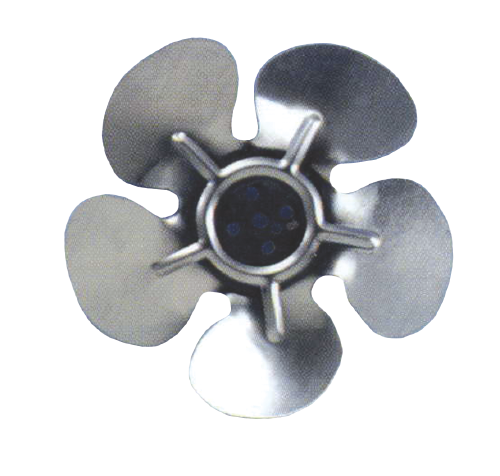
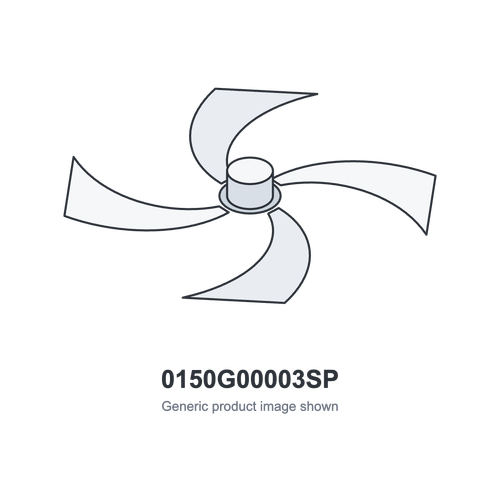


A fan blade or blower wheel is the part that turns motor power into airflow. Get it right and a condenser holds normal head pressure, an evaporator stays clear of ice and a furnace delivers its rated airflow. Get it wrong by a couple of degrees of pitch or a half inch of diameter and the motor overloads, the system runs inefficiently and the noise level climbs.
This category covers propeller-style fan blades for condensers, evaporators and refrigeration equipment, blower wheels for furnaces and air handlers, and impellers used in appliances and small fans. Choices include metal and plastic construction, a wide range of diameters, pitch angles, bore sizes and both rotation directions. Universal replacement lines are made to match OEM blades, but only if each of those specs is checked.
Blades crack, warp, rust, lose balance and get struck by debris. Blower wheels load up with dirt, which throws off balance and cuts airflow. A damaged blade often takes the motor with it, since a wobbling, unbalanced blade wears out bearings fast. Replacing the blade early is usually far cheaper than replacing the motor later.
How Fan Blades and Blower Wheels Work
Propeller fan blades
Propeller blades move a large volume of air against relatively low resistance, which is why they are used on condensers and many evaporators. The amount of air depends on blade diameter, pitch angle, number of blades and RPM. Pitch is the angle of the blade face relative to the plane of rotation, measured in degrees. A higher pitch moves more air at the same speed but requires more horsepower. That is why pitch must be matched to the motor and application.
Blower wheels
Blower wheels, also called squirrel cage wheels, are used in furnaces, air handlers and many appliances. Most residential blower wheels are forward curved designs that move air well against the higher static pressure of ductwork and filters. They are sized by diameter, width, bore and rotation, and the hub may be centered or offset depending on how the wheel sits in its housing.
Impellers
Impellers are small wheels used in appliances, ventilation fans and draft inducer assemblies. They are usually application specific. The OEM part number is the most reliable way to match one.
Rotation
Every blade and wheel is designed to rotate in one direction. Rotation is stated as clockwise (CW) or counterclockwise (CCW), and the label or catalog will say which side it is viewed from. Many blade manufacturers specify rotation viewed from the side the air leaves (discharge side), but conventions vary, so always confirm. A blade mounted for the wrong rotation moves little air and can overload the motor.
Signs a Fan Blade or Blower Wheel Needs Replacing
- Visible cracks, bent blades, chips or missing pieces. Do not try to straighten a bent metal blade; balance cannot be restored reliably.
- Vibration or wobble when the unit runs, often from an unbalanced or bent blade.
- Rust and corrosion at the hub or blade roots, common on coastal condensers.
- Hub slipping on the shaft, worn set screw seat or a stripped hub.
- Reduced airflow from a blower wheel packed with dirt or a blade that has warped.
- Motor running hot or drawing high amps after a blade replacement. This often means the blade's pitch or diameter is wrong for the motor.
- Rattling or striking noise from a blade hitting the shroud or debris.
How to Choose the Right Replacement
Diameter
Measure tip to tip across the blade for an even number of blades. For a three or five blade fan, measure from the center of the hub to one tip and double it. The replacement should match the original diameter so it fits the shroud or orifice ring properly.
Pitch
Pitch is stated in degrees and should match the original. If you cannot read a pitch marking, use the OEM part number or equipment specifications. More pitch means more air but higher motor load.
Number of blades
Three, four and five blade designs are common. Match the original unless the replacement is specified as an equivalent for that application.
Bore size and hub
The bore must match the motor shaft, commonly 1/4, 5/16, 3/8, 1/2 or 5/8 inch. Check hub style and length, and whether the hub is designed for a set screw on a shaft flat.
Rotation
Match rotation using the same viewing reference the replacement specifies.
Metal vs plastic
Metal blades, usually steel or aluminum, are standard for condensers and larger fans and handle heat and UV well. Plastic blades are common on small refrigeration and appliance fans; they are light, resist corrosion and are quiet, but they should be used only where they were designed to go.
Blower wheel specs
For blower wheels, match diameter, width, bore, rotation and hub position. A wheel that is too wide will not fit the housing; one that is too small will cut airflow.
| Spec | How to measure or identify | Why it matters |
|---|---|---|
| Diameter | Tip to tip, or hub center to tip times two for odd blade counts | Must fit the shroud or orifice; affects airflow |
| Pitch | Degrees, usually stamped on the blade or listed by OEM | Determines airflow and motor load |
| Number of blades | Count | Affects airflow, noise and balance |
| Bore | Shaft diameter in inches | Must fit the motor shaft |
| Rotation | CW or CCW, from the stated viewing side | Wrong rotation moves little air and overloads the motor |
| Material | Metal or plastic | Durability, weight and environment |
| Blower width | Measure across the wheel, not including the hub | Must fit the blower housing |
Installation and Safety Tips
- Lock out and verify power off before reaching into a condenser or blower compartment. Discharge any motor capacitors before handling wiring.
- Mark the blade's position on the shaft or measure from the motor face to the hub before removing it. Position relative to the shroud affects airflow and clearance.
- Clean the shaft. Rust and burrs make removal and installation difficult. Use penetrating oil and a proper puller rather than hammering on the shaft, which damages motor bearings.
- Seat the set screw on the shaft flat and tighten it to firm contact. Use thread locker where the manufacturer recommends it.
- Spin by hand before powering up. Confirm clearance from the shroud and check for wobble.
- Check rotation and amperage after start-up. Amp draw should be within the motor nameplate rating.
- Clean blower wheels in place carefully or remove them to clean thoroughly; never run a blower with a wheel that is cracked or missing blades.
- Refrigerant system concerns such as high head pressure after a repair should be addressed by an EPA 608 certified technician.
Part Details & Shipping
HVAC365 carries fan blades and blower wheels from Supco and other trusted lines. Supco has been serving the replacement parts trade since 1945. Product pages list diameter, pitch, bore, rotation and cross-reference information so you can match the original part, and these items ship in 3-5 business days.
Frequently Asked Questions
How do I measure fan blade pitch?
Pitch is usually stamped on the blade or hub. If it is not, the OEM part number or equipment manual is the best source. Measuring pitch accurately in the field requires a protractor and care, and an estimate can easily be off by several degrees.
Can I use a larger fan blade to get more air?
Not without checking the motor. A larger diameter or steeper pitch blade increases the load on the motor and can overload it. It may also not fit the shroud. Match the original specifications.
Which way is clockwise on a fan blade?
It depends on the viewing side. Many manufacturers specify rotation viewed from the discharge side, where air leaves the blade, but always confirm the convention on the replacement's listing.
Are plastic blades as good as metal?
For the applications they are designed for, yes. Plastic blades work well on small refrigeration and appliance fans. For outdoor condenser fans and larger motors, metal is the norm.
Why does my new fan blade vibrate?
Check that it is fully seated on the shaft, that the set screw is on the flat and that the shaft is not bent. A bent motor shaft or worn bearings will cause vibration regardless of the blade.
Should I replace the motor when I replace the blade?
Not always. If the motor bearings are smooth and quiet, amp draw is normal and the shaft is straight, a new blade is enough. If the old blade was badly out of balance for a long time, inspect the motor bearings closely.


