
-
Honeywell Residential
Honeywell Residential Remote Nozzles for Truesteam Humidifiers Includes Humidifier Adapter Nozzle & Remote Duct Nozzle with Gasket | 50028001-001
SKU: 50028001-001
$337.60- 🚚Qualifies for FREE Shipping
- ⚡Fast Shipping
Ships in 3-5 Business Days4 in stock -
Honeywell Residential
Honeywell Residential Cad Cell Relay with Y & G Terminals for Cooling 45 Second Safety Switch Timing | R8184M1051
SKU: R8184M1051
$472.64- 🚚Qualifies for FREE Shipping
- ⚡Fast Shipping
Ships in 3-5 Business Days14 in stock -
Honeywell Residential
Honeywell Residential Cad Cell Relay (15 Sec)led for Lockout | R8184G4066
SKU: R8184G4066
$375.24- 🚚Qualifies for FREE Shipping
- ⚡Fast Shipping
Ships in 3-5 Business Days10 in stock -
Honeywell Residential
Honeywell Residential Cad Cell Relay (45 Sec)Intermittent120V Coo=usa | R8184G4009
SKU: R8184G4009
$272.76- 🚚Qualifies for FREE Shipping
- ⚡Fast Shipping
Ships in 3-5 Business Days72 in stock -
$213.60
- 🚚Qualifies for FREE Shipping
- ⚡Fast Shipping
Ships in 3-5 Business Days6 in stock -
$178.80
- 🚚Qualifies for FREE Shipping
- ⚡Fast Shipping
Ships in 3-5 Business Days24 in stock -
Tigerloop
Tigerloop Oil De Aerator & Filter Includes Firomatic Valve Tiger Loop Ultra UL Listed | S220-8
SKU: S220-8
$396.20- 🚚Qualifies for FREE Shipping
- ⚡Fast Shipping
Ships in 3-5 Business Days8 in stock -
$213.60
- 🚚Qualifies for FREE Shipping
- ⚡Fast Shipping
Ships in 3-5 Business Days5 in stock -
Allanson
Allanson 120 Volt Primary 10k Secondary Replacement Ignition Transformer | 421-BT387
SKU: 421-BT387
$192.13- 🚚Qualifies for FREE Shipping
- ⚡Fast Shipping
Ships in 3-5 Business Days4 in stock -
$192.13
- 🚚Qualifies for FREE Shipping
- ⚡Fast Shipping
Ships in 3-5 Business Days6 in stock -
$192.13
- 🚚Qualifies for FREE Shipping
- ⚡Fast Shipping
Ships in 3-5 Business Days4 in stock -
$154.93
- 🚚Qualifies for FREE Shipping
- ⚡Fast Shipping
Ships in 3-5 Business Days10 in stock
Buying guidance
Oil Burner Parts



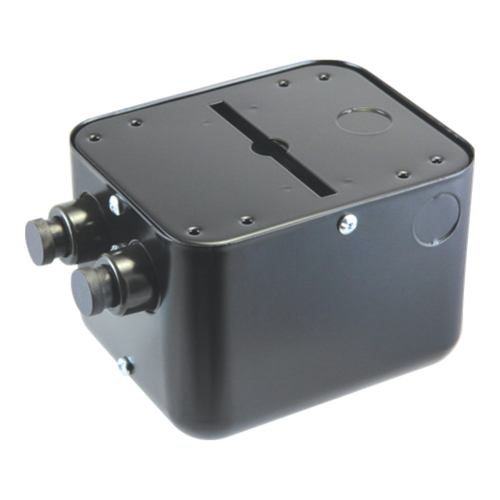


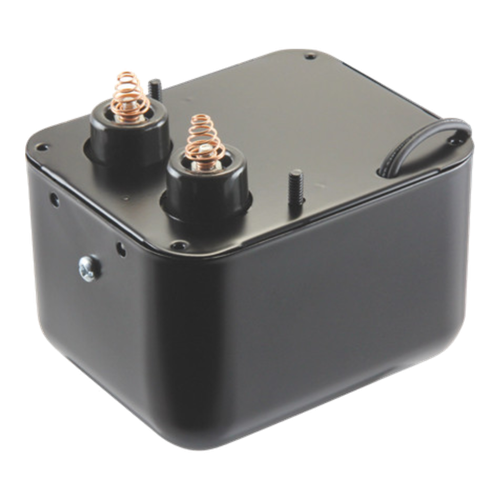
Oil-fired furnaces and boilers still heat millions of homes and businesses, and they depend on a small set of precision parts working together. The fuel pump delivers oil at a steady pressure, the nozzle turns it into a fine cone-shaped mist, the ignition transformer or igniter creates a spark across the electrodes, the burner motor drives the fan and pump, and the primary control watches the flame through a cad cell. If any one of those parts is worn or mismatched, the burner smokes, rumbles, locks out or will not start at all. This category covers the replacement parts that keep oil burners firing cleanly.
We carry oil burner parts from Beckett, Carlin, Suntec, Allanson, Honeywell, Tigerloop, Westwood, General and Firomatic, with live stock counts on every listing. This guide explains each part, how to match it and what to look at during a tune-up.
How an oil burner works
When the thermostat or aquastat calls for heat, the primary control starts the burner motor. The motor turns the fan, which supplies combustion air, and the fuel pump, which draws oil from the tank and raises it to the pressure set on the pump, commonly 100 to 150 PSI on residential burners. The ignition transformer or solid-state igniter produces a high-voltage spark across the electrode tips. Oil passes through the nozzle, which atomizes it into a precise spray pattern, and the spark lights it. The cad cell sees the flame and tells the primary control to keep running. If the cad cell does not see flame within the safety time, the primary shuts the burner down and locks out.
Parts in this category
Oil nozzles
Nozzles are rated by flow in gallons per hour (GPH) at 100 PSI, spray angle (such as 60, 70 or 80 degrees) and spray pattern (solid, semi-solid or hollow). They are matched to the burner and appliance by the manufacturer. Replace the nozzle at every annual service and use exactly the rating listed on the appliance or burner specification.
Oil pumps (fuel units)
Fuel pumps are defined by stages (single stage for gravity-fed tanks, two stage for lifts from below the burner), motor speed (1725 or 3450 RPM), rotation (right-hand or left-hand) and nozzle port and inlet configuration. The Speed and Flow Rate filters help narrow pumps by RPM and capacity. A replacement must match the burner's speed and rotation.
Ignition transformers and igniters
Older burners use an iron-core ignition transformer; most service replacements today are solid-state igniters, which are lighter and produce a stronger spark. Many are made to fit specific burner models such as Beckett, Carlin, Wayne or Riello, and the listing names the burners each one fits.
Cad cells and primary controls
The cad cell is a light-sensitive resistor that sees the flame. It plugs into a holder and is wired to the primary control. A dirty or failed cad cell is a common cause of lockouts. Oil primary controls are covered in our Ignition Controls & Flame Safeguards category.
Filters, de-aerators and valves
Oil filters and filter cartridges catch sludge and water before they reach the pump and nozzle. De-aerators such as the Tigerloop let a single-pipe tank system work like a two-pipe system by removing air from the oil line. Oil safety valves, solenoid valves and fusible valves protect the oil line and stop oil flow when the burner is off or in a fire.
Burner motors and couplings
Burner motors are matched by speed, frame, shaft size and rotation. The coupling between the motor and pump should be replaced when either is replaced.
Matching a replacement oil burner part
- Find the burner model on the burner's rating label (for example Beckett AF, AFG, NX or Carlin EZ) and the appliance model.
- Use the part number from the old part and search it here. Listings show the numbers they replace when published.
- For pumps, match stages, RPM, rotation and port configuration.
- For nozzles, match GPH, spray angle and pattern exactly as specified.
- For igniters, match the burner family and voltage (Voltage filter).
| Part | Typical service interval | What to match |
|---|---|---|
| Nozzle | Every annual tune-up | GPH, angle, pattern |
| Oil filter cartridge | Every annual tune-up | Filter housing model |
| Pump strainer | Every annual tune-up | Pump model |
| Cad cell | As needed when resistance is high | Holder style |
| Igniter | When spark is weak or absent | Burner family, voltage |
| Fuel pump | When pressure cannot be held | Stages, RPM, rotation |
Common oil burner problems
- Burner locks out after trying to start: check the cad cell, nozzle, oil supply and igniter before replacing the primary control.
- Smoke or soot: wrong or worn nozzle, incorrect air setting, low draft or a dirty heat exchanger.
- Delayed ignition or puffback: weak spark, misadjusted electrodes or an oil pump that drips after shutdown.
- Burner runs but no flame: plugged filter, air in the oil line, failed pump coupling or an empty tank.
- Noisy pump: air leaks on the suction side or a failing pump.
Installation and safety
Oil burner service should be performed by a qualified oil heat technician following the burner and appliance manufacturer's instructions and the codes that apply where you live. After replacing a nozzle, pump or igniter, the technician should set pump pressure with a gauge, adjust the electrodes to the manufacturer's dimensions, and use a combustion analyzer and smoke tester to set air for clean, efficient combustion. Never press the reset button on a locked-out burner more than once; unburned oil can collect in the chamber.
Annual oil burner tune-up checklist
Oil heat runs best when it is serviced every year before the heating season. A complete tune-up normally includes replacing the nozzle and oil filter cartridge, cleaning the pump strainer, checking and adjusting electrode gap and position, testing the igniter or transformer spark, checking the cad cell resistance with the flame on and off, vacuuming soot from the heat exchanger and flue passages, inspecting the chimney connector and barometric damper, and setting pump pressure with a gauge. The technician then performs a smoke test and combustion analysis to set the air band for the cleanest possible flame. A properly tuned burner uses less oil, produces less soot and is far less likely to lock out on the coldest night of the year.
Oil quality and storage
Water and sludge in the tank are the root cause of many nozzle, filter and pump failures. Keep the tank full over the summer to limit condensation, have the tank bottom checked for water, and replace filters on schedule. Additives can help in some cases, but they do not replace good filtration and a clean tank.
Shopping this category
Narrow by brand, part type, voltage, speed and flow rate. Each listing shows the manufacturer part number, cross-references when published and the quantity in stock right now. For help matching a part to your burner, call 1.888.509.3391 with the burner model and the numbers on the old part.
Frequently asked questions
How often should an oil burner nozzle be replaced?
At every annual service. Nozzles wear and partially clog over a season, which changes the spray pattern and causes soot.
What is the difference between a single-stage and a two-stage oil pump?
A single-stage pump is used when the tank is at or above the burner. A two-stage pump has extra lift and is used when oil must be pulled up from a tank below the burner.
Can I replace an ignition transformer with a solid-state igniter?
Yes, in most cases. Choose an igniter listed for your burner model so it mounts and connects correctly.
Why does my oil burner keep locking out?
The most common causes are a dirty or failed cad cell, a clogged nozzle or filter, air in the oil line or a weak spark. A technician should find the cause before resetting it again.
What does a Tigerloop do?
It removes air from the oil supply so a single-pipe system can run reliably, reducing air-related lockouts and nozzle problems.
Do I need to replace the coupling when I replace the pump?
It is good practice. A worn coupling can slip or break and stop the pump even when the motor is running.


