
-
White-Rodgers
White-Rodgers 24V Gas Valve 3/4" X 3/4" with Cable Connector for Damper Control Fast Opening | 36C84-923
SKU: 36C84-923
$889.76- 🚚Qualifies for FREE Shipping
- ⚡Fast Shipping
Ships in 3-5 Business Days5 in stock -
Honeywell Residential
Honeywell Residential Powerhead for V8043F 5000 Series | 40003916-548
SKU: 40003916-548
$234.36- 🚚Qualifies for FREE Shipping
- ⚡Fast Shipping
Ships in 3-5 Business Days20 in stock -
$520.40
- 🚚Qualifies for FREE Shipping
- ⚡Fast Shipping
Ships in 3-5 Business Days4 in stock -
$385.49
- 🚚Qualifies for FREE Shipping
- ⚡Fast Shipping
Ships in 3-5 Business Days8 in stock -
White-Rodgers
White-Rodgers 24V 3/4" 3 Wire Zone Valve 2 Way with End Switch | 1311-102
SKU: 1311-102
$350.16- 🚚Qualifies for FREE Shipping
- ⚡Fast Shipping
Ships in 3-5 Business Days22 in stock -
Honeywell Residential
Honeywell Residential 24V Automatic Rectangular Damper 8x12 Inch - Truezone | ZD8X12TZ
SKU: ZD8X12TZ
$400.18- 🚚Qualifies for FREE Shipping
- ⚡Fast Shipping
Ships in 3-5 Business Days4 in stock -
Honeywell Residential
Honeywell Residential 24V Automatic Rectangular Damper 8x10 Inch - Truezone | ZD8X10TZ
SKU: ZD8X10TZ
$385.36- 🚚Qualifies for FREE Shipping
- ⚡Fast Shipping
Ships in 3-5 Business Days5 in stock -
Honeywell Residential
Honeywell Residential 24V Automatic Rectangular Damper 20x8 Inch - Truezone | ZD20X8TZ
SKU: ZD20X8TZ
$424.00- 🚚Qualifies for FREE Shipping
- ⚡Fast Shipping
Ships in 3-5 Business Days4 in stock -
Honeywell Residential
Honeywell Residential 24V Two Position Actuator for VC Series Valves | VC8110ZZ03
SKU: VC8110ZZ03
$154.33- 🚚Qualifies for FREE Shipping
- ⚡Fast Shipping
Ships in 3-5 Business Days6 in stock -
Honeywell Residential
Honeywell Residential 24V Automatic Rectangular Damper 14x6 Inch - Truezone | ZD14X6TZ
SKU: ZD14X6TZ
$479.16- 🚚Qualifies for FREE Shipping
- ⚡Fast Shipping
Ships in 3-5 Business Days4 in stock -
Honeywell Residential
Honeywell Residential 24V Automatic Rectangular Damper 12x8 Inch - Truezone | ZD12X8TZ
SKU: ZD12X8TZ
$400.18- 🚚Qualifies for FREE Shipping
- ⚡Fast Shipping
Ships in 3-5 Business Days4 in stock -
Honeywell Residential
Honeywell Residential 24V Automatic Rectangular Damper 12x10 Inch - Truezone | ZD12X10TZ
SKU: ZD12X10TZ
$418.04- 🚚Qualifies for FREE Shipping
- ⚡Fast Shipping
Ships in 3-5 Business Days5 in stock
Buying guidance
Zone Controls & Dampers
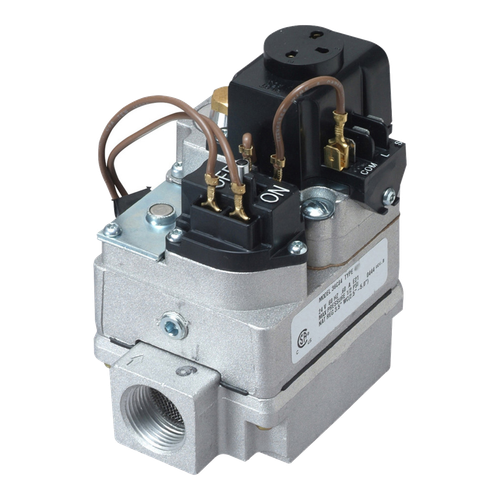
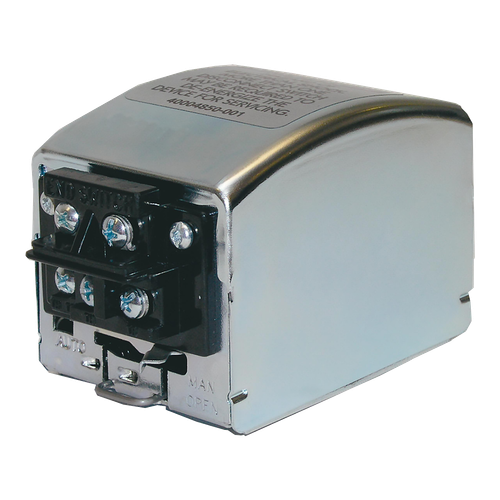
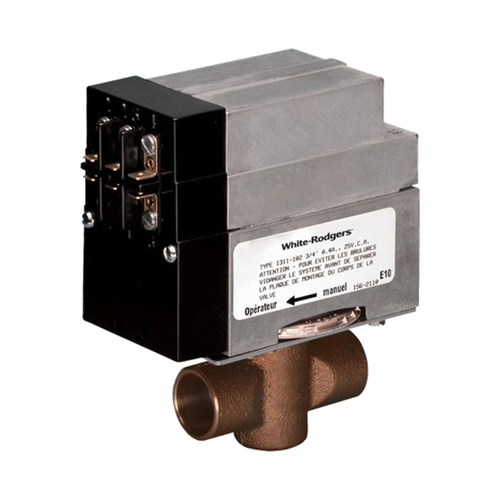


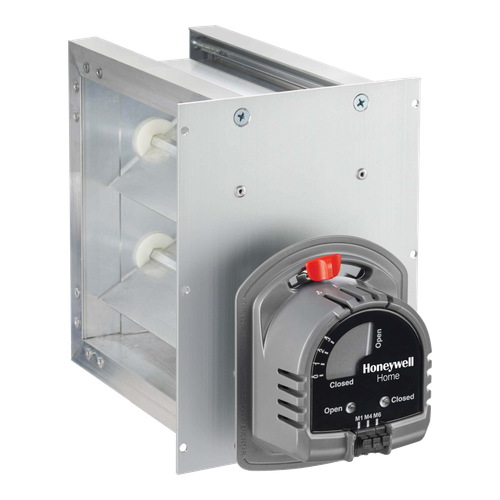


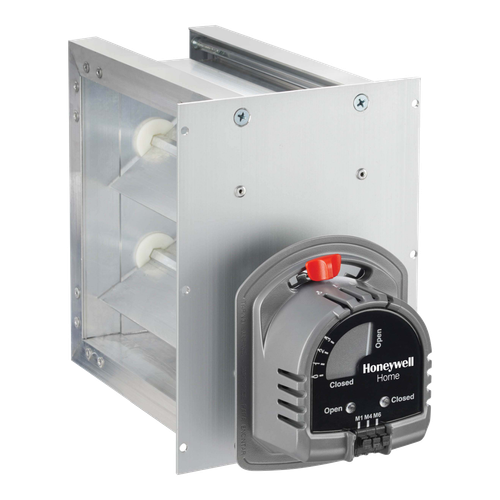
Zoning lets one heating or cooling system serve different parts of a building at different temperatures. In a hydronic (hot water) system, each zone has a zone valve that opens to let hot water flow when that zone's thermostat calls. In a forced-air system, motorized dampers in the ductwork open and close to send air where it is needed, coordinated by a zone control panel. This category covers the parts that make zoning work: zone valves, replacement actuators and powerheads, valve bodies and cartridges, zone dampers, damper actuators and zone control panels.
We carry zoning parts from Honeywell, Erie (Schneider Electric), Taco, White-Rodgers, Belimo, Johnson Controls, Caleffi and Siemens, with live stock counts on every listing. This guide explains how each part works, how to choose a direct replacement and how to tell whether a zone problem is the valve, the actuator or the controls.
How hydronic zone valves work
A zone valve has two main parts: the valve body, which is soldered or threaded into the piping, and the actuator (also called the powerhead or power unit), which opens and closes it. When a thermostat calls for heat, it sends 24 volts to the actuator. The actuator opens the valve, and when it is fully open, an end switch closes and tells the boiler or a zone panel to start the circulator and burner. When the call ends, the actuator returns the valve to its normal position.
- Normally closed valves stay shut without power and open on a call. This is the most common type for heating zones.
- Normally open valves stay open without power and close when energized. They are used for fail-safe applications.
- Two-way valves open or close a single flow path. Three-way valves divert or mix flow between two paths, such as a coil and a bypass.
The Normal Position filter on this page sorts valves and actuators by normally open or normally closed so you can match your system.
Replacing just the actuator
Most zone valve failures are in the actuator, not the body. Honeywell V8043 and V4043 valves, Erie valves, Taco 500 and 570 series and White-Rodgers 1311 and 1361 series can all be serviced by replacing the powerhead without cutting into the piping. Make sure the replacement actuator is listed for your valve series and matches its voltage and end-switch configuration.
Choosing a complete zone valve
If the body leaks, is seized or the series is no longer supported, replace the whole valve. Match these specs:
- Pipe size: commonly 1/2 in., 3/4 in. or 1 in. (Pipe Size filter).
- Connection type: sweat, NPT or flare (Connection Type filter).
- Flow coefficient (Cv): how much water flows through the valve at a 1 PSI pressure drop. Match the original Cv to keep the zone balanced.
- Close-off rating: the pressure difference the valve can shut against. It must be higher than the circulator's head.
- Voltage: most residential valves are 24 volts; some are 120 or 208/240 volts.
- End switch: needed when the valve must start the boiler or circulator.
| Spec | Where to find it | Why it matters |
|---|---|---|
| Valve series or part number | Label on the actuator cover | Fastest match for a replacement powerhead |
| Normal position | Valve label (N.C. or N.O.) | Reversed operation heats the wrong zone |
| Pipe size and connection | Valve body | Avoids extra fittings and leaks |
| Cv and close-off | Valve body or spec sheet | Keeps flow balanced and stops leak-through |
| Voltage and end switch | Actuator label and wiring | Must match the zone control and boiler circuit |
Forced-air zone dampers and actuators
Zone dampers are motorized blades installed in supply ducts. Round dampers are sized by duct diameter and rectangular dampers by width and height. Dampers are either power-open/spring-close, power-close/spring-open, or power-open/power-close, and their actuators must match the control panel's wiring (two-wire or three-wire). Replacement damper actuators let you repair an existing damper without opening the duct, as long as the actuator is listed for that damper series.
Zone control panels
The zone panel reads each thermostat, opens and closes the right dampers or valves and controls the equipment. Panels are chosen by number of zones, equipment type (single-stage, multi-stage or heat pump) and whether they support bypass or leaving-air temperature sensing.
Troubleshooting zone problems
- A zone will not heat: check for 24 volts at the actuator during a call. If voltage is present and the valve does not open, the actuator has likely failed.
- A zone heats when it should not: the valve may be stuck open, the cartridge worn or the manual-open lever left engaged.
- The boiler does not start: the end switch may not be closing. Check continuity on the end switch terminals with the valve fully open.
- Humming or clicking: often a failing actuator motor or a valve that is binding.
- Dampers stuck: confirm power at the damper terminals and check whether the blade turns freely by hand.
Installation notes
Zone valves and dampers should be installed by a qualified technician following the manufacturer's instructions and the codes that apply in your area. When sweating a valve body, remove the actuator and cartridge first so heat does not damage them. Mount actuators in the orientation the manufacturer allows, wire end switches to the correct terminals and test each zone independently after installation. Many systems also require a bypass or differential pressure valve to protect the circulator when only one zone is open.
Zoning tips for better comfort and efficiency
Good zoning saves energy by heating or cooling only the spaces that need it, but only when the system is designed for it. Each zone should have enough load to keep the boiler or furnace from short cycling, and the piping or ductwork should be able to handle the flow when only the smallest zone calls. On hydronic systems, a differential pressure bypass valve or a variable speed circulator keeps flow steady as valves open and close. On forced-air systems, a static pressure bypass or a variable-speed blower protects the equipment. Thermostats should be placed away from sunlight, supply registers and outside doors so each zone reads the room accurately. When adding or replacing zone valves, label each valve and its thermostat wire at the zone panel; it makes future troubleshooting far faster.
Manual override levers
Most zone valves have a manual-open lever for filling, purging or emergency heat if the actuator fails. If the lever is left in the manual position, the zone will heat continuously. Always return it to automatic after service.
Shopping this category
Filter by brand, part type, voltage, normal position, pipe size and connection type. Each listing shows the manufacturer part number, what it replaces when published and the quantity in stock. Not sure which actuator fits your valve? Call 1.888.509.3391 with the numbers on the actuator label.
Frequently asked questions
Can I replace a zone valve head without draining the system?
Usually yes. On most valves the actuator lifts off the body without opening the water side. Only the body or cartridge replacement requires draining.
What is an end switch on a zone valve?
It is a set of contacts that closes when the valve is fully open. It tells the boiler or zone control panel to start the circulator and burner.
Is a normally open or normally closed zone valve better?
Neither is better; they serve different purposes. Replace a valve with the same type as the original so the zone behaves the way the system was designed.
Can I mix brands of zone valves on one system?
Yes, as long as each valve's voltage, end switch and wiring are compatible with the zone control or boiler.
What size zone damper do I need?
Match the duct size where the damper will be installed. Round dampers are sized by diameter and rectangular dampers by width and height.
Why do I need a bypass with zone valves or dampers?
When only one small zone is calling, the circulator or blower may push more flow than that zone can take. A bypass protects the equipment and reduces noise.


