null

Cartridge Filters

Clean pool and spa water does not happen by accident. A cartridge filter is what stands between a clear, swimmable pool and cloudy water full of fine debris, body oils, sunscreen, and particles that a skimmer basket simply cannot catch on its own. When a filter cartridge wears out or a system needs an upgrade, the right replacement has to match the flow rate and tank the pump can handle, and it has to be available without a long wait. HVAC365 carries a broad selection of pool and spa cartridge filters so that finding the right fit for a residential pool, a commercial aquatics facility, or a hot tub does not turn into a week-long sourcing exercise.

This category covers cartridge-style filtration equipment and replacement cartridge elements for swimming pools, hot tubs, and spas. Whether you are a homeowner swapping out a worn cartridge at the start of swim season, a pool service contractor restocking before a busy maintenance week, or a facility manager sourcing filters for a commercial pool, this is the section of the catalog that covers your needs.

Choosing the Right Cartridge Filter

The single most important number to nail down is flow rate compatibility. Every cartridge filter is rated for a maximum flow rate, usually expressed in gallons per minute (GPM). If the pump on your system pushes more water than the filter is rated to handle, you get poor filtration, shortened cartridge life, and potentially a bypassed element. Start by checking your pump's flow rate against the filter's rated capacity, not by estimating, but by pulling the spec from the pump label or documentation. Undersizing a filter to save money upfront is one of the more common and expensive mistakes in pool equipment.

Pool volume matters too, though it works alongside flow rate rather than replacing it as a consideration. A larger pool generates more load on the filter, which means a filter sized for a small backyard pool will cycle water less effectively and require more frequent cleaning on a larger body of water. The general principle is to size for adequate turnover of the pool volume within the timeframe your local code or best practice recommends, but the exact numbers depend on your specific pool's surface area, depth, and bather load, not on a generic chart.

For residential pools, a single-tank cartridge filter is the standard choice. Light commercial settings, such as apartment complex pools or hotel amenity pools, may need higher-flow rated equipment or more frequent cartridge servicing schedules. Heavy commercial aquatics facilities often look at different filtration technologies altogether, though cartridge systems do appear in certain commercial contexts. If you are buying for a hot tub or spa rather than a full-size pool, the scale is different, and the cartridge size and micron rating appropriate for a spa are not the same as for a pool, so do not cross-apply pool filter specifications to a spa without verifying compatibility.

Efficiency in the cartridge filtration world is primarily about micron rating. A lower micron rating catches finer particles but also loads up and requires cleaning sooner, while a higher micron rating passes debris a finer element would catch. The right balance depends on your water conditions, bather load, and how often you are willing to clean or replace the cartridge. This is a judgment call worth thinking through before buying the cheapest available option.

Distributors or contractors restocking for a service fleet may also want to weigh lead time and bulk availability, since cartridge filters and replacement elements are seasonal items. Demand spikes around late spring as pools open, which can tighten availability on popular sizes. The installation-readiness factors covered further down are worth reviewing as well, since the physical fit of a new filter to an existing pad, plumbing, and pump configuration is a separate decision from the flow rating alone.

Buying Tips

  • Buy the cartridge element at the same time as the tank. Many buyers purchase a filter housing and then discover the replacement cartridge is a proprietary size that has to be ordered separately, leaving the system down while they wait. Ordering both together from the start eliminates that gap.
  • Do not use pool cartridge ratings for a spa. Spa filtration uses different cartridge sizes and often a different micron rating than a full-size pool filter. A cartridge that fits a pool filter tank will not drop into a spa skimmer housing. Verify the cartridge dimensions and end-cap configuration before ordering a replacement.
  • Check the thread and end-cap style, not just the overall dimensions. Cartridges that appear identical in diameter and length can have different end-cap styles (open, closed, or with a specific thread type) that determine whether they will actually seat and seal properly in a given housing. Measure the old cartridge or pull the part number before ordering a replacement.
  • A cracked or deformed end-cap is not a cosmetic issue. A cartridge with a damaged end-cap will allow water to bypass the filter media entirely, meaning the pump is running and the water looks like it is being filtered, but is not actually passing through the element. Inspect end-caps at every cleaning, not just when flow rate drops.

Filter Types and Configurations

Cartridge filters for pools and spas come in a few distinct configurations, and picking the wrong one for the application is an easy mistake to avoid if you know what to look for.

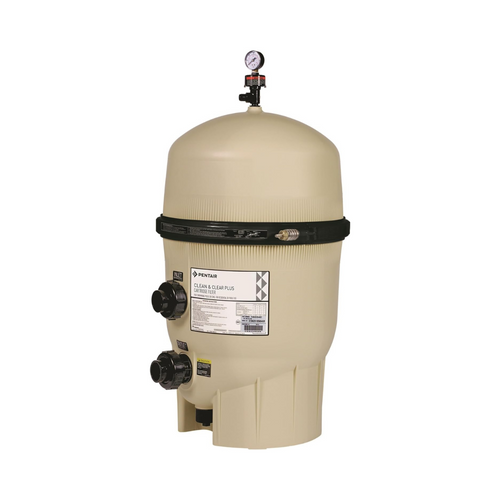
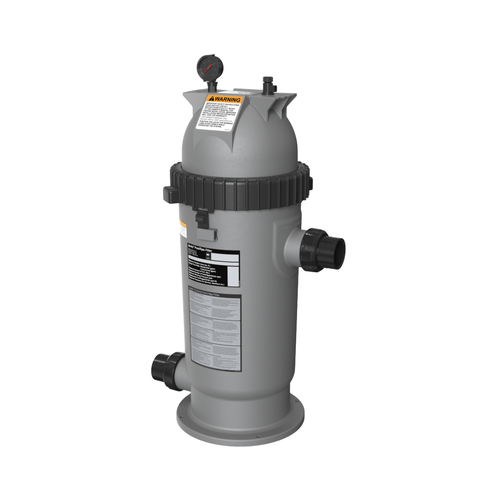
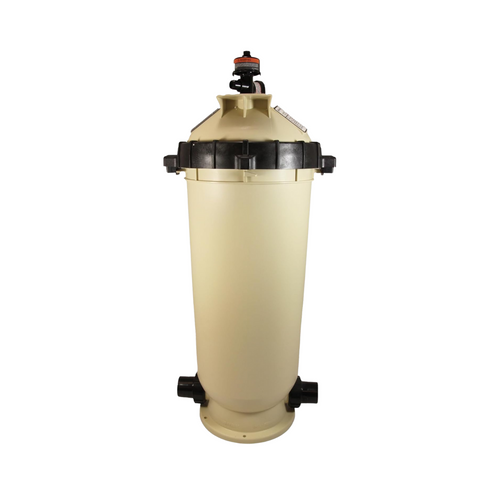
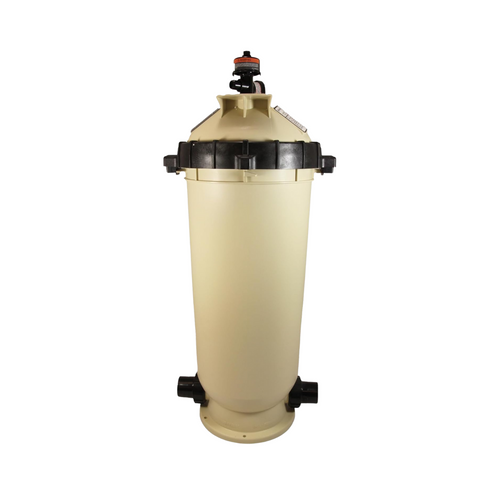
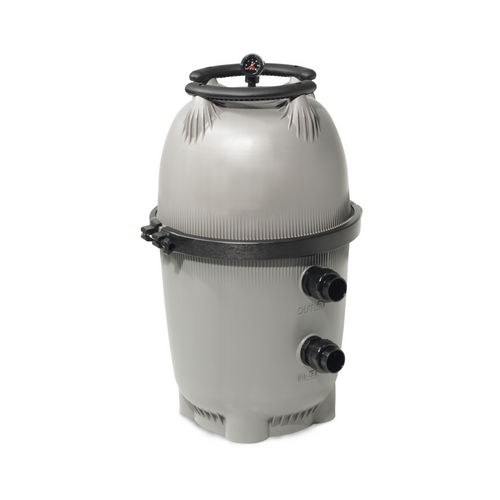
  • Single-cartridge filters. The most common residential setup. One cartridge element sits inside a single tank housing. These are straightforward to clean and replace, and they suit most backyard pools and all but the busiest hot tubs. When sizing, the cartridge's square footage of filter area is a meaningful spec: more filter area means longer intervals between cleanings and better handling of higher bather loads.
  • Multi-cartridge (quad) filters. Four cartridge elements housed in a single tank. This configuration dramatically increases total filter area compared to a single-element tank of similar physical size, which means longer cleaning intervals and better performance on higher-flow systems or pools with heavier use. Common on larger residential pools and light commercial applications where a higher flow rate is required without stepping up to a different filtration technology.
  • Replacement cartridge elements. Sold separately from the tank housing, these are the consumable part of a cartridge filtration system. Replacement elements are defined by their physical dimensions, end-cap style, and micron rating. This is a high-volume category for pool service contractors who are maintaining multiple pools on a route and need a reliable supply of the right cartridges for each system they service.

If you are choosing between a cartridge system and other filtration technologies such as sand or diatomaceous earth, that is a broader decision than this category covers. Cartridge systems have clear advantages in simplicity and ease of maintenance, since cleaning requires no backwashing and no specialized media handling, but the right choice for a given installation depends on the specific pool and owner preferences.

Fitting a New Filter to an Existing System

Before a new cartridge filter goes on order, measure the space available on the equipment pad. Tank diameter and height vary enough between models that a filter that works perfectly on paper may not fit the pad or the existing plumbing layout. Check the pad footprint, the available vertical clearance, and the position of existing plumbing connections relative to where the new tank's ports will land.

Plumbing connections on the filter tank need to match the existing supply and return line sizes, or you will need to plan for adapters or a partial replumb. Verify the inlet and outlet port sizes on both the existing plumbing and the new filter before finalizing the purchase. This is one of the more overlooked steps in a filter replacement, and catching it before the equipment arrives saves real time on install day.

For pump-to-filter compatibility, the pump and filter need to be matched so that the pump is not oversized for the filter's rated flow. If a new pump is going in alongside a new filter, size them together rather than selecting each independently. A pump that is too powerful for the filter shortens cartridge life and can stress the tank housing.

Also look up local code requirements before installing. Some jurisdictions have specific requirements around pool equipment placement, setback distances from structures, and bonding of pool equipment. These vary and are not something to guess at. If the installation is commercial, inspection and permit requirements are almost always a factor.

Things You Should Know

Q: How often does a pool cartridge filter need to be cleaned?

A: Cleaning frequency depends on pool usage, bather load, and the total filter area of the cartridge. A heavily used pool or a cartridge with limited filter area will load up faster. A common baseline is to inspect and clean when the pressure gauge on the tank reads 8-10 PSI above the clean starting pressure, but check the specific filter manufacturer's guidance for your model rather than relying on a single generic rule.

Q: Can I use any cartridge element in my filter tank?

A: No. Replacement cartridges must match the tank housing in diameter, length, and end-cap style — even cartridges that look identical can have end-cap configurations that prevent a proper seal. Always verify the OEM part number or measure the existing cartridge before ordering. The end-cap and thread details covered in the buying tips above are the right starting point.

Q: What is the difference between a single-cartridge and a multi-cartridge (quad) filter?

A: A single-cartridge filter has one element in the tank; a quad filter has four, dramatically increasing total filter area in a similar-sized housing. The filter types section above walks through both configurations and when each makes sense.

Q: How do I know what size cartridge filter my pool needs?

A: Start with your pump's flow rate (GPM) and verify the filter is rated to handle at least that flow. Then factor in pool volume and bather load, since both affect how quickly the cartridge loads up. The sizing considerations at the top of this page cover the full process, and a pool service professional or the filter manufacturer's sizing guide can help confirm the right cartridge area for your situation.

Q: Are cartridge filters suitable for commercial pools?

A: Cartridge filters work in some commercial settings, particularly light commercial pools with moderate bather loads such as hotel amenity pools or apartment complex pools. High-traffic facilities typically have different requirements. The guidance on commercial applications earlier on this page covers what to verify before specifying a cartridge system for a commercial installation.

Q: Do cartridge filters require backwashing?

A: No. Cartridge filters do not require backwashing, which is one of their main practical advantages over sand and DE filters. Cleaning involves removing the cartridge element, rinsing it with a garden hose, and allowing it to dry before reinstalling, or installing a spare element while the removed cartridge dries. No water is wasted in a backwash cycle, which matters in areas with water use restrictions.

Q: When should a cartridge element be replaced rather than cleaned?

A: Replace a cartridge element when the filter fabric shows visible tears, when end-caps are cracked or deformed, or when cleaning no longer restores normal operating pressure. A cartridge that collapses or deforms under normal operating pressure is past its service life. As a rough rule, most cartridge elements last one to three seasons depending on usage, but inspect at every cleaning rather than going strictly by calendar. The end-cap inspection note in the buying tips above is worth revisiting here.

HVAC365 ships cartridge filters and replacement elements nationwide, with a broad catalog stocked to cover residential pool replacements through commercial facility needs and distributor volume orders. When pool season hits and a filter needs to be replaced before the weekend, having a stocked and reliable source matters more than the filter price itself.

Compare
Show: 12 24 48

Fast Shipping

Easy Returns

Warranty Coverage

Financing Available