

null
Tools

Tools

When an HVAC job stalls because the right tool is not on the truck or in the shop, the delay costs real money — a contractor's schedule slips, a homeowner's system sits down, and no amount of skill covers a missing piece of equipment. HVAC365 stocks the tools that matter across installation, service, and diagnostics so you can get what you need without hunting across multiple suppliers. Whether you are a homeowner tackling a filter swap and a thermostat replacement, a contractor running a full residential install, a commercial service tech keeping rooftop units running, or a distributor stocking a fleet of technicians, this category has something directly relevant to the work you are doing.

Choosing the Right HVAC Tool for the Job

The most important question to answer before buying any HVAC tool is whether it matches the specific task, system type, and scale you are working on. A gauge set sized for residential work may not cover the pressures a large commercial system operates at. A recovery machine adequate for a split system may be undersized for a rooftop unit with a large refrigerant charge. Before you purchase, think through what the tool actually needs to do on the job it will be used for — not just in general.

Application fit matters as much as the tool type itself. Hand tools — wrenches, tubing cutters, flaring tools, ratchets — are broadly applicable, but specialized tools like manifold gauge sets, vacuum pumps, refrigerant scales, leak detectors, and anemometers are spec-sensitive. Check the system type, refrigerant, pressure range, and measurement units the tool needs to work with before buying. A tool that is off-spec for the refrigerant or pressure range you are working with is not just inconvenient; it can produce inaccurate readings or create a safety issue.

Efficiency and precision are real tradeoffs here, too. A lower-cost manifold gauge set may be accurate enough for routine residential maintenance but may not deliver the precision a commercial commissioning job demands. A basic vacuum pump will pull a system down, but a two-stage pump will reach deeper vacuum levels faster, which matters when you are trying to verify system integrity before charging. Spending a little more for a tool that does the job right the first time is almost always cheaper than a comeback call or a failed commissioning. If buying decisions for your job depend on electrical supply requirements, case dimensions, or specific accessory compatibility, those factors are covered further down.

Distributors and shop managers buying tools in volume will have additional considerations — lead time, packaging, and whether individual items or kits better serve their technicians — that go beyond the single-unit purchasing calculus. Those are worth working through with your rep before placing a bulk order.

Buying Tips

  • Do not buy a tool for today's job and ignore tomorrow's. If you are adding a refrigerant to your service lineup — say, a newer lower-GWP refrigerant — your existing gauge set may not be rated for it. Check compatibility before you are standing in front of the system.
  • Manifold hoses and fittings wear faster than the gauges themselves. Inspect hose condition and coupling seals regularly. A slow leak at a hose fitting will throw off your readings and cost you refrigerant — both of which are expensive problems.
  • Calibration matters more than most buyers check. Digital manifold gauges and refrigerant scales drift over time. If your gauge set or scale has not been calibrated in a while, you may be working from inaccurate readings without realizing it. Factor in calibration intervals when deciding between economy and professional-grade instruments.
  • Kits can save money upfront but lock you into a brand ecosystem. Combo kits (gauge set, vacuum pump, scale, leak detector) are good value if you are just building out a toolkit. But if you already own a solid pump or a good scale, buying a kit to get one item you need is rarely the right move — buy the gap, not the whole kit again.

Types of HVAC Tools and When Each One Fits

HVAC tools break down into a few broad working categories, and knowing where each one belongs keeps you from over-buying or arriving at a job with the wrong kit.

  • Hand tools and installation tools — tubing cutters, flaring tools, swaging tools, pipe benders, wrenches, and ratchets. These are the mechanical workhorses of any install or service call. Quality matters here: a flare that is out of spec because of a worn flaring tool is a refrigerant leak waiting to happen.
  • Refrigeration service tools — manifold gauge sets, vacuum pumps, refrigerant recovery machines, refrigerant scales, and charging cylinders. These are the tools that touch the refrigerant circuit directly. Compatibility with the refrigerant type and system pressures you are working with is non-negotiable.
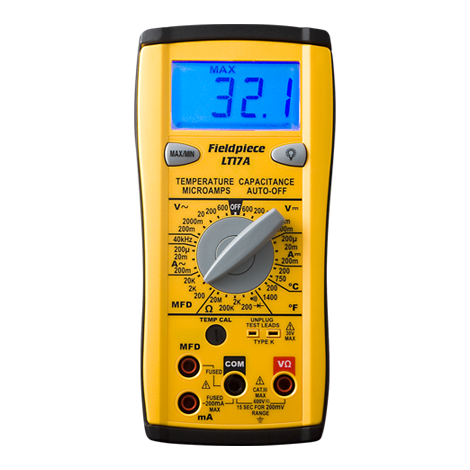
  • Diagnostic and measurement tools — digital multimeters, clamp meters, thermometers, anemometers, manometers, and combustion analyzers. These tools help you find problems, verify performance, and document system condition. A good clamp meter and a reliable thermometer are table stakes for any HVAC tech; more specialized instruments like combustion analyzers belong on the truck if you are servicing gas appliances.
  • Leak detection tools — electronic leak detectors, UV dye kits, and nitrogen leak testing equipment. Finding a refrigerant leak accurately the first time saves hours of diagnostic labor. The right tool depends on the refrigerant type, system size, and whether you are looking for a known leak or doing a general system check.
  • Safety and access tools — lockout/tagout kits, safety glasses, gloves rated for refrigerant handling, and equipment for working at height. These are not optional on a commercial job site and should not be treated as optional on a residential one either.

What It Takes to Use These Tools Safely and Correctly

Most HVAC tools do not have complicated installation requirements the way equipment does, but they do have real compatibility and operating requirements you should verify before using them on a live system.

For electrical tools — vacuum pumps, recovery machines, leak detectors, digital manifolds — check the voltage and amperage requirements against what is available at the job site. A recovery machine that draws more current than a standard outlet can supply will trip breakers or run inefficiently. If you are working in a commercial environment with 208V or 230V service, verify that the tool is rated for the supply voltage present.

Refrigerant compatibility is critical for any tool that makes contact with the refrigerant circuit. Gauge sets, hoses, fittings, and recovery machines are often rated for specific refrigerant families. Using a tool on a refrigerant it is not rated for can damage seals, compromise readings, or create a safety hazard. Pull the spec sheet for the tool and compare it against the refrigerant the system uses before connecting anything.

Vacuum pumps require clean oil to pull a proper deep vacuum. Check the oil condition before each use and change it after pulling systems that may have had moisture or contamination. A pump running on degraded oil will not reach the vacuum depth the job requires, and you may not realize it without a micron gauge to verify. If you do not own a micron gauge, treat it as a required accessory for any vacuum pump you use on refrigerant systems — pulling to gauge pressure and pulling to a verified deep vacuum are not the same thing.

For measuring instruments like anemometers, manometers, and combustion analyzers, look up the operating temperature range and calibration status before relying on readings in extreme conditions. A combustion analyzer used outside its rated ambient temperature range may give inaccurate readings at exactly the moment you need accuracy most. Store instruments in their cases, away from refrigerants and moisture, and keep them calibrated per the manufacturer's schedule.

Physical condition and accessories matter, too. Hoses, fittings, seals, and probe tips wear out. A gauge set with cracked hoses or worn schrader valve cores will leak refrigerant and give unreliable readings. Inspect tools before each major job, replace wear items proactively, and keep a supply of common replacement parts — hose gaskets, replacement probes, battery packs — on hand so a worn part does not sideline a tool mid-job.

Things You Should Know Before You Buy

Q: Do I need EPA Section 608 certification to buy refrigerant recovery equipment?

A: Technicians who purchase and use refrigerant recovery equipment to service systems containing regulated refrigerants are generally required to be EPA Section 608 certified. The certification requirement applies to the technician, not to the tool itself, so purchasing the equipment is typically unrestricted — but operating it to recover regulated refrigerants requires the appropriate certification. Verify current EPA requirements and any state-specific rules before purchasing if you are unsure of your certification status.

Q: How do I know if a gauge set is compatible with the refrigerant in my system?

A: Check the gauge set's listed refrigerant compatibility on the spec sheet or product labeling — manufacturers typically list which refrigerants the gauges, hoses, and fittings are rated for. The pressure scale on the gauge face also needs to match the operating pressure range of the refrigerant you are working with. If the system uses a refrigerant not listed on the gauge set, do not assume compatibility. The broader point about refrigerant compatibility for tools that touch the circuit is covered in the safety and compatibility section above.

Q: What is a micron gauge and do I actually need one?

A: A micron gauge (also called a vacuum gauge) measures system vacuum in microns of mercury, far more precisely than the low-side scale on a manifold gauge. Pulling to a verified deep vacuum — typically below 500 microns, though the target varies by job and manufacturer specification — is the only reliable way to confirm that a system is free of non-condensables and moisture before charging. As noted above when covering vacuum pump use, a micron gauge is a required tool, not an optional accessory.

Q: What is the difference between a manifold gauge set and a digital manifold?

A: A traditional manifold gauge set uses analog gauges to display high-side and low-side pressures. A digital manifold does the same but adds features like built-in refrigerant libraries, superheat and subcooling calculations, temperature probe inputs, and often Bluetooth data logging. Digital manifolds cost more but reduce manual calculation errors and are faster on complex diagnostic calls. For a technician doing high-volume service work, the time savings and accuracy improvement typically justify the added cost.

Q: How often should I change the oil in my vacuum pump?

A: Change vacuum pump oil after every system evacuation where the system may have had moisture or contamination, and at a minimum after every few normal evacuations even if the oil looks clean. Degraded or moisture-saturated oil significantly reduces the pump's ability to reach deep vacuum. The oil should be clear to light yellow; dark, milky, or cloudy oil needs to be changed before the next use. Check the manufacturer's service interval recommendation for your specific pump model.

Q: Can I use the same leak detector for all refrigerant types?

A: Not always. Electronic leak detectors are typically designed to sense specific refrigerant families — HFCs, HFOs, or hydrocarbons, for example — and a detector calibrated for one refrigerant family may not reliably detect another. Check the detector's listed refrigerant compatibility before relying on it for a system using a refrigerant type you have not tested it with. UV dye detection is more broadly compatible but requires that dye already be present in the system.

Q: Are HVAC tools covered by a warranty, and what should I look for?

A: Most professional-grade HVAC tools carry a manufacturer warranty, but coverage varies significantly — from one year on economy instruments to limited lifetime warranties on hand tools from some manufacturers. Pay attention to what the warranty covers: parts only, or labor and calibration as well? Some manufacturers offer calibration certification services that are worth factoring in for precision instruments. Review the warranty terms for the specific tool before purchasing, especially for higher-cost items like digital manifolds, recovery machines, and vacuum pumps.

HVAC365 ships tools nationwide, so whether you need a single gauge set for a same-week service call or a restocking order for a shop full of technicians, you are not waiting on a regional distributor to have it in their warehouse. Fast shipping matters when a job is on the schedule and a tool is the only thing holding it up — residential or commercial, single unit or volume order.

Compare
Show: 12 24 48

Fast Shipping

Easy Returns

Warranty Coverage

Financing Available