
-
Continental Refrigerator
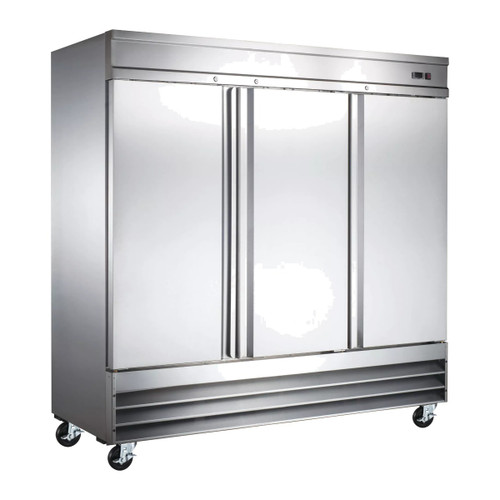
Continental Refrigerator 3-Section Reach-In Freezer, 3 Solid Doors, Stainless Steel Front, 208-230V, R290 | 3FN
SKU: 3FN
$19,791.05- 🚚Qualifies for FREE Shipping
- ⚡Fast Shipping
Ships in 3-5 Business Days2 in stock -
Continental Refrigerator
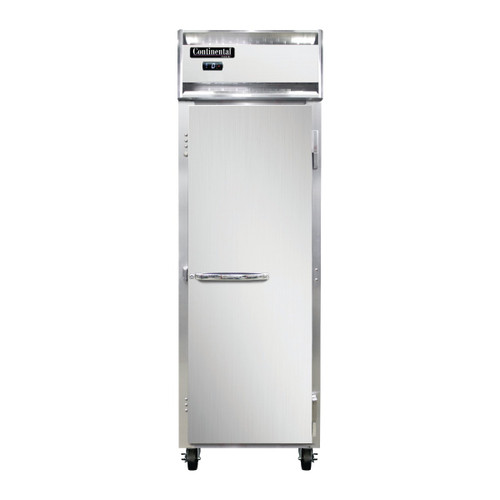
Continental Refrigerator 20 Cu. Ft. Reach-In Freezer, 1 Solid Door, Stainless Steel Front, R290 | 1FN
SKU: 1FN
$10,696.15- 🚚Qualifies for FREE Shipping
- ⚡Fast Shipping
Ships in 3-5 Business Days3 in stock -
Kelvinator Commercial
Kelvinator Commercial 48 Cu. Ft. Glass Door Merchandiser Freezer, 2 Hinged Doors, 54 in. Wide, R290 | KCHGM48F
SKU: KCHGM48F
$21,183.33- 🚚Qualifies for FREE Shipping
- ⚡Fast Shipping
Ships in 3-5 Business Days1 in stock -
Kelvinator Commercial
Kelvinator Commercial 23 Cu. Ft. Novelty Chest Freezer, Sliding Glass Lids, 71 in. Wide, White, R290 | KCNF170WH
SKU: KCNF170WH
$9,870.00- 🚚Qualifies for FREE Shipping
- ⚡Fast Shipping
Ships in 3-5 Business Days1 in stock -
Everest
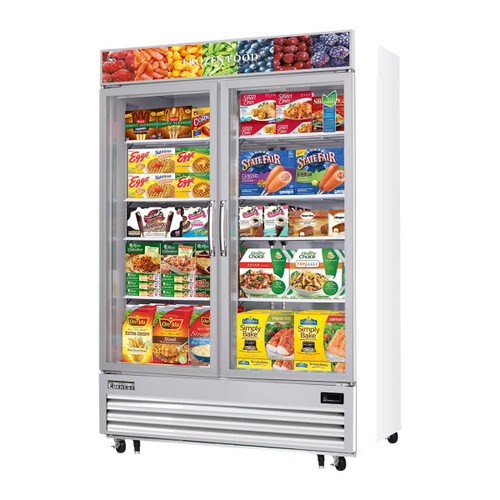
Everest 48 Cu. Ft. Bottom Mount Glass Door Merchandiser Freezer, 2 Swing Doors | EMGF48
SKU: EMGF48
$13,644.58- 🚚Qualifies for FREE Shipping
- ⚡Fast Shipping
Ships in 3-5 Business Days1 in stock -
Entrée
Entrée 42.5 Cu. Ft. Glass Door Merchandiser Freezer, 2 Doors, 54 in. Wide, Black, R290 | EGMF53X
SKU: EGMF53X
$5,495.00- 🚚Qualifies for FREE Shipping
- ⚡Fast Shipping
Ships in 3-5 Business Days2 in stock -
Entrée
Entrée Glass Door Merchandiser Freezer, 1 Door, 27 in. Wide, Black, R290 | EGMF27X
SKU: EGMF27X
$3,495.00- 🚚Qualifies for FREE Shipping
- ⚡Fast Shipping
Ships in 3-5 Business Days4 in stock -
Entrée
Entrée 66.5 Cu. Ft. Reach-In Freezer, 3 Solid Doors, Stainless Steel Interior & Exterior, R290 | EFB3X-SI
SKU: EFB3X-SI
$5,995.00- 🚚Qualifies for FREE Shipping
- ⚡Fast Shipping
Ships in 3-5 Business Days1 in stock -
Entrée
Entrée 41.1 Cu. Ft. Reach-In Freezer, 2 Solid Doors, Stainless Steel Interior & Exterior, R290 | EFB2X-SI
SKU: EFB2X-SI
$4,636.08- 🚚Qualifies for FREE Shipping
- ⚡Fast Shipping
Ships in 3-5 Business Days3 in stock -
Entrée
Entrée 20.6 Cu. Ft. Reach-In Freezer, 1 Solid Door, Stainless Steel Interior & Exterior, R290 | EFB1X-SI
SKU: EFB1X-SI
$2,995.00- 🚚Qualifies for FREE Shipping
- ⚡Fast Shipping
Ships in 3-5 Business Days6 in stock -
Blue Air
Blue Air 72 Cu. Ft. Glass Door Merchandiser Freezer, 3 Swing Doors, Black, 208-230V, R290 | BKGF72B-HC
SKU: BKGF72B-HC
$8,395.00- 🚚Qualifies for FREE Shipping
- ⚡Fast Shipping
Ships in 3-5 Business Days1 in stock -
Blue Air
Blue Air 43 Cu. Ft. Glass Door Merchandiser Freezer, 2 Swing Doors, Black, R290 | BKGF49B-HC
SKU: BKGF49B-HC
$6,295.00- 🚚Qualifies for FREE Shipping
- ⚡Fast Shipping
Ships in 3-5 Business Days2 in stock
Buying guidance
Upright & Chest Freezers





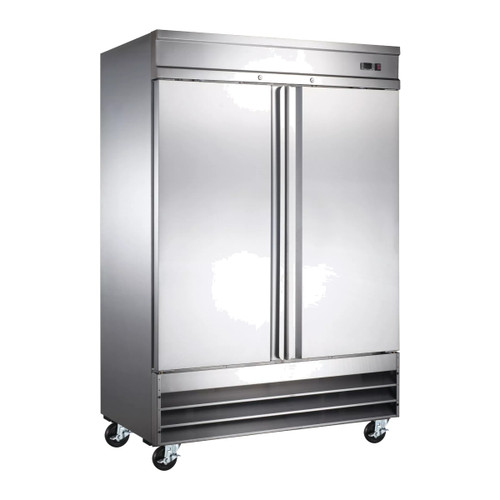


What are upright and chest freezers?
Upright and chest freezers keep frozen food and frozen merchandise at the low temperatures that protect quality and food safety. This category covers commercial models built for restaurants, convenience stores, markets, cafeterias, concession stands and any business that stores or sells frozen product: solid door reach-in freezers for back of house storage, glass door merchandiser freezers that display product to customers, and chest freezers with sliding glass lids for ice cream and frozen novelties. Brands include Blue Air, Entrée, Everest, Kelvinator Commercial and Continental Refrigerator.
Commercial freezers are built differently from household units. They use heavier cabinets and hinges, larger refrigeration systems that recover quickly after door openings, shelving rated for heavy loads, and certifications for commercial food service use. Choosing the right one starts with how you will use it: storing product out of sight, selling it from a display, or a mix of both.
Types of Commercial Freezers
Solid door reach-in freezers
Reach-in freezers are the workhorses of commercial kitchens. Solid stainless steel or painted steel doors hold temperature best, and the cabinets come in one, two and three section widths, roughly 27, 54 and 81 inches wide. They are used for frozen proteins, vegetables, desserts and prepared food. Top mount refrigeration keeps the compressor out of floor-level dust and grease, while bottom mount refrigeration puts the compressor at floor level where the air is cooler and service is easier.
Glass door merchandiser freezers
Merchandiser freezers combine storage with sales. Double or triple pane glass doors, bright LED lighting and an illuminated header let customers see ice cream, frozen meals and frozen novelties before they open the door. They are common in convenience stores, markets, cafes, delis, hotels and campus stores. Because customers open the doors often, look for self-closing doors with good seals and a refrigeration system sized for frequent openings.
Chest freezers and novelty freezers
Chest freezers open from the top, so cold air stays inside when the lid is opened. Models with sliding glass lids are used as novelty freezers for ice cream bars and frozen treats at checkout counters, pools, concession stands and snack bars. They hold a lot of product in a compact footprint and are often mounted on casters so they can be moved for seasonal displays.
How to Choose the Right Freezer
- Capacity. Measured in cubic feet. A one section reach-in typically holds around 20 to 23 cubic feet, a two section 40 to 50, and a three section 65 to 72. Estimate your frozen inventory at its busiest and add room to grow.
- Footprint and access. Measure the space, the doorways and the path into the building. Allow clearance for the door swing and for airflow around the refrigeration system.
- Door type. Solid doors save energy and hold temperature best for storage. Glass doors sell product. Chest freezers suit impulse items and bulk storage.
- Refrigeration location. Top mount systems stay away from floor dirt and suit hot kitchens with good overhead clearance. Bottom mount systems put the top shelf at a more comfortable height and are easy to service.
- Temperature range. Most commercial freezers hold between about -10°F and 0°F. Ice cream and novelty freezers may run slightly warmer to keep product scoopable.
- Electrical. Most one and two section models run on 115 volt power with a standard plug, while some larger units need 208 to 230 volt service. Confirm the outlet and circuit before delivery.
- Refrigerant and efficiency. Many current models use R-290 hydrocarbon refrigerant, which has a very low global warming potential and improves efficiency. ENERGY STAR listed models can lower operating costs further.
Brands in This Category
Blue Air builds reach-in freezers and glass door merchandisers with R-290 refrigeration and strong warranty coverage, popular with restaurants and convenience stores. Entrée offers stainless steel reach-in freezers and black glass door merchandisers aimed at value-minded kitchens and stores. Everest is known for bottom mount merchandisers and reach-ins backed by long compressor coverage. Kelvinator Commercial makes novelty chest freezers and glass door merchandisers for retail. Continental Refrigerator builds heavy duty, American-made reach-in freezers with stainless steel fronts and some of the longest warranties in the category.
Matching a Freezer to Your Business
Restaurants and kitchens
Choose solid door reach-ins sized for your frozen inventory, with stainless steel interiors where cleaning matters most. A one section unit suits small kitchens and food trucks, while busy restaurants often run a two or three section reach-in alongside a walk-in freezer.
Convenience stores and markets
Glass door merchandisers drive sales of ice cream, frozen meals and ice. Black cabinets and LED lighting make product stand out, and two or three door models offer room for several product categories.
Concessions and seasonal sales
Novelty chest freezers with sliding glass lids are easy to move, hold plenty of ice cream bars and frozen treats, and fit near a register where impulse sales happen.
Each product page lists capacity, dimensions, electrical requirements, refrigerant, temperature range and warranty so you can compare models side by side before you order.
Installation and Placement Tips
- Set the cabinet level on a solid floor so doors close and seal properly.
- Leave the clearance the manufacturer specifies around the refrigeration system so it can breathe. A freezer jammed against a wall or next to a fryer works harder and wears out sooner.
- Plug into a dedicated circuit sized for the unit, and avoid extension cords.
- Let a new freezer run empty until it reaches temperature before loading product.
- Load product so air can circulate around it, and keep it away from the evaporator fan.
Care and Maintenance
Commercial freezers last longer and use less energy with a few simple habits. Clean the condenser coil every one to three months, more often in kitchens with grease or dusty locations. Check door gaskets for tears and replace them when they no longer seal. Keep the interior organized so doors are not held open while staff search for product, and wipe up spills before they freeze onto shelves. Watch the temperature display and have small changes checked before they become a failure. Many models defrost automatically, but ice buildup on the evaporator or around the door is a sign that the defrost system, gasket or door alignment needs attention.
Food Safety Basics
Frozen food should be held at 0°F or colder to stop bacterial growth and protect quality. Keep a thermometer in the cabinet, log temperatures if your local health department requires it, and rotate stock so the oldest product is used first. Do not overload a freezer with warm product, which raises the cabinet temperature and slows recovery.
Shipping and Delivery
Commercial freezers are large, heavy items that ship by freight on a pallet. Plan for a liftgate if there is no loading dock, measure doorways and hallways in advance, and inspect the unit for damage before signing the delivery receipt. Let the freezer stand upright for several hours after delivery before plugging it in so the compressor oil settles.
Frequently Asked Questions
What is the difference between a reach-in freezer and a merchandiser?
A reach-in freezer is built for storage, usually with solid doors. A merchandiser has glass doors and lighting to display product to customers.
Can I use a commercial freezer at home?
Commercial freezers are designed and warrantied for commercial use. Some manufacturers limit or void warranty coverage for residential installations, so check the warranty terms on each product page.
Why does my freezer build up frost?
Frost usually comes from doors left open, worn gaskets, a door that does not close fully, or a defrost problem. Fixing the seal and door alignment solves most cases.
How much space should I leave around the freezer?
Follow the manufacturer's clearance guidance. As a general rule, leave a few inches at the sides and back and keep the front grille or top vents clear.


