
-
$3,065.96
- 🚚Qualifies for FREE Shipping
- ⚡Fast Shipping
Ships in 1-2 Business Days2 in stock -
Jandy
Jandy 2.7 HP Variable Speed Pool Pump with 2 Aux Relays - No Controller Included PlusHP Series | VSPHP270DV2A
SKU: VSPHP270DV2A
$3,053.91- 🚚Qualifies for FREE Shipping
- ⚡Fast Shipping
Ships in 1-2 Business Days369 in stock -
$3,181.86
- 🚚Qualifies for FREE Shipping
- ⚡Fast Shipping
Ships in 1-2 Business Days45 in stock -
Jandy
Jandy 3.8 HP Variable Speed Pool Pump with 2 Aux Relays - No Controller Included FloPro Series | VSFHP3802A
SKU: VSFHP3802A
$3,068.38- 🚚Qualifies for FREE Shipping
- ⚡Fast Shipping
Ships in 1-2 Business Days29 in stock -
$3,091.37
- 🚚Qualifies for FREE Shipping
- ⚡Fast Shipping
Ships in 1-2 Business Days6 in stock -
Waterway
Waterway Power Defender Variable Residential Pool Pump 1.65 hp 115/230V Single-Phase In-Ground | PD-165
SKU: PD-165
$1,792.55- 🚚Qualifies for FREE Shipping
- ⚡Fast Shipping
Ships in 1-2 Business Days39 in stock -
Aquastar
AquaStar Pipeline Variable Speed Residential 3 hp 230V Single-Phase In-Ground/Above Ground Pool Pump | PLP300S
SKU: PLP300S
$2,129.20- 🚚Qualifies for FREE Shipping
- ⚡Fast Shipping
Ships in 1-2 Business Days21 in stock -
$3,392.20
- 🚚Qualifies for FREE Shipping
- ⚡Fast Shipping
Ships in 1-2 Business Days38 in stock -
Jandy
Jandy 3.8 HP Variable Speed Pool Pump with 2 Aux Relays with SpeedSet Controller FloPro Series | VSFHP3802AS
SKU: VSFHP3802AS
$3,259.35- 🚚Qualifies for FREE Shipping
- ⚡Fast Shipping
Ships in 1-2 Business Days2 in stock -
Pentair
Pentair IntelliPro VS SVRS Pool Pump Variable Residential 4 hp 230V Single-Phase In-Ground | 013002
SKU: 013002
$3,904.17- 🚚Qualifies for FREE Shipping
- ⚡Fast Shipping
Ships in 1-2 Business Days18 in stock -
Jandy
Jandy 2.7 HP Variable Speed Pool Pump with 2 Aux Relays - No Controller Included ePump Series | VSSHP270DV2A
SKU: VSSHP270DV2A
$3,337.89- 🚚Qualifies for FREE Shipping
- ⚡Fast Shipping
Ships in 1-2 Business Days192 in stock -
Pentair
Pentair 5 hp High Performance Variable Speed Pool Pump 3ph WhisperFloXF Series | 022035
SKU: 22035
$4,508.86- 🚚Qualifies for FREE Shipping
- ⚡Fast Shipping
Ships in 1-2 Business Days2 in stock
Buying guidance
Variable Speed Pool Pumps
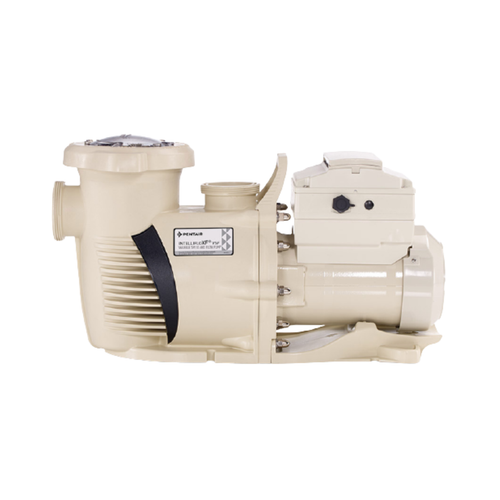

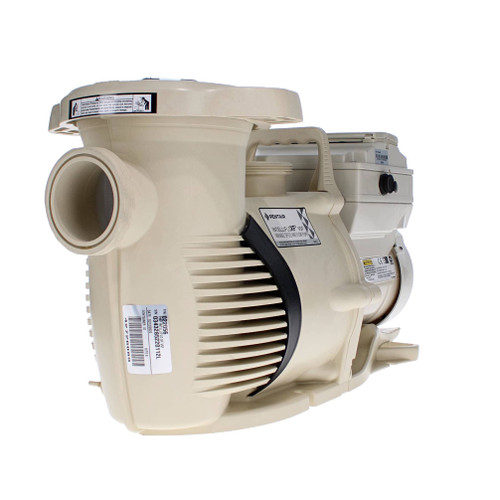
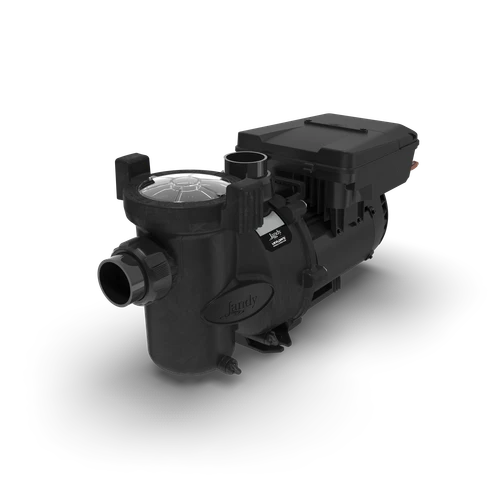


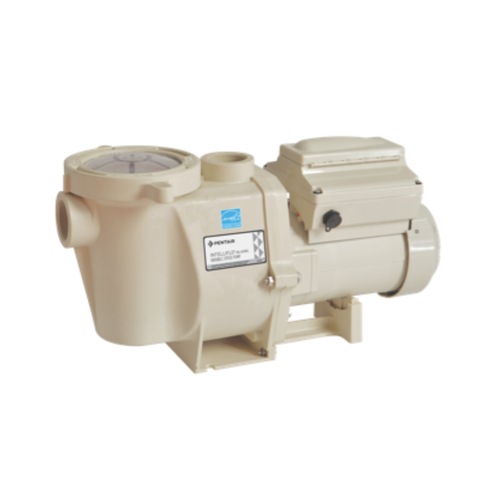

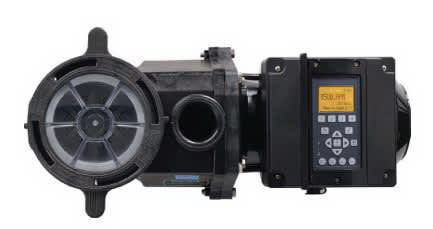


A variable speed pool pump does the same basic job as any pool pump: it pulls water from the skimmers and main drain, pushes it through the filter, heater and sanitizer, and sends it back through the returns. The difference is that it does not have to do that job at full speed all day. A permanent-magnet motor and an onboard drive let you set the exact RPM the pool needs for each task, so the pump can loaf along at low speed for filtration and only ramp up for vacuuming, spa jets, water features or a heater cycle. That one change is the biggest energy saving available on most residential equipment pads.
Variable speed is also no longer just the premium option. Under the U.S. Department of Energy's dedicated-purpose pool pump rule, in effect since July 2021, most standard-size inground filtration pumps sold for new installs and replacements now have to meet an efficiency level that, in practice, only variable speed designs reach. This category carries variable speed pumps and drive packages from Pentair, Hayward, Jandy, Waterway and other major brands. Service techs replacing worn-out single speed pumps, builders specifying new pads and homeowners tired of high electric bills all shop here. The electrical side of any pump change, including bonding and GFCI protection, belongs to a licensed electrician or qualified pool professional.
How Variable Speed Pool Pumps Work
The wet end of a variable speed pump looks familiar: a strainer pot and basket, a clear lid, a closed-face impeller spinning in a volute, a diffuser, and a mechanical shaft seal between the water and the motor. What changes is the motor and its controls.
- Permanent-magnet motor. Instead of the induction motor used in older pumps, most variable speed pumps use a totally enclosed, fan-cooled permanent-magnet motor. It is more efficient across its speed range and runs much quieter at low RPM.
- Drive. An electronic drive, usually mounted on top of or at the end of the motor, converts incoming power and controls motor speed. Typical ranges run from several hundred RPM up to about 3,450 RPM, adjustable in small steps.
- Onboard controls. Most pumps have a keypad that can store a daily schedule of speeds plus several preset "quick" speeds, and many can run off external relays or digital inputs. Some newer models add Wi-Fi or app control.
- Communication. Many pumps can talk to a same-brand automation system over an RS-485 data cable, letting the controller set speeds directly and read status and faults.
The reason running slow saves so much comes down to the pump affinity laws. Flow changes in direct proportion to speed. Head (pressure) changes with the square of speed. Power changes with roughly the cube of speed. Drop from 3,450 RPM to about 1,725 RPM and you move about half the water for roughly one-eighth of the power. You run longer to turn the pool over, but total energy for the day falls sharply. Slower water also filters better, since sand, cartridge and DE filters all catch fine particles more effectively at lower flow rates.
The DOE rule measures this with a number called the weighted energy factor, or WEF, expressed in thousands of gallons pumped per kilowatt-hour. A higher WEF is better. WEF is a weighted blend of performance at different load points, which is why multi-speed and variable speed pumps score so well. The rule sets minimum WEF levels by pump class, such as self-priming filtration pumps, non-self-priming pumps, pressure cleaner booster pumps and waterfall pumps, and by hydraulic horsepower. Standard-size self-priming filtration pumps are the class where variable speed has effectively become the requirement.
Signs Your Pump Needs Repair or Replacement
- Bearing noise. A rising whine, growl or screech from the motor means bearings are going. Variable speed motors are generally sold as complete assemblies, so compare the cost of a motor-and-drive replacement against a whole new pump.
- Water at the seal. Water dripping between the wet end and motor means the shaft seal is leaking. Replace it promptly. Water that tracks down the shaft can reach the rear bearing and the drive electronics.
- Drive fault codes. Overtemperature, overcurrent, undervoltage, priming failure and communication errors all show up on the keypad. Write down the exact code and check the manual. Many faults trace back to voltage problems, a clogged impeller, a closed valve, poor ventilation or a loose data cable rather than a failed pump.
- Will not prime. Usually an air leak on the suction side: lid O-ring, drain plugs, unions, valve stems or cracked fittings. A variable speed pump's priming cycle will usually run at high speed, so persistent priming failures point back to the plumbing.
- Dead display. Check power at the drive, the breaker and GFCI, and any external timer feeding the pump. A blown internal fuse or failed drive board can also cause this, and on many models the drive can be replaced separately from the motor.
- An old single speed pump still running. Not a failure, but if the pump runs eight or more hours a day at full speed, the energy savings from a variable speed upgrade can be substantial. Utility rebates exist in some areas, so check with your power company.
How to Choose the Right Variable Speed Pump
Choosing a variable speed pump is less about matching the old horsepower and more about covering the hardest job the system has to do. Work through these points before ordering.
- Find the peak demand. List every task: filtration, spa jets, spillover, waterfalls, deck jets, in-floor cleaning, solar on the roof, suction cleaner. The pump needs enough capacity at high speed to cover the most demanding one. It only runs there when needed.
- Estimate total dynamic head. Pipe size, length, fittings, filter, heater and elevation change all add resistance. Many residential systems land around 40 to 60 feet of head, but pads with solar, in-floor systems or long runs can be higher. Check the pump curve on each product page against your estimate.
- Check horsepower class and voltage. Variable speed pumps are sold by total horsepower or capacity class. Larger models are typically 230 V only, while some smaller ones are dual voltage or 115 V. Confirm the existing circuit and breaker can support the new pump.
- Match port size and fit. Common ports are 1.5, 2 and 2.5 inches, sometimes with unions. Measure the old pump's inlet height, outlet height and footprint. Many pumps offer base or riser kits to line up with existing plumbing.
- Decide how it will be controlled. Onboard schedule only, relays from an existing time clock, or full integration with automation. Pentair IntelliFlo-series pumps pair with Pentair IntelliCenter and EasyTouch, Hayward TriStar VS and similar models with OmniLogic, and Jandy VS FloPro and VS PlusHP-series pumps with AquaLink. Cross-brand communication is limited, so plan the control method up front.
- Match the tier to the job. Pentair SuperFlo VS and Hayward MaxFlo VS or Super Pump VS are popular direct replacements for standard residential pools. Higher-capacity models such as Pentair IntelliFlo3 or Hayward TriStar VS suit larger pools, spa combos and feature-heavy pads. Jandy offers the VS FloPro and ePump lines, and Waterway has variable speed options as well.
- Confirm compliance. For replacements on standard inground pools, buy a model listed as compliant with the DOE rule for its intended use.
| Speed | Relative Flow | Relative Head | Relative Power (approx.) | Typical Use |
|---|---|---|---|---|
| Full speed, about 3,450 RPM | 100% | 100% | 100% | Priming, spa jets, big water features |
| About 3/4 speed | 75% | 56% | About 42% | Heater cycles, pressure cleaners, solar |
| About 1/2 speed | 50% | 25% | About 13% | Routine filtration on many residential pools |
| About 1/3 speed | 33% | 11% | About 4% | Light circulation where skimmers and equipment still work |
These are theoretical affinity-law figures. Real-world numbers vary with motor efficiency, drive losses and the system curve, but the trend holds: small drops in speed produce large drops in power.
Installation and Safety Tips
- Bring in a licensed electrician. Pool pump circuits fall under NEC Article 680. That means GFCI protection where required, correct conductor size and breaker, a proper disconnect, and connection of the motor's bonding lug to the equipotential bonding grid with solid copper conductor no smaller than 8 AWG.
- Check voltage before power-up. Dual-voltage pumps must be set or wired for the actual supply. Wrong settings can damage the drive immediately.
- Plumb the suction side right. Use pipe sized for the flow, keep elbows away from the pump inlet where possible and make every suction joint airtight. Cavitation shows up as noise, vibration and lost flow.
- Prime with water in the pot. Fill the strainer pot before starting. Dry running even briefly can damage the shaft seal.
- Set minimum speeds for equipment. Heaters, salt cells and some chlorinators have minimum flow requirements and flow or pressure switches. Skimmers need enough flow to pull debris. Program higher speeds during heating, cleaning and spa modes.
- Keep the drive cool and dry. Leave room around the motor fan and drive, avoid tight enclosures and protect it from sprinklers and roof runoff.
- Respect suction entrapment rules. A high-capacity pump can generate strong suction. Confirm drain covers are VGB Act and ANSI/APSP-16 compliant and within their service life, and that the system meets local anti-entrapment requirements.
Shopping This Category at HVAC365
Every variable speed pump in this category is brand-new equipment with the full manufacturer warranty. Product pages list horsepower class, voltage, port size and RPM range so you can compare models side by side, and most items ship in 1-2 business days. If you are not sure which size fits your pad or which pump pairs with your automation, send HVAC365 the old pump's nameplate details and a description of the system, and we will help you sort it out.
Frequently Asked Questions
Do I have to replace my single speed pump with a variable speed pump?
For most standard-size inground filtration pumps, the compliant replacement models on the market today are variable speed. The DOE rule applies to new pumps manufactured for sale, not to pumps already installed, so you can keep running a working pump. When it fails, expect the replacement to be variable speed unless it falls into a smaller pump class.
How much energy will a variable speed pump save?
It depends on your electric rate, run hours, plumbing and how low you can set the filtration speed. Because power falls roughly with the cube of speed, the savings can be large on pools that spend most of the day at low RPM. Use the manufacturer's energy calculator with your own numbers rather than a general figure.
What RPM should I run for filtration?
Run the lowest speed that still keeps the skimmers working, satisfies the heater and salt cell flow switches when they are on, and turns the pool over in your target time. Many residential pools land somewhere around 1,200 to 2,000 RPM for routine filtration, but the right setting depends on plumbing, pool size and equipment.
Can a variable speed pump work with my existing time clock?
Usually. Some installers feed the pump through the old timer and let the onboard schedule run when power is on. Others leave the pump powered full time and let it keep its own schedule. Check the manual, since some pumps lose their clock or program without constant power.
Will my Pentair pump talk to Hayward or Jandy automation?
Generally, full digital communication only works within the same brand. You can often control another brand's pump through relays or digital inputs to select preset speeds, but you lose some status and fault reporting. Check both manuals before mixing brands.
Can I replace just the motor or drive?
Often, yes. Many variable speed pumps have replacement motor assemblies and drives available separately. If the wet end is in good shape and the pump is not too old, replacing a failed drive can make sense. If the motor and drive are both suspect, a complete pump may be the better value.


