





Description
Product Summary
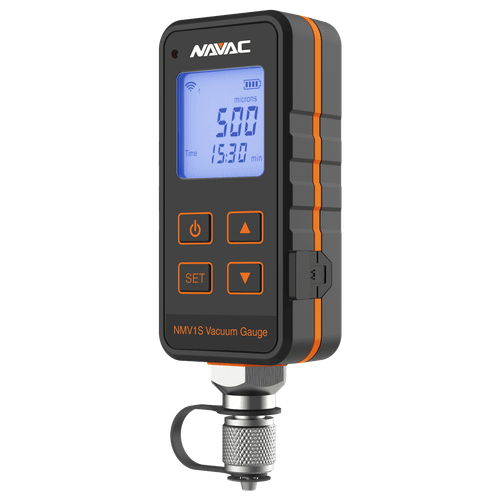
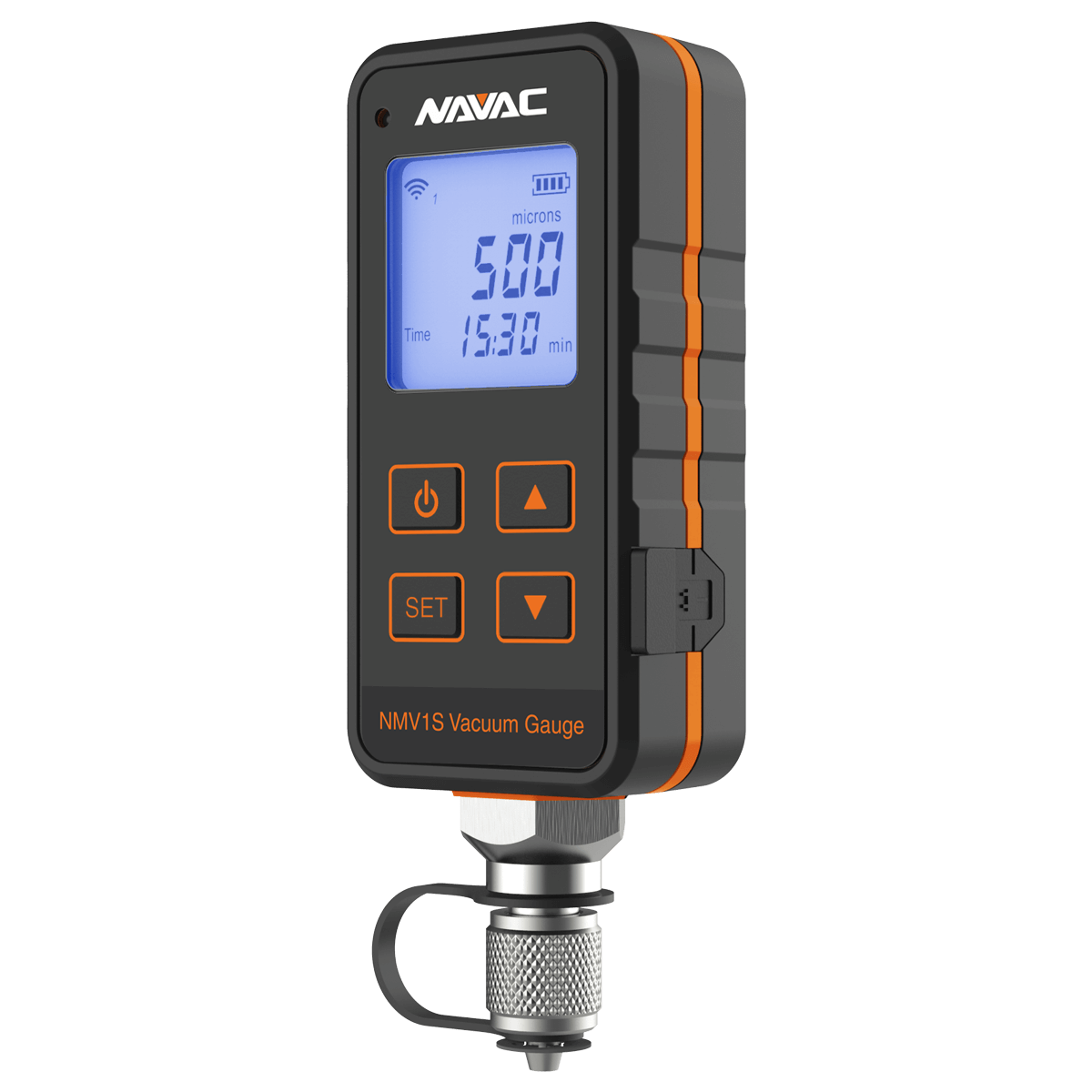
The NAVAC NMV1S is a premium digital micron vacuum gauge built for technicians who want accuracy, wireless monitoring and durability in one compact tool. A high-precision Pirani sensor reads from 0 to 25,000 microns with ±5% of reading accuracy from 15 to 1,000 microns, and 0.01 micron resolution below 10 microns.
Bluetooth connectivity with a 100 ft range lets you monitor evacuation from a distance, while a 500 psi maximum overload rating protects the sensor from accidental system pressure. The rechargeable 2000 mAh lithium battery charges via USB-C, and audible target and leak-decay alarms keep you informed throughout the job.
Key Features
- Pirani Sensor: High-precision sensor with 0.01 micron resolution below 10 microns.
- 500 PSI Overload: Withstands accidental exposure to system pressure up to 500 psi.
- Bluetooth Wireless: Monitor vacuum readings remotely at up to 100 ft (30 m).
- Rechargeable Battery: 2000 mAh lithium battery with USB-C charging.
- Target Alarm: Buzzes when the preset vacuum level is reached.
- Leak Warning: Rapid buzz and flashing backlight when vacuum rises from the decay target.
- Accessories Included: Angled stem and storage bag for protection and easy connection.
Specifications
| Brand | NAVAC |
|---|---|
| Model | NMV1S |
| Sensor | Pirani |
| Range | 0-25,000 microns; 0-3,300 Pa; 0-33.3 mBar; 0-25 mmHg |
| Resolution | 0.01 micron (<10 microns); 0.01 Pa (<10 Pa); 0.001 mBar; 0.001 mmHg |
| Accuracy | ±5% of reading, 15-1,000 microns (at 68°F) |
| Units | Microns, Pa, mBar, mmHg |
| Maximum Overload Pressure | 500 psi |
| Bluetooth Range | 100 ft (30 m) |
| Battery | 2000 mAh rechargeable lithium, USB-C |
| Operating Temperature | 32-122°F (0-50°C) |
| Weight | 6.2 oz |
| Warranty | 1 year |
What's Included
- (1) NMV1S premium micron vacuum gauge
- (1) Angled stem
- (1) Storage bag
Ideal Applications
- Remote evacuation monitoring on residential and commercial systems
- Vacuum decay testing for leaks and moisture
- Mini split and heat pump installations
- Jobs where accidental pressurization of the gauge is a risk