Commercial Heat Pump Condensers: Three-Phase Split Heat Pumps From 3 to 10 Tons
A commercial heat pump condenser is the outdoor unit of a split-system heat pump. Like an air conditioning condenser, it houses the compressor, outdoor coil, fan, and controls. Unlike a straight AC condenser, it also contains a reversing valve, a defrost control, and refrigerant components that let the system run in reverse, pulling heat from outdoor air in winter and delivering it indoors through a matched air handler. For light commercial buildings with three-phase power, a split heat pump provides both cooling and efficient electric heating without gas piping, combustion venting, or a separate heating appliance.
This guide covers where three-phase split heat pumps fit, how they are sized and rated for heating, how defrost works, what balance point and supplemental heat mean in practice, and what changes with the move to R-454B refrigerant.
Where are commercial split heat pumps used?
- Small offices, medical and dental suites, and professional buildings with indoor air handlers.
- Retail and restaurant spaces in strip centers where the air handler sits above the ceiling or in a back room.
- Multi-story buildings with air handlers on each floor and outdoor units on the roof or at grade.
- Churches, schools, and community buildings with three-phase service and no gas.
- Replacement of existing three-phase split heat pumps or AC systems with electric strip heat.
Three-phase power matters here. Many 3 to 5 ton heat pumps are built in both single-phase and three-phase versions; in commercial buildings with 208V or 460V three-phase service, the three-phase version is usually the right fit and is often required by the building's electrical design.
What three-phase heat pump condensers are available from Rheem?
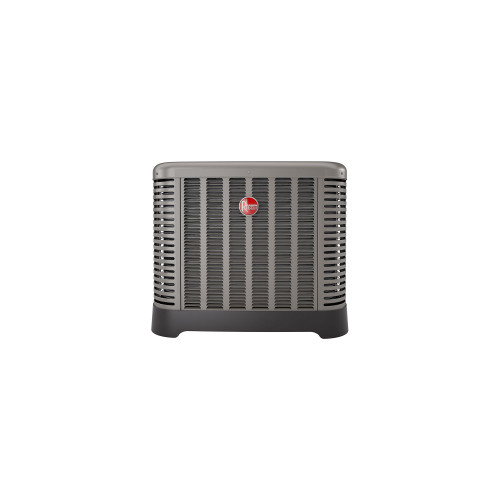
Rheem offers the RP14AY and RP15AY heat pump series in three-phase versions for light commercial applications in the smaller tonnages, and the RPCY commercial heat pump condensers for larger capacities. All use R-454B refrigerant. The RPCY line is designed to match RHCYP commercial air handlers, while RP14AY and RP15AY three-phase units pair with matched Rheem air handlers listed in the manufacturer's AHRI combinations.
| Size range | Typical product type | Rating standard |
|---|
| 3 to 5 tons | Three-phase versions of residential-style heat pumps such as RP14AY and RP15AY | AHRI 210/240: SEER2, EER2, HSPF2 |
| Above 5.4 tons (65,000 Btu/h) to about 10 tons | Commercial heat pump condensers such as RPCY | AHRI 340/360: EER, IEER, COP at 47°F and 17°F |
How is heating capacity rated on a commercial heat pump?
Heat pumps publish heating capacity at two outdoor temperatures: 47°F and 17°F. The 47°F rating describes performance on a mild winter day; the 17°F rating shows what is left on a cold one. A heat pump's capacity drops as outdoor temperature falls because there is less heat available in the air and the compressor works across a larger pressure difference. For many standard designs, capacity at 17°F is somewhere in the range of 55 to 65 percent of the 47°F value, though designs vary.
Efficiency is reported as HSPF2 for systems below 65,000 Btu/h and as COP (coefficient of performance) at 47°F and 17°F for larger systems. A COP of 3.3 means the unit delivers 3.3 units of heat per unit of electricity, compared with 1.0 for electric resistance. Federal minimums for commercial air-cooled heat pumps from 65,000 to under 135,000 Btu/h include 3.4 COP at 47°F. Cooling performance on the same units is rated in SEER2 or IEER depending on size.
How does defrost work on a heat pump condenser?
When the outdoor coil runs below freezing in humid conditions, frost builds on its surface, typically when outdoor air is roughly between 20 and 40°F. Frost blocks airflow and cuts capacity. The defrost control periodically switches the reversing valve to cooling mode, stops the outdoor fan, and sends hot refrigerant gas through the outdoor coil to melt the ice. Defrost usually lasts a few minutes and ends when the coil temperature reaches a set point or a time limit is reached.
- Time-temperature defrost checks coil temperature at fixed intervals, such as every 30, 60, or 90 minutes, and defrosts if the coil is cold enough.
- Demand defrost uses sensor inputs to defrost only when frost is actually building, which avoids unnecessary defrost cycles.
During defrost, the indoor coil is temporarily cooling, so the air handler's electric heat is usually energized to prevent cold air from blowing into the space. Install the outdoor unit on a pad or stand that lets defrost water drain away and does not create ice hazards on walkways.
What is the balance point, and why does it matter?
The balance point is the outdoor temperature where the heat pump's output equals the building's heat loss. Above it, the heat pump carries the whole load. Below it, supplemental electric heat in the air handler makes up the difference. Finding it requires the building's heat loss at design temperature and the heat pump's extended heating performance data. A lower balance point means fewer hours of electric resistance heat and lower operating costs. Larger outdoor units, two-stage compressors, and higher-efficiency designs all lower the balance point.
What should I check when sizing a commercial heat pump condenser?
- Size for cooling first. In most U.S. climates, size the heat pump to the cooling load from a commercial load calculation, then check heating performance. Oversizing for heat can hurt summer humidity control.
- Check heating at design temperature. Compare the 17°F capacity, adjusted to your design temperature, with the heating load to size supplemental heat.
- Account for ventilation air. Outdoor air required by code adds to both heating and cooling loads.
- Match voltage. 208/230V three-phase and 460V three-phase are common. Confirm the outdoor unit and air handler voltages are compatible with the building service.
- Read MCA and MOP. These set wire and breaker sizing. The outdoor unit and air handler are typically on separate circuits.
What changes with R-454B on split heat pumps?
Under the EPA Technology Transitions rule, new light commercial heat pumps manufactured or imported from January 1, 2025 must use refrigerant with a GWP below 700, and split systems built with pre-2025 R-410A components could be installed only until January 1, 2026. Rheem's RP14AY, RP15AY, and RPCY heat pumps use R-454B, an A2L refrigerant with a GWP of about 466. Practical points for installers:
- The indoor air handler or coil must be listed for R-454B and matched to the outdoor unit.
- Indoor refrigerant joints should be brazed or made with listed mechanical connectors; follow the installation instructions on flare connections.
- Depending on charge and room size, the system may require a refrigerant detection sensor in the air handler, which triggers the blower if a leak is detected.
- Use A2L-rated recovery machines, vacuum pumps, and recovery cylinders.
- Follow manufacturer line sizing tables for length and vertical rise, especially because heat pump lines carry refrigerant in both directions and must return oil in both heating and cooling.
How should a heat pump condenser be installed?
Set the unit level on a pad or stand that raises it above the expected snow line in cold climates and allows defrost water to drain. Maintain the airflow clearances in the installation manual on all sides and above the fan discharge. Keep the unit away from roof drains, downspouts, and drip lines that could load the coil with ice. Verify phase rotation on three-phase scroll compressors at startup, charge by weight with line set adjustments, and confirm operation in both heating and cooling modes, including a forced defrost test if the control allows.
What commercial heat pump condensers are offered here?
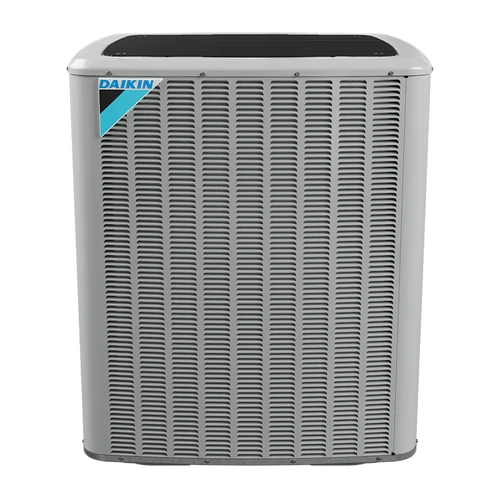
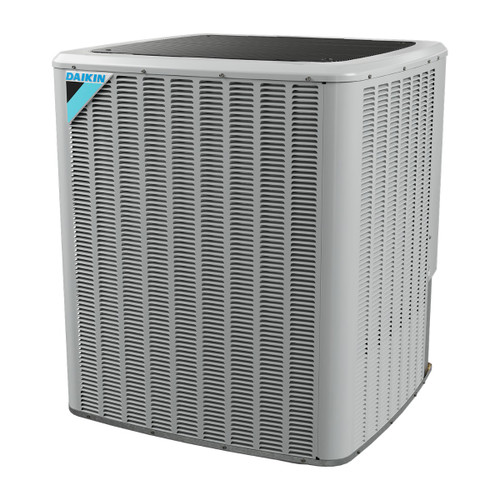
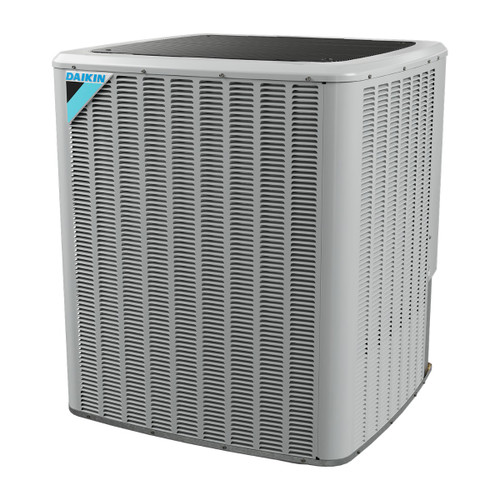
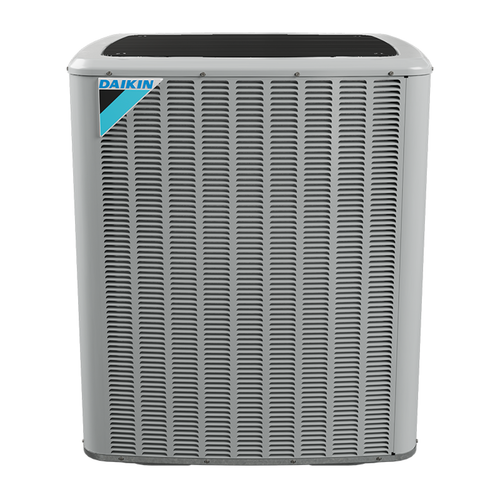
This category includes three-phase Rheem RP14AY and RP15AY heat pumps for light commercial applications, Rheem RPCY commercial heat pump condensers matched to RHCYP air handlers, and related Daikin heat pump outdoor units where available. Product pages list cooling and heating capacities, efficiency ratings, voltage, MCA and MOP, and matched indoor units. For complete matched combinations, see Commercial Heat Pump Systems.
Do commercial heat pump condensers need special maintenance?
Beyond standard condenser care, check the reversing valve for full shift in both modes, verify defrost control operation and sensors, and confirm the base pan drains freely so defrost water does not refreeze around the coil.
Commercial Heat Pump Condenser FAQ
Can a heat pump condenser replace an AC condenser on the same air handler?
Only if the air handler is listed for that heat pump and refrigerant. Heat pump systems typically need an indoor coil and metering arrangement designed for two-way operation, and with the change to R-454B, an existing R-410A air handler generally cannot be reused.
Why does my heat pump blow steam in winter?
That is normal defrost. The vapor is moisture from melting frost on the outdoor coil, and it should stop within a few minutes.
Do three-phase heat pumps work the same as single-phase?
The refrigeration cycle is the same. Three-phase compressors run more smoothly and draw less current per leg, and must be wired with correct phase rotation.
How cold can a commercial heat pump operate?
Standard heat pumps continue to heat well below freezing, with reduced capacity. The manufacturer's data lists capacity at low temperatures, and supplemental heat covers the shortfall.