Moving a Commercial Space to a Split Heat Pump: Conversion Planning and Heating Specs
A lot of the heat pump condensers we sell for commercial jobs are not like-for-like replacements. They are going into buildings that used to heat with a gas furnace, electric strip heat, or a separate boiler, where the owner wants one system for heating and cooling, wants to drop a gas account, or is following a local electrification push. Those conversions bring questions a straight replacement never raises: what the heating capacity really is on a cold morning, what the air handler needs, how backup heat gets sized and wired, and where the defrost water goes. This page is organized around those questions for the three-phase split heat pumps listed here.
The Lineup on This Page
| Series | Sizes | Power | Cooling rating shown | Refrigerant |
|---|
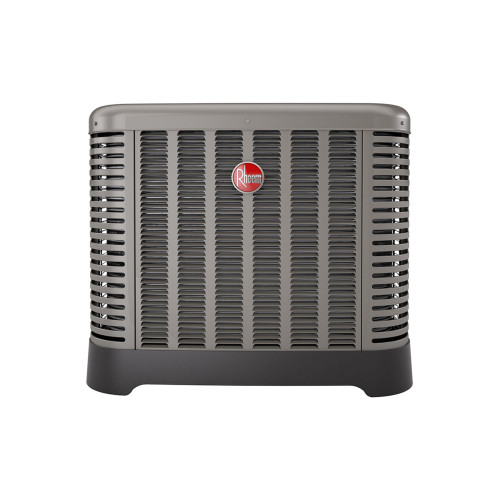
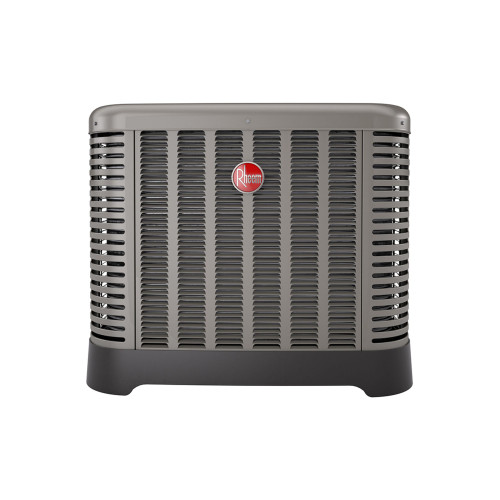
| Rheem RP14AY | 3, 3.5, 4, 5 tons | 208/230V or 460V 3-phase | 14.3 SEER2 | R-454B |
| Rheem RP15AY | 3, 3.5, 4, 5 tons | 208/230V or 460V 3-phase | 14.3 SEER2 | R-454B |
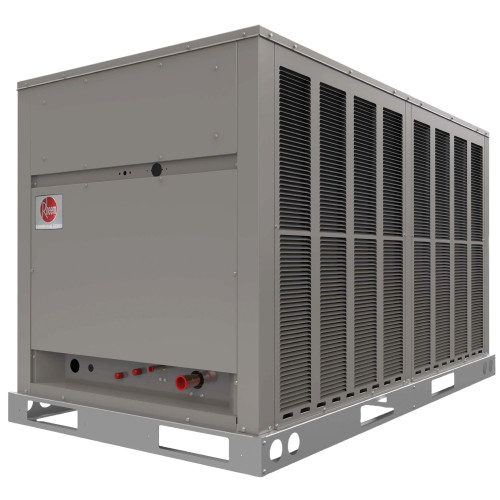
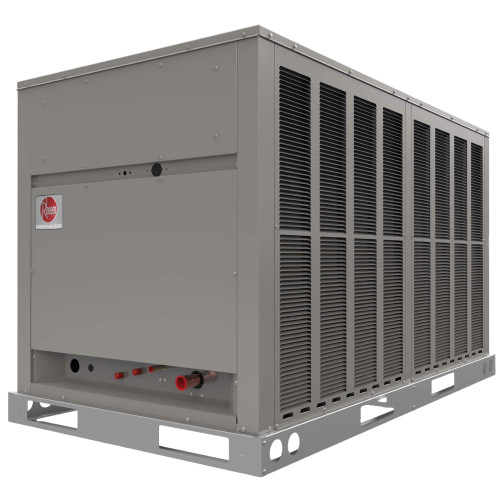
| Rheem Commercial Classic RPCY | 7.5, 10 tons | 208/230V or 460V 3-phase | 14.1 IEER | R-454B |
| Daikin DH4SEA | 3, 4, 5 tons | 208/230V or 460V 3-phase | 14.3 SEER2 / 12.5 EER2 | R-32 |
| Daikin DH6TE | 7.5, 10 tons | 208/230V or 460V 3-phase | 16.0 IEER | R-32 |
Heating ratings depend on the indoor section the condenser is paired with, so look them up for the exact combination. For matched Rheem pairs with the rating already established, see Commercial Heat Pump Split System Bundles. Cooling-only outdoor units are on Commercial AC Condensing Units.
Reading the Heating Numbers
Heat pumps under 65,000 Btu/h, which covers the 3 to 5 ton models here, carry an HSPF2 rating, a seasonal heating efficiency figure. Larger units, such as the 7.5 and 10 ton RPCY and DH6TE, are rated with heating COP at standard outdoor test temperatures, typically 47°F and 17°F. COP is the ratio of heat delivered to electrical energy used at that condition, so a higher number at 17°F tells you more about cold-weather operating cost than the 47°F figure does.
For sizing, the number that matters most is heating capacity at your design temperature, not the nominal tonnage. Heat pump output falls as the outdoor temperature drops while the building load rises. The point where those two lines cross is the balance point, and below it the supplemental heat has to carry the difference. Pull the expanded heating performance tables from the spec sheet and read the capacity at your local winter design condition.
Converting From a Cooling-Only System
If the building has a cooling-only condenser and an air handler with electric strip heat, switching to a heat pump looks simple, but check these items first:
- The indoor section must be heat pump rated. A heat pump runs refrigerant in both directions and needs an indoor coil and metering arrangement approved for heat pump duty with that condenser. A cooling-only air handler such as the Rheem RHCYA is not the match for an RPCY; the RHCYP is. On 3 to 5 ton systems, confirm the RH2TY model is listed with the specific RP14AY or RP15AY.
- The thermostat must be a heat pump thermostat. It needs a reversing valve output (O or B, depending on the manufacturer) and auxiliary or emergency heat stages. A conventional heat/cool thermostat cannot run a heat pump properly.
- The defrost cycle changes the controls. During defrost the indoor coil briefly goes back to cooling, so most systems bring on some auxiliary heat to temper the supply air. Confirm how the air handler and thermostat handle that.
- The duct system may need a look. Heat pump supply air is cooler than gas furnace air. Diffusers that throw well with 120°F+ air may feel drafty with heat pump air, especially in high-ceiling retail.
Converting From Gas Heat
Replacing a gas furnace and cooling coil with a heat pump split usually means a new air handler, a new electrical circuit for backup heat, and often a bigger electrical service. Check these before you quote:
- Electrical capacity. Add the heat pump MCA, the air handler and its electric heat, and everything else on the service. Electric heat is often the item that pushes a panel over its rating.
- Backup heat size. Size supplemental heat to cover the gap between the heat pump’s output at design temperature and the building load, and check whether your code or the owner requires full emergency heat capacity if the compressor fails.
- Venting and gas piping. Abandoned flues and gas lines must be handled per the local mechanical and fuel gas codes.
- Ventilation air. If the old furnace or air handler had an outdoor-air connection or economizer, plan how ventilation will be handled on the new system, since cold outdoor air adds to the heating load.
Outdoor Unit Placement for Heat Pumps
Heat pumps make water. Every defrost cycle melts frost off the outdoor coil, and that water drains out the bottom of the unit. On grade, raise the unit so the water drains away and does not refreeze around the base, and keep it off walkways and doorways where ice is a slip hazard. On a roof, keep the discharge and drain path away from roof drains that could freeze and from any area where ice would build on the membrane. In snow country, the unit needs to sit above expected snow depth with clear airflow. Coastal heat pumps also benefit from a coil coating, just like cooling-only units.
Refrigerant and Service Notes
The Rheem heat pumps here use R-454B and the Daikin DH4SEA and DH6TE use R-32. Both are A2L refrigerants, so recovery, evacuation, and leak-check equipment must be rated for A2L use, and installation must follow the manufacturer’s instructions and applicable safety standards, including any refrigerant detection requirements at the indoor unit. Never mix refrigerants or connect an A2L heat pump to an indoor coil listed for a different refrigerant.
RP14AY or RP15AY?
Both Rheem 3 to 5 ton series are listed at 14.3 SEER2 on this page, so the difference shows up in how they are paired. In Rheem’s matched bundles, the 3 to 4 ton RP15AY models are paired with a wider RH2TY cabinet than the RP14AY of the same tonnage (for example, the 3 ton RP15AY with a 21 inch cabinet and the 3 ton RP14AY with a 17-1/2 inch cabinet), the 5 ton pairings differ again, and the listed HSPF2 for the 3 to 5 ton bundles runs from 7.5 to 7.8 depending on the pairing. If the indoor space is tight, the cabinet width can decide it for you. Measure the opening and the return plenum before choosing, and compare the HSPF2 of the specific pairings if heating cost matters more than first cost.
Choosing Between Rheem and Daikin Here
Both brands cover 3 to 5 tons and 7.5 to 10 tons in both voltages. In practice, contractors tend to choose by what they already stock parts for and what indoor sections they can source. Rheem offers matched RHCYP and RH2TY air handlers on our Commercial Air Handlers page and as complete bundles; if you are going Daikin, confirm the matching Daikin indoor section and its AHRI listing before ordering the outdoor unit.
Frequently Asked Questions
What heating rating do the 7.5 and 10 ton heat pumps use?
Units at 65,000 Btu/h and above are rated with heating COP at standard outdoor temperatures rather than HSPF2. Use the spec sheet for the paired COP and capacity figures.
Can I keep my existing RHCYA air handler and add an RPCY heat pump?
No. The RHCYA is the air conditioning air handler in Rheem’s commercial line, while the RPCY heat pump is paired with the RHCYP heat pump air handler. Use the RHCYP, or a matched RPCY bundle.
Will a heat pump keep up on the coldest day?
It depends on your design temperature and building load. Check the capacity table at your design condition and size supplemental heat to cover whatever the heat pump cannot.
Does a commercial heat pump need its own thermostat?
It needs one that supports heat pumps: a reversing valve output plus auxiliary and emergency heat stages. Two-stage units also need two compressor stages.
Where should the defrost water go on a rooftop install?
Away from walkways, roof drains that can freeze, and areas where ice would sit on the membrane. Raise the unit enough for water to drain freely.
Is there a 575V version of these heat pumps?
Not on this page today. The listings here are 208/230V and 460V 3-phase. Contact us before ordering if your site is on 575V.