
-
Cleveland Controls
Cleveland Controls Universal Field Adjustable Air Pressure Sensing Switch | ANS2-3000-00K
SKU: ANS2-3000-00K
$87.33- 📦$14.95 Flat-Rate Shipping
- ⚡Fast Shipping
Ships in 3-5 Business Days8 in stock -
Cleveland Controls
Cleveland Controls Universal Field Adjustable Air Pressure Sensing Switch | ANS2-2000-00K
SKU: ANS2-2000-00K
$87.33- 📦$14.95 Flat-Rate Shipping
- ⚡Fast Shipping
Ships in 3-5 Business Days24 in stock -
Cleveland Controls
Cleveland Controls Universal Field Adjustable Air Pressure Sensing Switch | ANS2-1000-00K
SKU: ANS2-1000-00K
$87.33- 📦$14.95 Flat-Rate Shipping
- ⚡Fast Shipping
Ships in 3-5 Business Days24 in stock -
Honeywell Residential
Honeywell Residential 24V 1/2" X 1/2" Smart Valve Gas Valve with Ignition Control Includes LP Kit Fast Open | SV9501M8129
SKU: SV9501M8129
$770.82- 🚚Qualifies for FREE Shipping
- ⚡Fast Shipping
Ships in 3-5 Business Days7 in stock -
Honeywell Residential
Honeywell Residential 24V 1/2" X 1/2" Smart Valve Gas Valve with Ignition Control for Natural Gas Standard Opening Includes LP Kit | SV9501M2528
SKU: SV9501M2528
$770.82- 🚚Qualifies for FREE Shipping
- ⚡Fast Shipping
Ships in 3-5 Business Days41 in stock -
White-Rodgers
White-Rodgers Natural to Regulated LP Gas Conversion Kit for Use on Single Stage 36C D E F G H J Valves | F92-0659
SKU: F92-0659
$16.16- 📦$9.95 Flat-Rate Shipping
- ⚡Fast Shipping
Ships in 3-5 Business Days18 in stock -
$759.00
- 🚚Qualifies for FREE Shipping
- ⚡Fast Shipping
Ships in 3-5 Business Days5 in stock -
$787.98
- 🚚Qualifies for FREE Shipping
- ⚡Fast Shipping
Ships in 3-5 Business Days4 in stock -
$423.47
- 🚚Qualifies for FREE Shipping
- ⚡Fast Shipping
Ships in 3-5 Business Days17 in stock -
White-Rodgers
White-Rodgers 3/4" X 3/4" Millivolt Gas Valve with Side Outlets & LP Kit 280000 BTU Includes Reducer Bushings | 36C03U-433
SKU: 36C03U-433
$516.62- 🚚Qualifies for FREE Shipping
- ⚡Fast Shipping
Ships in 3-5 Business Days12 in stock -
White-Rodgers
White-Rodgers 120VAC Gas Valve -3/4 X -3/4 Plugged Pilot LP Kit Reducer Bushings NO Line Interrupter NO Side Taps Replaces | 36C01A-405
SKU: 36C01A-405
$453.47- 🚚Qualifies for FREE Shipping
- ⚡Fast Shipping
Ships in 3-5 Business Days10 in stock -
Honeywell Residential
Honeywell Residential 3 Wire Replaceable Ignitor/Flame Rod Assembly with 30" Leads for Honeywell SV Smart Valves | Q3400A1024
SKU: Q3400A1024
$176.80- 🚚Qualifies for FREE Shipping
- ⚡Fast Shipping
Ships in 3-5 Business Days58 in stock
Buying guidance
Gas Valves & Regulators


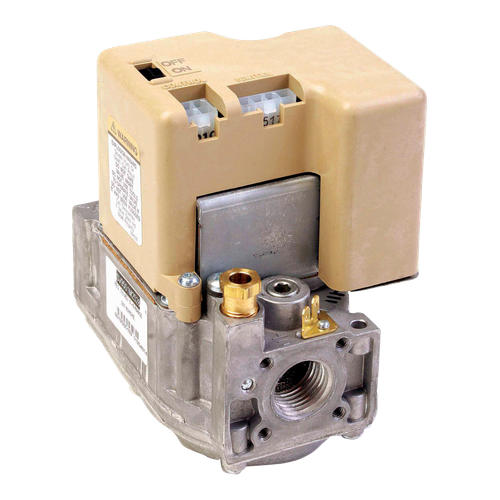
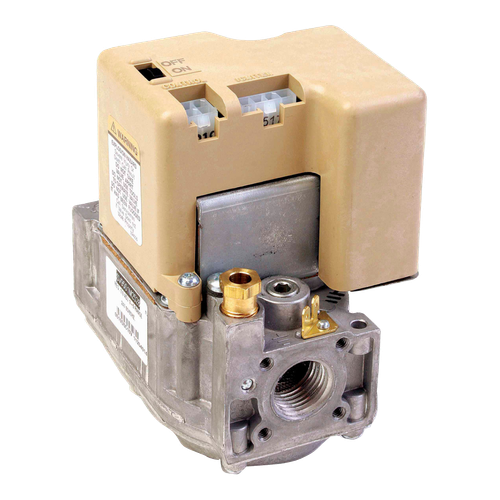

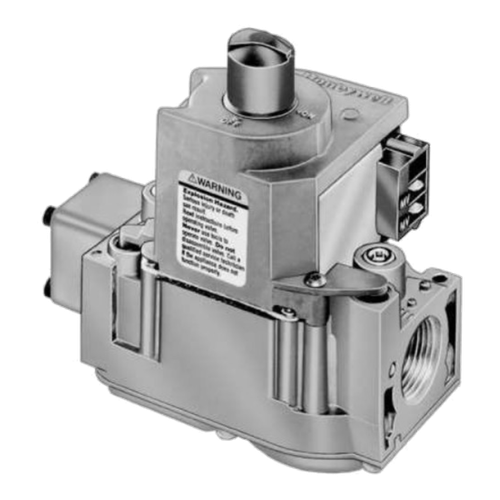
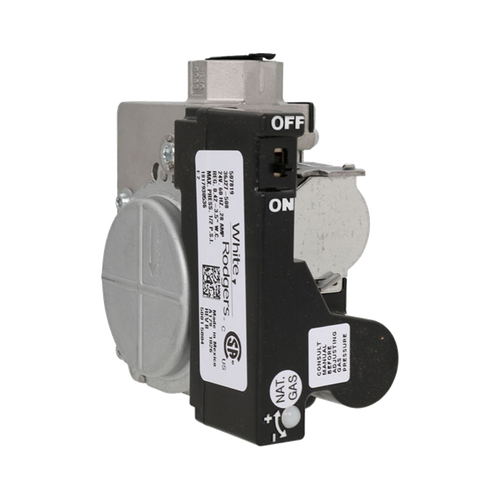
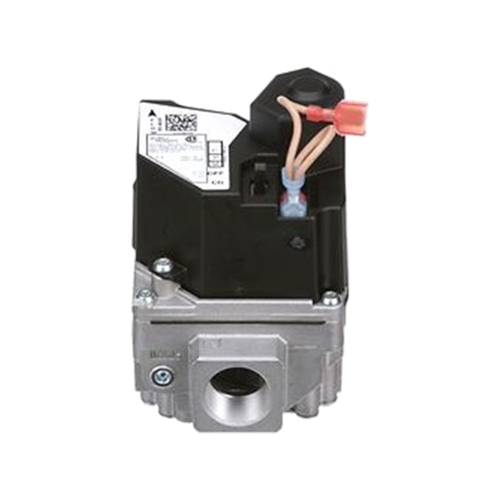
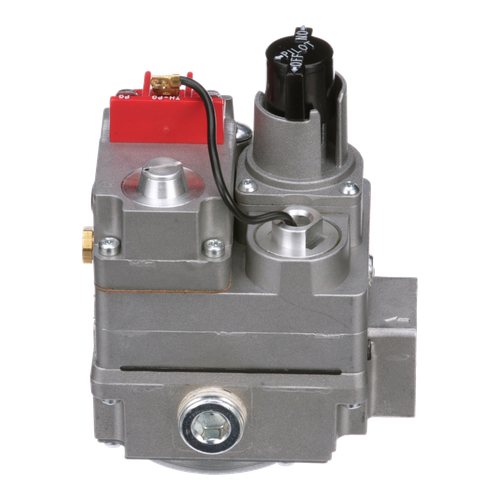


When a gas furnace, boiler or water heater clicks, sparks or glows and never lights, the gas valve is one of the first parts a technician checks. The valve is the gatekeeper between the gas line and the burner: it opens only when the control board, pilot or flame safety tells it the appliance is ready, and it shuts the instant something is wrong. Next to it on the gas train sits the pressure regulator, which holds the gas at the pressure the burner was designed for, no matter what the utility line is doing. This category brings together the gas valves, line and appliance regulators, regulator springs, orifices and shutoff valves used to keep residential and light commercial gas heating equipment running.
We stock replacement and universal parts from Honeywell, White-Rodgers, Robertshaw, Maxitrol, Baso and the OEM parts lines of Goodman, Carrier, ICP, Rheem, Nordyne and others, with live stock counts on every listing. Below is a practical guide to choosing the right part, matching it to your equipment and knowing when a valve or regulator really is the problem.
What a gas valve does
A gas valve is an electrically or thermally operated valve that controls gas flow to the main burner and, on many models, to the pilot. Most modern valves are "combination" valves: one body holds a manual shutoff knob, one or two automatic safety valves, a built-in pressure regulator and, on pilot models, a pilot outlet and thermocouple or thermopile connection. When the thermostat calls for heat, the ignition control energizes the valve operator, the valve opens and gas flows to the burner at the outlet pressure set by its internal regulator.
Types of gas valves by ignition system
The ignition system on your appliance decides which valve family you need. The Ignition Type filter on this page sorts valves the same way:
- Standing pilot: a pilot flame burns all the time. The valve is held open by a thermocouple (about 30 millivolts) or powered by a thermopile (about 750 millivolts on millivolt valves). Common on older furnaces, wall heaters, water heaters and fireplaces.
- Intermittent pilot: the pilot is lit by a spark only when there is a call for heat, proved by a flame sensor, and then the main valve opens. These valves have separate pilot and main operators and run on 24 volts.
- Hot surface ignition (HSI): an igniter glows red hot and lights the main burner directly. The 24-volt valve opens after the igniter has warmed up. This is the most common system on furnaces built in the last 25 years.
- Direct spark ignition (DSI): a spark electrode lights the main burner directly with no pilot. Valves are 24-volt with fast-opening operators.
Some valves, such as integrated "smart valve" designs, combine the ignition control and gas valve in a single body. Those must be replaced with the same family of valve, not a standard combination valve.
Single-stage, two-stage and modulating valves
A single-stage valve opens to one outlet pressure. A two-stage valve has a low-fire and a high-fire setting, typically used on two-stage furnaces to run quietly at reduced input most of the time. Modulating valves step through many firing rates and are matched to specific furnace controls. Always replace a two-stage or modulating valve with one of the same staging; a single-stage valve on a two-stage furnace will not respond to the low-fire call.
Gas pressure regulators
Gas comes into a building at a pressure set by the utility or propane supplier, and appliances are designed for a much lower, steady manifold pressure. Regulators bridge that gap. You will find three common kinds here:
- Appliance regulators mount directly ahead of a burner or valve to hold a specific outlet pressure for one appliance.
- Line regulators reduce elevated building pressure (for example 2 PSI or 5 PSI systems) down to the inches of water column appliances use. Many include an overpressure protection device (OPD) and a vent limiter so they can be installed indoors without a vent line where codes allow.
- Regulator springs change the outlet pressure range of a regulator. Springs are color coded and specific to each regulator series, so the listing names which regulator models each spring fits and the range it gives, such as 3 to 6 inches or 7 to 11 inches of water column.
How regulators are sized
A regulator is chosen by its capacity in BTU per hour at a given pressure drop, its pipe size and its outlet pressure range. A regulator that is too small starves the appliance at full fire; one that is far too large can be unstable at low flow. The BTU capacity in each listing is the manufacturer's rating for that body and spring combination.
Matching a replacement valve or regulator
Use this checklist before you order:
- Read the label on the old part. The model number on the valve or regulator body is the most reliable way to find a direct replacement. Search it on HVAC365; many listings show the part numbers they replace.
- Confirm the ignition type (standing pilot, intermittent pilot, hot surface or direct spark).
- Confirm the gas type. Natural gas and LP (propane) use different outlet pressures. Many valves ship for natural gas and include an LP conversion kit; the Gas Type filter shows which valves are natural gas only, LP only or convertible.
- Check inlet and outlet sizes (for example 1/2 in. x 1/2 in. or 1/2 in. x 3/4 in.) and whether the outlet is straight-through or side outlet.
- Check voltage. Most furnace valves are 24 volts; some commercial equipment uses 120-volt valves, and pilot appliances may be millivolt.
- Check staging and opening speed. Standard opening, slow opening and two-stage valves are not interchangeable on every appliance.
- Check capacity. The valve or regulator must be rated for at least the appliance's full input in BTU per hour.
| Spec | Where to find it | Why it matters |
|---|---|---|
| Ignition type | Appliance rating plate, ignition control label | Determines the valve family and operator design |
| Gas type | Rating plate, valve label (NAT or LP) | Sets the correct outlet pressure |
| Pipe size | Valve body markings | Avoids extra adapters and pressure loss |
| Voltage | Valve label (24 VAC, 120 VAC, millivolt) | A mismatched operator will not open or will burn out |
| BTU capacity | Valve or regulator label, spec sheet | Must meet or exceed the appliance input |
Signs a gas valve or regulator has failed
- The igniter glows or the spark clicks, but no gas ever reaches the burner, and the valve receives its correct voltage during the trial for ignition.
- The pilot lights but will not stay lit once the button is released (often a thermocouple, but sometimes the valve's magnet assembly).
- Burner flame is too small, lazy or yellow, and manifold pressure cannot be set to the manufacturer's value.
- The burner keeps burning after the thermostat is satisfied (a serious safety issue; shut the gas off and call a technician).
- A regulator hums, chatters or causes pressure to swing as other appliances turn on.
- A smell of gas near the valve or regulator. Leave the building and call your gas utility first.
Many "bad valve" calls turn out to be another part: a weak flame sensor, a failed pressure switch or a control board that never sends voltage to the valve. A technician should confirm voltage at the valve terminals and measure inlet and manifold pressure with a manometer before replacing it.
Installation and safety
Gas valves and regulators are safety controls. Installation, gas conversion and pressure adjustment should be done by a qualified gas technician following the appliance manufacturer's instructions and the codes that apply where you live. After any gas valve replacement, the installer should leak test every joint, verify inlet and manifold pressure, clock or measure the input and confirm the valve closes completely at the end of the cycle. Requirements for line regulators, vent limiters and overpressure protection vary by jurisdiction, so check with your local code authority before installing an elevated-pressure system.
Gas orifices and shutoff valves
Burner orifices meter how much gas each burner receives. They are drilled to a specific size for natural gas or LP and for a given input, and they are swapped during gas conversions or high-altitude derates. Automatic shutoff and safety shutoff valves close the gas supply to a burner or pilot line whenever their control signal is lost. Replace orifices and safety valves only with the sizes and models specified for your appliance.
Shopping this category
Use the filters to narrow by brand, part type (gas valve, pressure regulator, regulator spring, orifice or shutoff valve), gas type, ignition type, pipe size and voltage. Every listing shows the manufacturer part number, the parts it replaces when the manufacturer publishes them, and how many are in stock right now. If you are not sure which valve or regulator your equipment needs, call us at 1.888.509.3391 with the appliance model and serial number, or the numbers from the old part, and we will help you match it.
Frequently asked questions
Can I use a universal gas valve instead of the original?
Often, yes. Universal combination valves are designed to replace many OEM valves when the ignition type, gas type, voltage, staging, pipe sizes and capacity all match. Some appliances, especially those with integrated smart valves or modulating controls, require the exact OEM part.
How do I convert a gas valve from natural gas to propane?
Most convertible valves use a conversion kit that changes the regulator spring or setting, and the burner orifices must also be changed. Conversions must be done by a qualified technician using the appliance manufacturer's kit and instructions.
What is the difference between a millivolt valve and a 24-volt valve?
A millivolt valve is powered by a thermopile heated by the pilot flame, so it needs no outside electricity. A 24-volt valve is powered by the appliance's control transformer and opened by an ignition control or thermostat circuit.
Why does my regulator need a vent or vent limiter?
A regulator's diaphragm must breathe as it moves. If the diaphragm ever leaks, the vent is where gas would escape, so the vent is either piped outdoors or fitted with a listed vent limiter where codes permit.
What does the color of a regulator spring mean?
Manufacturers color code springs by outlet pressure range. The color only applies within one regulator series, so always match the spring to the regulator model listed on the product page.
How long do gas valves last?
Many gas valves last as long as the appliance, often 15 to 20 years, but dirt, moisture, voltage problems and heavy cycling can shorten that. A valve that fails a pressure or voltage test should be replaced, not repaired.


