The Brand Story
AutoPilot: Turning Salt Into Chlorine Since 1976
Anyone who has cared for a pool in Florida knows the routine: the jugs of liquid chlorine, the test strips, the green tint that creeps in after a week of storms and heat. In St. Petersburg, on Florida's Gulf Coast, a company named AutoPilot set out to change that routine by making chlorine right at the pool. Dissolve ordinary salt in the water, pass it through an electrolytic cell, and the pool sanitizes itself. AutoPilot has been building salt chlorine generators since 1976, and the idea it helped popularize is now standard equipment on pools around the world.
Chapter 1 · 1976
Chlorine from salt
AutoPilot has been manufacturing salt chlorine generators for swimming pools since 1976, which puts it among the earliest companies in the field. The principle is chemistry, not magic. A small amount of salt is added to the pool, low enough that swimmers barely notice it. When that water flows through the generator's cell, a low-voltage current splits the salt into chlorine, which sanitizes the pool and then reverts to salt, ready to be used again. The result is a steady, automatic supply of sanitizer rather than the peaks and valleys of hand dosing.
Chapter 2 · St. Petersburg
AquaCal AutoPilot
AutoPilot operates as AquaCal AutoPilot, Inc. from St. Petersburg, Florida, alongside AquaCal, the company's line of pool heat pumps. Pairing the two made sense in a state where pool owners want both clean water and warm water through the cooler months, and the newer AutoPilot controls are built to manage both. The company's reach extends well beyond Florida: in the United Kingdom, for example, its Pool Pilot Digital Nano+ system is sold exclusively through the distributor Certikin.
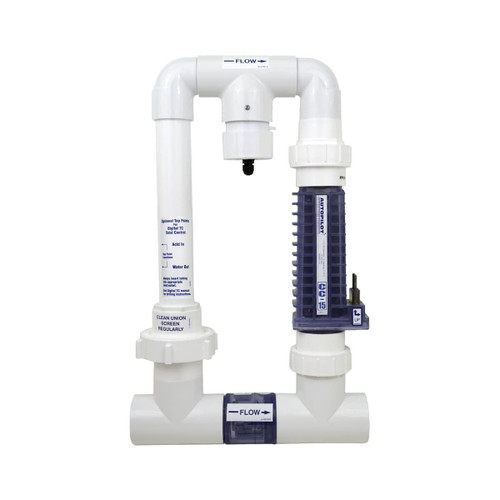
Over nearly five decades AutoPilot has refined the details that matter to service technicians: microprocessor controls with digital readouts of water temperature, salt level and chlorine output; low-salt alerts that tell the owner how much to add; and a patented manifold that regulates flow through the cell so it can produce chlorine efficiently.
Salt cells are working parts that wear with every hour of chlorine production, and eventually every one needs replacing. AutoPilot has long encouraged owners to send back the old cell: older cells carrying a rebate sticker can be returned with the receipt for a new one, and the company mails a rebate check. It is a small detail, but it says something about a manufacturer that expects its equipment to stay in service for many seasons.
The Lineup
What AutoPilot builds today
AutoPilot builds salt chlorine generators, replacement cells, chemistry controllers and pool automation. HVAC365 carries pieces of each family:
At a Glance
AutoPilot at a glance
- Salt chlorine generators since
- 1976
- Company
- AquaCal AutoPilot, Inc.
- Location
- St. Petersburg, Florida
- Sister brand
- AquaCal pool heat pumps
- Product focus
- Salt chlorination, chemistry control, automation
Questions
Frequently asked questions about AutoPilot
Who makes AutoPilot salt systems?
AutoPilot salt chlorine generators are made by AquaCal AutoPilot, Inc., based in St. Petersburg, Florida, the same company behind AquaCal pool heat pumps.
How long has AutoPilot made salt chlorine generators?
AutoPilot has manufactured salt chlorine generators for swimming pools since 1976.
How does an AutoPilot salt chlorine generator work?
Salt dissolved in the pool water passes through the generator's cell, where a low-voltage current converts it into chlorine. The chlorine sanitizes the water and then reverts to salt, so the cycle repeats.
What is PoolSync?
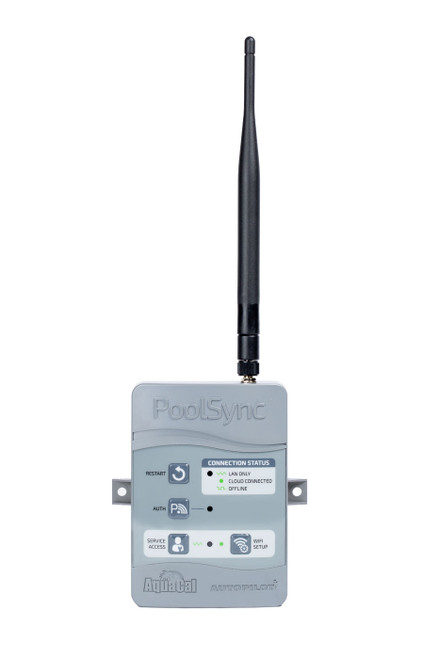
PoolSync is AutoPilot's Wi-Fi controller that manages ChlorSync salt chlorine generators and AquaCal heat pumps from one system.
What is the difference between ChlorSync and ChemSync?
ChlorSync is AutoPilot's salt chlorine generator, which produces sanitizer. ChemSync is its chemistry controller, which monitors water balance and doses acid from an attached tank.