The Brand Story
Raypak: Seventy-Plus Years of Making Water Warm in Southern California
In 1948, in postwar Southern California, a young company built a copper fin-tube boiler, a compact way to heat water for homes and buildings that no one in North America had built before. That idea, thin copper fins wrapped around tubes to pull heat from a flame as efficiently as possible, became Raypak's signature. Decades later, it is still the reason a backyard pool in Florida or Arizona can be swimmable on a cool spring evening.
Chapter 1 · 1948
The first copper fin-tube boiler
Raypak has operated in Southern California since 1948, the year it produced North America's first copper fin-tube boiler for space heating and hot water. Copper moves heat quickly, and fins multiply the surface the hot gases touch, so a fin-tube heat exchanger can be smaller and faster than the heavy cast-iron sections common at the time. The same principle would carry the company from boilers into water heaters and, eventually, into pool and spa heating.
Chapter 2 · 1985
Joining the Rheem family
In 1985 Rheem acquired Raypak. Rheem, founded in 1925 by brothers William, Richard and Donald Rheem, had built its name on water heating and heating and cooling equipment. Raypak gave it a specialist in hydronic boilers and pool heaters, and Raypak gained the resources of a much larger manufacturer while keeping its own name, engineering and California base.
Chapter 3 · 2000 to 2004
A new home in Oxnard
In 2000 Raypak moved into its current headquarters in Oxnard, California, a coastal city in Ventura County. The engineering kept moving too. Working with Honeywell, Raypak helped develop the first high-turndown modulating atmospheric heating boiler, a design that lets a boiler throttle down to match a small load instead of cycling on and off. In 2004 it introduced the first hybrid boiler system combining its ADB and CHX designs.
Chapter 4 · 2008
Heat pumps, built in Florida
Gas heaters are fast, but in warm climates many pool owners prefer a heat pump that pulls heat from the outdoor air. In 2008 Raypak bought the manufacturing assets of Pool Fact Industries, a heat pump pool heater maker that had long supplied it, in Arcadia, Florida. The plant became Raypak Arcadia, building heat pump pool heaters in the state where they are needed most, with support from the Rheem air conditioning operation in Fort Smith, Arkansas.
Chapter 5 · 2017 to today
Seventy years and a testing lab
Starting in 2017, Raypak expanded its Oxnard testing laboratory and warehouse, adding a chilled water loop so pool heaters could be tested under realistic conditions. In 2018 it marked its 70th anniversary by opening an Innovation Learning Center for contractors and partners. Raypak says it assembles all of its boilers, water heaters and gas pool heaters in the United States. In 2023 its Avia gas pool and spa heater was named Heater of the Year at the Pool Nation awards.
The Lineup
What Raypak builds today
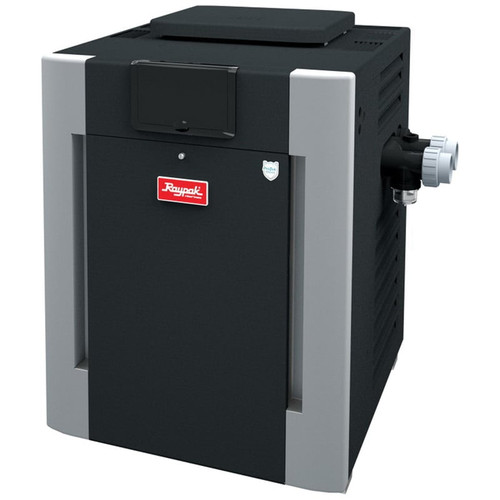
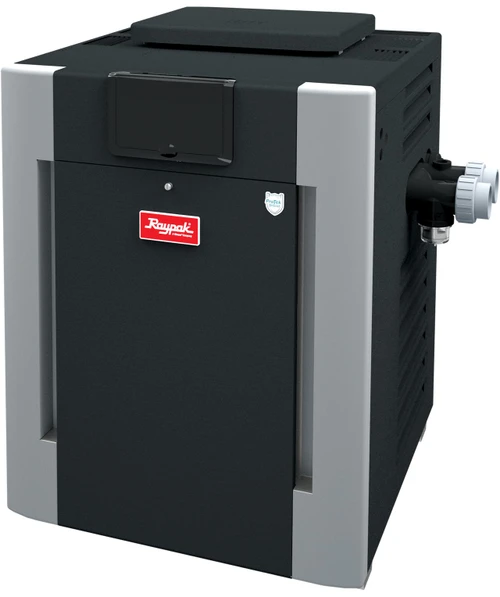
Raypak builds commercial and residential boilers, water heaters, and pool and spa heaters. HVAC365 carries its pool and spa heating range:
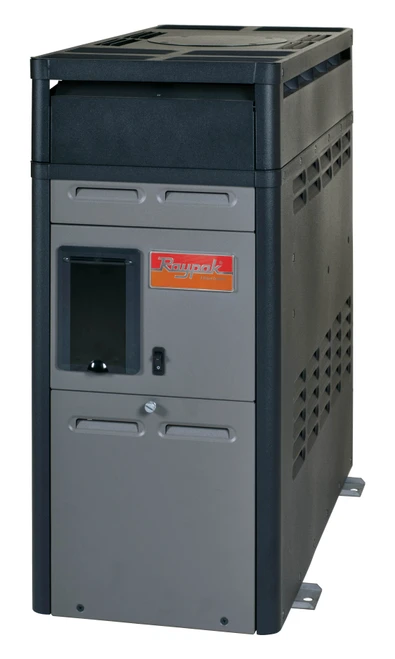
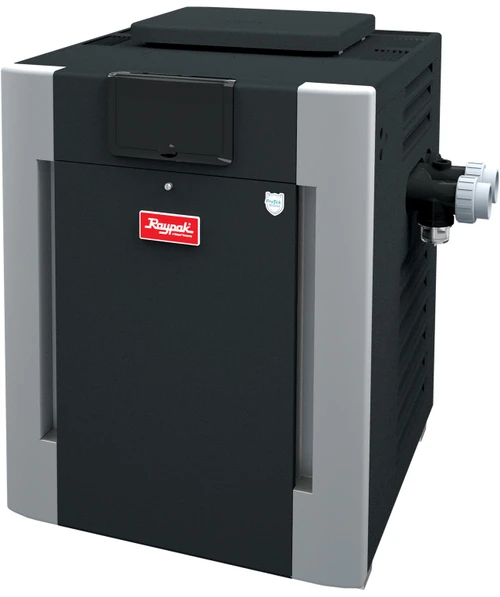
- Natural gas pool heaters: Digital models with electronic ignition and polymer headers from about 266,000 to 399,000 BTU, the Low NOx Avia HD for regions with strict emissions rules, Professional series units and ASME-certified versions with cupro-nickel heat exchangers for commercial pools.
- Propane pool heaters: Digital and Analog models from about 106,000 to 400,000 BTU, including ASME versions.
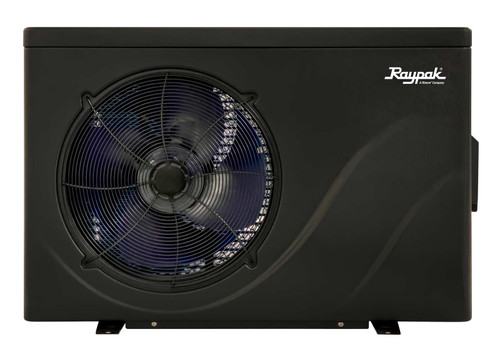
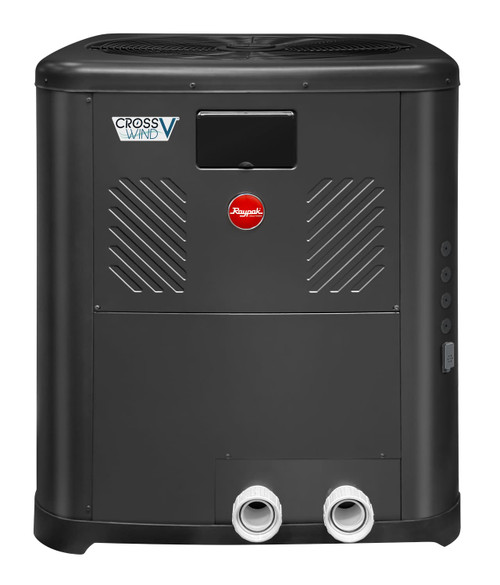
- Heat pump pool heaters: the Crosswind family, from the 65,000 BTU Crosswind 65-I-R with a spiral titanium heat exchanger to the 137,000 BTU Crosswind V 8550 Deluxe.
- Electric pool and spa heaters: compact titanium-element units such as the 18 kW ET3, sized for spas and small bodies of water.
- Controls: pool temperature controllers and automation components that tie heaters into a pool system.
In the Field
Gas, heat pump or electric
A gas heater raises water temperature quickly regardless of the weather, which suits spas and pools heated only on weekends. A heat pump costs more to buy but usually less to run in warm, humid climates like South Florida, where it can hold a pool at temperature for months. An electric resistance heater is simple and compact and fits best on spas. Gas models are built for a specific fuel, so a natural gas heater and a propane heater are not interchangeable without the manufacturer's conversion.
Sizing
How big a heater does a pool need
Pool heater size is measured in BTU per hour, and the right number depends on more than gallons. Surface area matters most, because an open pool loses most of its heat from the surface, especially on windy nights. The temperature rise you want above the average air temperature, how long you can wait for the water to warm, and whether the pool has a cover all move the answer. A cover can cut heat loss dramatically, letting a smaller heater do the job. For a spa, which is heated quickly and often, more BTU means less waiting. Commercial pools add another layer: many jurisdictions require ASME-certified heaters, and venting, gas line size and clearances must follow the installation manual and local code.
At a Glance
Raypak at a glance
- Roots
- 1948, Southern California
- First product
- Copper fin-tube boiler
- Parent company
- Rheem, since 1985
- Headquarters
- Oxnard, California, since 2000
- Heat pump plant
- Raypak Arcadia, Florida, since 2008
- U.S. assembly
- Boilers, water heaters, gas pool heaters
- Product focus
- Boilers, water heaters, pool and spa heaters
Questions
Frequently asked questions about Raypak
Who owns Raypak?
Raypak has been part of Rheem since Rheem acquired it in 1985.
Where are Raypak pool heaters made?
Raypak says it assembles all of its gas pool heaters, boilers and water heaters in the United States. Its headquarters is in Oxnard, California, and its heat pump pool heaters are built at Raypak Arcadia in Florida.
How long has Raypak been in business?
Raypak has operated in Southern California since 1948, when it built North America's first copper fin-tube boiler.
Should I choose a gas heater or a heat pump?
Gas heaters heat water quickly in any weather and suit spas and occasional use. Heat pumps cost more up front but are usually cheaper to run in warm climates where the pool is kept heated for long periods.
What does ASME mean on a Raypak heater?
ASME versions are built and certified to the ASME pressure vessel code, which is often required for commercial pools and spas.
Can a natural gas Raypak heater run on propane?
Not as shipped. Gas heaters are built for a specific fuel, so choose a natural gas or propane model to match the site, or follow the manufacturer's approved conversion.