null
Air Conditioner Condensers

Air Conditioner Condensers

A failed or undersized condenser is the reason a house stays hot in July or a commercial space loses cooling when it can least afford to. The condenser is the outdoor half of a split-system air conditioner: it sheds the heat your indoor coil pulls out of the building, and if it is not sized and matched correctly, nothing else in the system performs the way it should. HVAC365 stocks a wide range of condensers across capacity classes and efficiency tiers, so whether you need a direct swap for a residential system or a unit spec'd for a light commercial build, you are not waiting on a special order to find out it was the wrong one.

This part of the catalog sits within the broader Air Conditioner Components lineup, but it focuses specifically on the outdoor condensing unit itself: the refrigerant-circuit heart of a split-system that lives outside the structure. That distinction matters because compatibility with the indoor equipment, the refrigerant circuit, and the electrical supply all run through this one component. Homeowners replacing a failed outdoor unit, contractors spec-matching for a new install, light commercial buyers outfitting a small office or retail space, and distributors stocking for a season or a fleet of properties all shop this category for the same reason: they need the outdoor unit to be right before anything else can work.

Picking the Right Condenser

Capacity is the first question, and it is not a guess. A load calculation (Manual J or an equivalent method) gives you the actual cooling demand the structure places on the system. That number drives the tonnage or BTU class you need. Oversizing is a real problem: a condenser that is too large for the space short-cycles, meaning it kicks on and off too frequently to properly dehumidify the air or run efficiently. Undersizing means the system runs constantly and still cannot hold the target temperature on the hottest days. Neither is acceptable, and neither is fixed cheaply after the equipment is installed. Get the load number first.

Application type shapes the decision as much as capacity does. A residential replacement typically follows the existing system's configuration closely, particularly if the air handler, coil, and refrigerant lines are staying. A light commercial install may call for a unit with a different operating range, a higher duty cycle, or specific certifications depending on local code. These are not interchangeable without checking. If you are sourcing for a commercial space, confirm that the unit is rated for that application before the purchase, not after.

Efficiency tier is the third lever. Higher SEER2 ratings reduce operating cost over the life of the equipment, and in many regions utility rebates are tied to hitting a specific efficiency threshold. The upfront cost of a higher-efficiency unit is real, but so is the payback period through lower utility bills, and in some jurisdictions the minimum efficiency standard is set by code rather than preference. Know what the local minimum is, and check whether your utility offers a rebate for going above it before you decide where in the efficiency range to land. The installation-readiness factors covered further down also bear on this decision: a higher-efficiency unit sometimes has stricter requirements around matched components or electrical supply that need to be in place first.

For distributors or contractors buying across multiple jobs, lead time and volume availability are part of the calculation alongside efficiency and capacity. Stocking the right units across the capacity range you typically see means fewer callbacks and fewer job delays while you wait on freight.

Buying Tips

  • Match the refrigerant circuit before anything else. If the indoor coil and line set are staying, the replacement condenser must be compatible with the refrigerant already in the system. Newer units designed for lower-GWP refrigerants are not always drop-in replacements for older R-22 or R-410A systems. Mismatching here is not a small problem.
  • Do not skip the AHRI certificate. A matched system rating (condenser plus indoor coil plus air handler, as certified by AHRI) is what most utility rebate programs require, and it is what a code inspector may ask for. Buying the condenser and the indoor unit from different product families without checking the AHRI certificate first can disqualify you from a rebate you were counting on.
  • Check the disconnect and breaker size before you order. If the existing electrical service is staying, the new condenser's minimum circuit ampacity and maximum overcurrent protection must fall within what is already on site. A unit that needs a larger disconnect or a panel upgrade adds cost and time to a job that was supposed to be a straightforward swap.
  • Verify local refrigerant and efficiency regulations now, not at permit time. Some states and jurisdictions have adopted efficiency minimums or refrigerant transition rules that go beyond the federal baseline. Finding out at the permit desk that the unit you installed does not meet the local standard is an expensive way to learn this.

Condenser Types and Common Applications

Not all condensers are built for the same job, and the configuration that makes sense for a 1,500-square-foot house is not necessarily the one you want for a small commercial property or a high-efficiency retrofit. Here is how the main distinctions break down.

  • Standard residential split-system condensers are the most common unit in this category: an outdoor condensing section paired with a separate indoor air handler and coil. They cover the full range of residential cooling loads and represent the majority of replacement work. Most homeowner swaps and contractor installs fall here.
  • High-efficiency condensers operate at higher SEER2 ratings, often using two-stage or variable-capacity compressors to modulate output rather than simply cycling on and off. Variable-capacity units in particular can hold a much tighter indoor temperature, run more quietly, and dehumidify more effectively at part load. The tradeoff is a higher equipment cost and, in some cases, more specific requirements around matched indoor components and controls.
  • Light commercial condensers are rated for higher duty cycles, sometimes carry commercial certifications, and may be built for higher ambient operating temperatures than a standard residential unit. If the application is a small office, a retail space, or a building that sees extended runtime, this is worth specifying rather than defaulting to a residential unit that is slightly oversized.
  • Single-stage versus two-stage versus variable-capacity compressors represent a meaningful split within both the residential and commercial segments. Single-stage units run at full capacity or not at all. Two-stage units can run at a reduced capacity when full output is not needed, which improves dehumidification and efficiency at mild temperatures. Variable-capacity units modulate across a wider range and are the most efficient option under typical part-load conditions, which is most of the cooling season in most climates.

What It Takes to Install One

Installing a condenser correctly requires confirming several site conditions before the unit arrives, not after. Working through these before you place the order will catch most of the surprises that otherwise surface on install day.

Electrical supply is the starting point. Every condenser specifies a minimum circuit ampacity and a maximum overcurrent protection rating; pull both from the product's spec sheet and compare them against the disconnect, breaker, and wiring already on site. If the existing service is undersized for the new unit, a panel or service upgrade is part of the scope. Verify this against the specific unit's nameplate requirements, not a general estimate.

Refrigerant line sets need to be checked for length, diameter, and condition. A line set that is too long, too short, or the wrong diameter for the new unit's refrigerant circuit can degrade performance and may void the warranty. If the system is being converted to a different refrigerant, the line set and any existing components need to be evaluated for compatibility. Ask the manufacturer or check the installation manual for the line set specifications the new unit requires.

The matched indoor components matter. A condenser does not work in isolation: it is part of a refrigerant circuit that includes the evaporator coil and, depending on the system, the metering device. Measure what is already on site. Look up whether the combination is AHRI-rated, particularly if a rebate or permit requires it. In many cases, swapping only the outdoor unit while leaving a mismatched or aging indoor coil in place will hurt efficiency and shorten the new equipment's life.

Clearances and mounting context are often underestimated. The outdoor unit needs adequate airflow on all sides, and manufacturer clearance requirements vary. Check the installation manual for the minimum distances from walls, fences, shrubs, and other obstructions. The pad or mounting surface needs to be level and stable. Units installed on uneven pads vibrate more, are louder, and wear faster.

Operating temperature range is worth checking if the application is in a climate with very high or very low ambient temperatures. Not every condenser is rated to operate efficiently or safely at extreme ambient conditions. If the site sees sustained high ambient heat or operates in a region that uses the cooling system year-round, look at the unit's rated operating range, not just its efficiency at standard test conditions.

Controls and integration come into play when there is a smart thermostat, a building management system, or a communicating air handler already on site. Some higher-efficiency condensers use proprietary communicating protocols that only work with matched indoor equipment and specific thermostat models. If the existing controls are staying, check compatibility before the unit ships.

Things You Should Know

Q: What is an air conditioner condenser and what does it do?

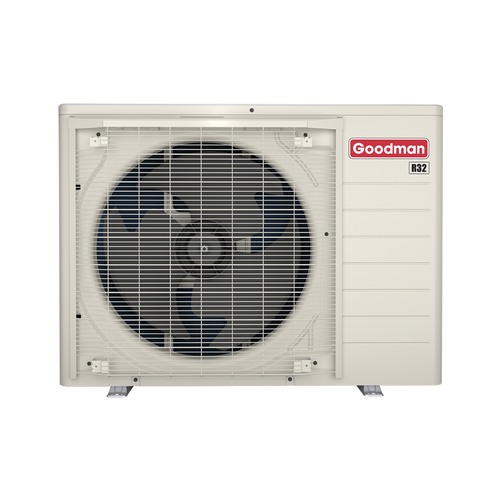
A: The condenser is the outdoor unit in a split-system air conditioner. It houses the compressor, the condensing coil, and the fan, and its job is to release the heat that the indoor evaporator coil has pulled out of the building. Without a functioning condenser, the refrigerant circuit cannot complete its cycle and the system produces no cooling.

Q: How do I know what size condenser I need?

A: Size is determined by a load calculation, not by the square footage of the space alone. A Manual J calculation accounts for insulation, window area, orientation, climate zone, and occupancy to produce the actual cooling load the structure places on the system. That figure drives the tonnage or BTU class you need. Using the old unit's nameplate as a starting point is reasonable, but if the old unit was never sized correctly, you will be repeating the same mistake. The capacity section above covers why getting that number right before ordering matters.

Q: Can I replace just the outdoor condenser and keep my existing indoor equipment?

A: Sometimes, but not always without consequences. The new condenser must be compatible with the refrigerant in the existing system, matched to the indoor coil's capacity, and ideally AHRI-rated as a system with the indoor components. Mismatched combinations can reduce efficiency, shorten equipment life, and disqualify a rebate. The site-condition checklist earlier in this page covers exactly what to verify before you decide whether a partial swap makes sense.

Q: What does SEER2 mean and why does it matter?

A: SEER2 is the current federal efficiency rating standard for air conditioners, replacing the older SEER metric with a test procedure that more accurately reflects real-world installation conditions. A higher SEER2 rating means lower operating cost over the life of the equipment and may be required for code compliance or utility rebate eligibility. The efficiency tier discussion above covers how to factor this into the buying decision.

Q: What refrigerant does a new condenser use?

A: New condensers are transitioning away from R-410A toward lower global-warming-potential refrigerants such as R-32 and R-454B as part of the industry's phasedown under EPA regulations. The specific refrigerant a given unit uses is on the nameplate and in the product documentation. This matters because a condenser designed for one refrigerant is not a drop-in replacement for a system using a different one — a point the refrigerant matching tip above addresses directly.

Q: Do I need a permit to replace a condenser?

A: In most jurisdictions, yes. Replacing a condenser is mechanical work that typically requires a permit and, in many areas, a licensed HVAC contractor to pull it. Requirements vary by state and municipality. Check with your local building department before the work begins. Some areas also require a third-party inspection to close the permit, which means the installation needs to meet code on first inspection.

Q: What electrical work is typically required for a condenser replacement?

A: Each condenser specifies a minimum circuit ampacity and a maximum overcurrent protection rating. Compare those figures against the existing disconnect, breaker, and wiring. If the new unit has different electrical requirements than the old one, the electrical service may need to be upgraded before the condenser can be installed. The electrical supply section above walks through how to do that check against the specific unit's spec sheet.

HVAC365 ships condensers nationwide, covering residential replacements through volume distributor orders from a broad, stocked catalog. When a household is without cooling or a commercial job is waiting on equipment, having the right unit available and ready to ship matters more than almost anything else in the supply chain. Browse the category to find the capacity class and efficiency tier your job calls for, or reach out if you need help matching a unit to a specific application.

Compare
Show: 12 24 48

Fast Shipping

Easy Returns

Warranty Coverage

Financing Available